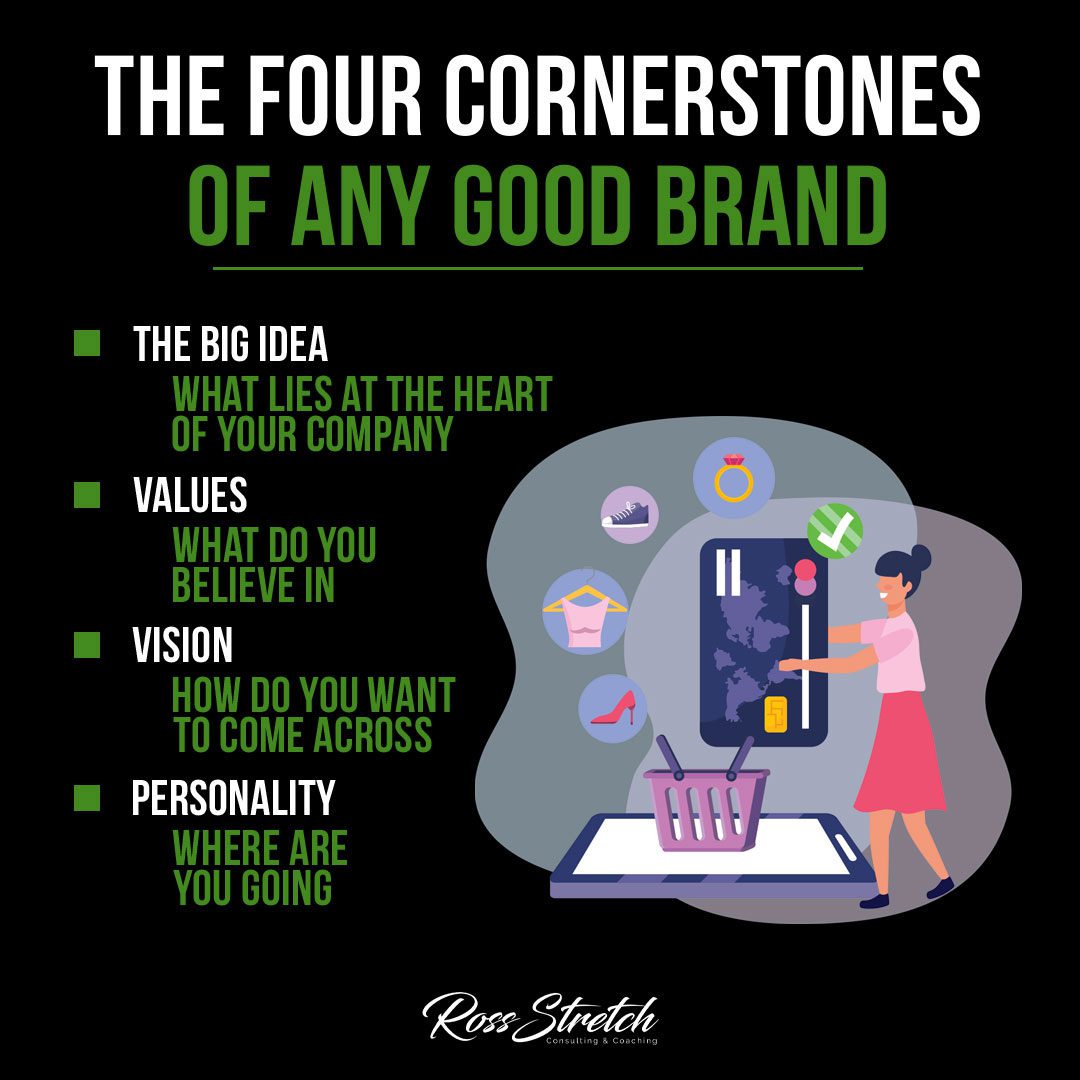
Building a recognizable, lasting brand identity is one of the most valuable things an entrepreneur can do. Yet most small businesses skip the foundations and jump straight to logos and taglines. True brand strength comes from four cornerstones: the big idea, core values, vision, and brand personality. Get these right, and every marketing decision becomes easier — because it flows from a center that is clear and consistent.
The Big Idea: Your Brand’s Central Purpose
Every powerful brand is anchored by a single, compelling big idea — the central concept that sets it apart from every competitor. This is not your product or your service. It is the reason your business exists and the transformation you promise to deliver. Apple’s big idea is not computers; it’s empowering creative individuals to think differently. Nike’s is not shoes; it’s athletic potential realized through determination.
Your big idea should be simple enough to communicate in a sentence, yet rich enough to inspire years of marketing, product development, and customer relationships. When you can articulate it clearly — to your team, your vendors, and your customers — it becomes the compass for every business decision. Without it, brands drift, and audiences lose interest.
Finding your big idea requires honest reflection. What does your business uniquely solve? What gap exists in the market that you are best positioned to fill? The answer to those questions, stated with conviction, is the foundation upon which everything else is built.
Core Values: What Your Brand Stands For
Core values are not platitudes on a wall. They are the principles that guide how your brand behaves — particularly when no one is watching and especially when decisions are difficult. A brand that claims to value transparency but obscures fees, or claims to value community but ignores customer feedback, is a brand that will eventually lose trust.
The most effective brand values are specific, behavioral, and lived from the top down. Instead of “integrity,” a brand might commit to telling customers the truth even when it costs a sale. That kind of specificity creates accountability. It gives employees something to point to and customers something to believe in.
When your values are authentic and consistently demonstrated, they build a loyal community around your brand — people who do not just buy your product but advocate for your mission. In an era when consumers research brands before they buy, values are a competitive advantage that cannot be easily replicated.
Vision: The Direction Your Brand Is Heading
A brand’s vision is its north star — the future state it is working toward. It is the long-term aspiration that gives meaning to the daily grind and context to short-term decisions. Where do you want your brand to be in five years? What impact do you want to have had on your customers, your industry, or your community?
A compelling vision does something important: it attracts the right people. Employees want to work for brands with a clear sense of purpose. Investors want to back businesses with a defined future. Customers want to support companies whose trajectory aligns with their own values. A brand that cannot articulate where it is going will struggle to build meaningful momentum in any of these relationships.
Vision should be ambitious but grounded. It should stretch the organization while remaining connected to the real capabilities and markets in which the brand operates. Revisit it annually, refine it as markets shift, but never lose sight of it entirely.
Brand Personality: The Human Element
People do not form relationships with companies — they form relationships with personalities. Brand personality is the consistent set of human characteristics your brand projects across every interaction: tone of voice, how you respond to criticism, the humor in your copy, the warmth in your customer service emails.
Think of your brand as a person. Is it bold and provocative, like a disruptive startup? Warm and nurturing, like a family-oriented service brand? Authoritative and precise, like a financial institution? Defining this clearly means that anyone producing content, responding to customers, or designing your next campaign knows exactly how to communicate in a way that feels cohesive.
Personality is particularly important in the social media age. Brands that communicate with a distinct, recognizable voice build audiences; brands that post generic, corporate-sounding content become background noise. Invest time in defining your brand’s personality and creating guidelines that keep it consistent across all channels and all team members.
Integrating All Four Cornerstones Into a Coherent Strategy
The four cornerstones do not operate in isolation — they reinforce each other when properly integrated. Your big idea shapes your vision; your values inform your personality; your personality expresses your values in every customer interaction. A brand that aligns all four creates an experience that feels seamless and trustworthy, one where the advertising matches the product, and the product matches the promise.
Integration requires consistency. Apply your brand cornerstones across every touchpoint: your website, your packaging, your hiring decisions, your social media presence, your pricing strategy, and your return policy. When customers encounter a consistent experience at every stage of their journey, brand trust builds naturally over time.
As your business grows, revisit and stress-test your cornerstones regularly. Markets change, audiences evolve, and new competitors emerge. A brand that is anchored to its foundational elements but willing to adapt how it expresses them will remain relevant without losing the identity it has worked to build.
Conclusion
Building a brand without these four cornerstones is like building a house on sand. The big idea, core values, vision, and personality are not just marketing concepts — they are operational tools that guide decisions, attract the right people, and create loyalty that outlasts any single product or campaign. Take the time to define them clearly, commit to them consistently, and you will have laid the groundwork for a brand that genuinely stands out in a crowded market.
Resources
- Branding Strategy Insider — in-depth articles on brand positioning, identity, and strategy
- Entrepreneur: Building Your Brand — practical guides for entrepreneurs at every stage
- Harvard Business Review: Branding — research-backed insights on brand strategy and consumer behavior
- Building a StoryBrand by Donald Miller — a framework for clarifying your brand message so customers listen


 Ross Stretch