
Authentic relationships are among the most valuable things in life, yet building them requires a skill most people are never formally taught: the ability to recognize when someone isn’t being genuine. Fake people — those whose words and actions consistently fail to align — can drain your energy, betray your trust, and compromise your personal and professional growth. Learning to identify them protects your emotional well-being and helps you invest your time and energy in connections that are genuinely worth keeping. The good news is that inauthentic behavior leaves clear signals — if you know what to look for.
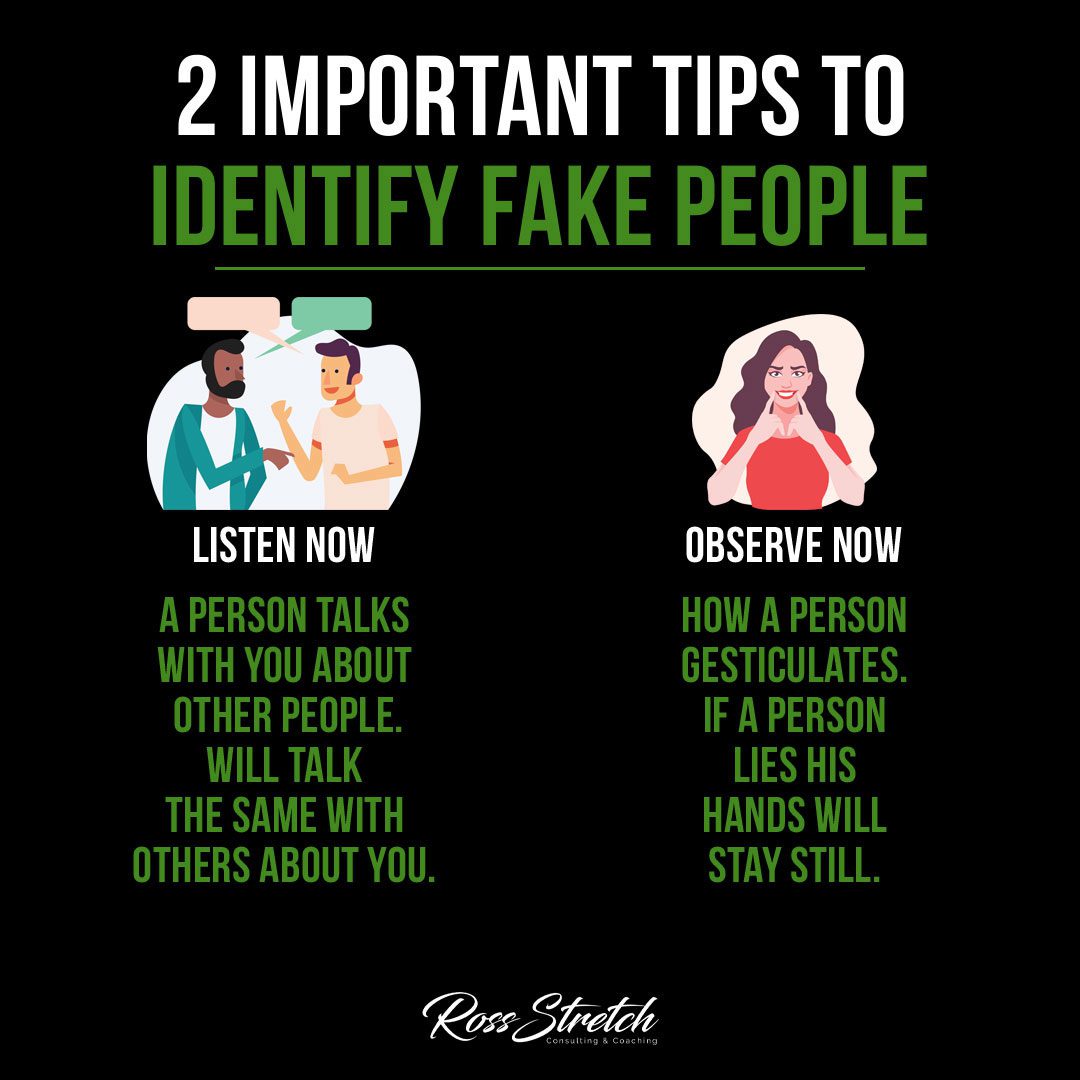
Tip 1: Listen to How They Talk About Other People
What Someone Says About Others Reveals What They Will Say About You
One of the most reliable signals of a person’s character is how they speak about people who aren’t in the room. If someone frequently gossips, criticizes, mocks, or shares private information about mutual friends, colleagues, or former relationships, pay close attention — this is a window into how they will eventually speak about you when you are absent.
People who are genuinely secure and kind rarely need to tear others down. When someone habitually gossips, it often reflects insecurity, a need for social control, or a lack of empathy. They use information as currency, trading stories about others to build intimacy or status in conversations — a tactic that feels connective in the moment but is ultimately transactional. If they are willing to share another person’s private struggles, failures, or embarrassments with you, they are equally willing to share yours with someone else.
The pattern is more revealing than any single incident. Everyone occasionally vents or shares frustration about someone in their lives. The red flag is the person whose conversations are consistently characterized by negativity toward others, who seems energized by drama, or who cannot speak about former friends or partners without contempt.
- Actionable Tip: Pay attention to whether this person speaks about others with basic dignity, even in conflict. Honest criticism is normal — habitual cruelty or the betrayal of confidence is a pattern worth taking seriously.
- Why It Works: People’s consistent treatment of others is the most accurate predictor of how they will eventually treat you. One incident is situational; a pattern is character.
Pro Tip: Notice What They Don’t Say
Fake people often speak in vague, non-committal ways when they should be advocating for you or speaking with conviction. If someone is always diplomatically neutral — never willing to take a position, defend you in your absence, or stand behind something they claimed to believe — that evasiveness may signal that their words are performance rather than principle. Authenticity requires the willingness to be accountable to what you say. People who are never on the record about anything real are protecting themselves, not you.
Tip 2: Observe Non-Verbal Cues and Behavioral Consistency
The Gap Between Words and Actions Is Where the Truth Lives
Inauthentic people are often skilled with language — they say the right things, make the right promises, and present themselves in appealing ways. Where they reveal themselves is in the gap between what they say and what they do. Body language and behavioral consistency are the most truthful channels of communication, because they are far harder to consciously control than words.
Research on deception by psychologists like Paul Ekman, who spent decades studying micro-expressions, suggests that emotional leakage — brief, involuntary facial expressions — can reveal hidden feelings that words attempt to conceal. Overly controlled or wooden body language during emotional conversations can indicate that someone is managing their presentation rather than responding naturally. Eye contact that disappears when specific topics arise, or physical distancing when commitments are discussed, can signal discomfort with honesty.
Behavioral consistency over time is equally telling. Does this person follow through on what they promise? Do they show up when it inconveniences them? Do their actions in public match their behavior in private? Sustained inauthenticity is cognitively demanding — the effort to maintain a false persona tends to show up in inconsistencies that accumulate and become difficult to ignore.
- Actionable Tip: Watch for mismatches between what someone says and how they act across different contexts — especially situations where following through requires real effort or sacrifice on their part.
- Why It Works: Genuine character is consistent across contexts. People who behave very differently depending on who is watching, or who routinely fail to honor commitments, are revealing something important about their reliability and intentions.
Pro Tip: Test for Reciprocity
A simple and revealing test of authenticity is reciprocity. Share something modestly vulnerable with someone and observe their response. Do they engage with what you have shared, ask follow-up questions, or reciprocate with their own transparency? Or do they redirect the conversation back to themselves, offer shallow advice, or gloss over what you said entirely? Genuine people invest in mutual exchange. Fake people are primarily interested in relationships where they are the net beneficiary — taking connection, information, or support while offering as little of substance as possible in return.
Maintaining Healthy Boundaries Without Confrontation
Identifying someone as inauthentic doesn’t always require a dramatic confrontation or a complete severing of ties. In many contexts — professional environments, extended social circles, family settings — you will need to maintain a functional relationship while protecting yourself from emotional exploitation or misplaced trust.
The most effective strategy is deliberate distance. You don’t need to announce it — simply reduce the depth of information you share, pull back on emotional investment, and avoid placing this person in positions of trust that require genuine reliability. Let the relationship exist at a level that demands nothing important from them, and invest your deeper energy where it is genuinely reciprocated. Over time, authentic people and inauthentic people self-select out of and into the roles they are suited to in your life.
Conclusion
Recognizing fake people isn’t about becoming paranoid or suspicious of everyone around you — it’s about developing the discernment to distinguish between relationships that nourish you and those that deplete you. By listening carefully to how people speak about others and watching for consistency between words and actions over time, you will build a far more accurate picture of who can genuinely be trusted. The goal is a social and professional circle rooted in authenticity, where the people around you make you better — and where you do the same for them.
Resources

 Ross Stretch