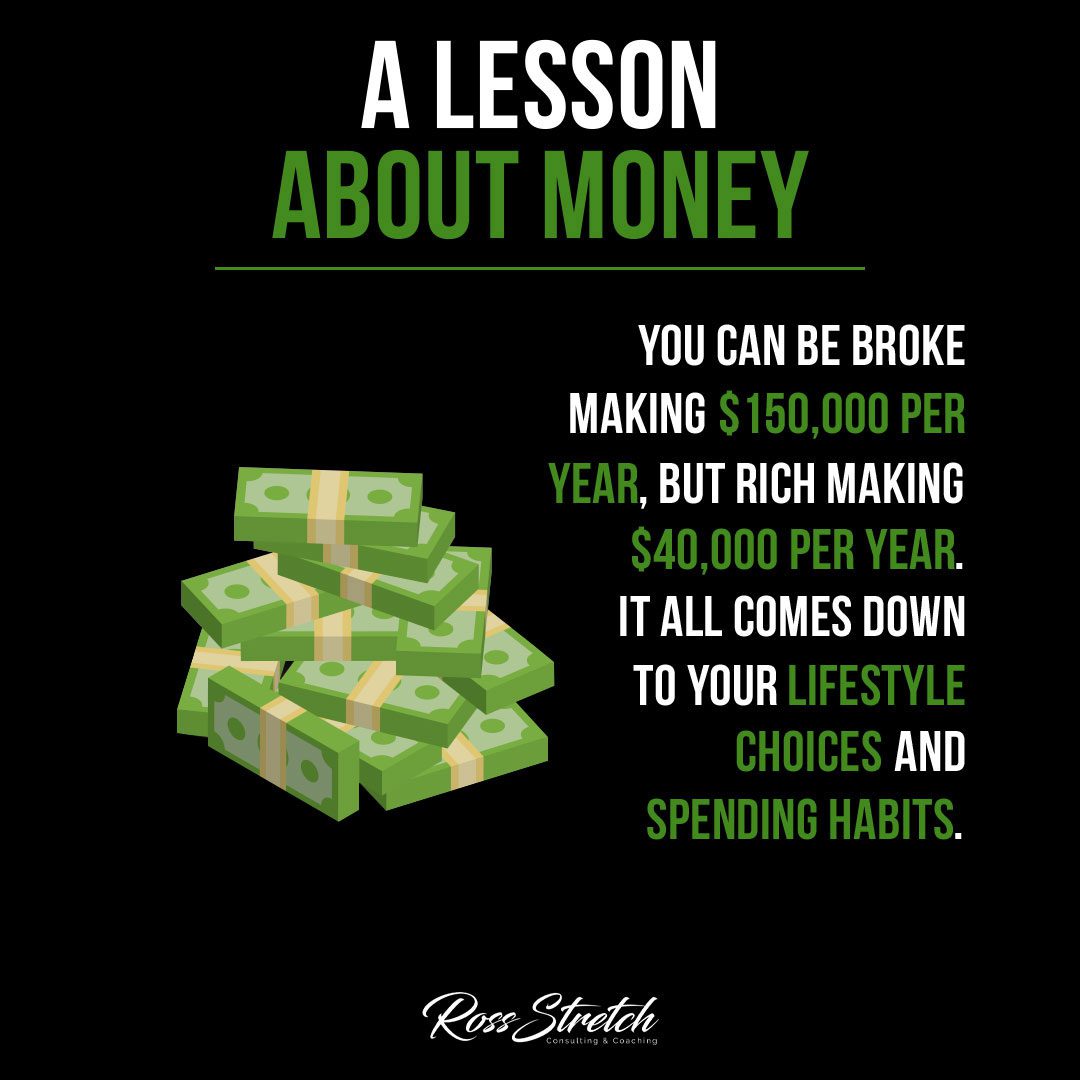
Consider two people. The first earns $300,000 a year as a specialist physician, carries $400,000 in student debt, drives a leased luxury car, and has $40,000 in savings. The second earns $60,000 a year as a public school teacher, owns a modest home with $200,000 in equity, has maxed out a retirement account for 20 years, and has a net worth approaching $700,000. The first person has high income. The second person has wealth. These are not the same thing, and understanding the difference is foundational to building a financially secure life.
\
\
\
\
The High-Income, Low-Wealth Paradox
\
\
High earners living paycheck to paycheck is not a stereotype — it is a documented pattern. Research consistently shows that a significant share of people earning six-figure salaries report financial stress, carry substantial debt, and hold minimal savings. The culprit is almost always the same: lifestyle expenditures that rise in lockstep with income. Every raise triggers a better apartment. Every promotion justifies a newer car. The income grows, but so does the spending, leaving the gap between income and expenses — the true engine of wealth — unchanged or narrowed.
\
\
The tax structure compounds this problem. Active earned income — wages and salaries — is taxed at the highest marginal rates. In high-tax jurisdictions, a top earner can see 40 to 50 percent of each additional dollar earned disappear to federal, state, and payroll taxes combined. By contrast, long-term capital gains from investments are taxed at substantially lower rates in most countries. High earners who consume rather than invest their income are handing their wealth-building potential to both the government and retailers, in that order.
\
\
\
\
What True Wealth Actually Looks Like
\
\
Wealth is not a salary — it is a balance sheet. Net worth, not annual income, is the meaningful measure of financial health. Net worth is the value of everything you own minus everything you owe: the equity in your home, the value of your investment accounts, the cash in your savings accounts, minus your mortgage balance, car loans, credit card debt, and student loans. A person with a $65,000 salary, no debt, and $350,000 in assets is considerably wealthier than someone earning $200,000 with $900,000 in liabilities.
\
\
Real wealth provides something income alone cannot: optionality. When your assets generate enough income to cover your living expenses, work becomes a choice rather than a necessity. This is the definition of financial independence — not a specific dollar amount, but a particular relationship between your asset base and your cost of living. Building toward that relationship requires a fundamental shift in how you think about money: from what you earn each month to what you own and what those assets produce.
\
\
\
\
Lifestyle Inflation: The Silent Wealth Killer
\
\
Lifestyle inflation is the tendency to increase spending as income rises. It is not always dramatic — it accumulates through a hundred small decisions made over years. A slightly nicer apartment after the first promotion. Business class flights because you can afford them now. Premium subscriptions, upscale dining, a newer phone on a shorter upgrade cycle. Each individual decision seems reasonable in isolation. The cumulative effect is that your savings rate — the percentage of income you retain rather than spend — stays flat or actually declines as you earn more.
\
\
The practical antidote to lifestyle inflation is not deprivation — it is intentionality. Before increasing your spending in response to an income increase, pause and ask: does this expenditure provide genuine, lasting satisfaction, or am I spending out of social comparison, habit, or the vague feeling that I now deserve more? The goal is not to spend less across the board. It is to spend deliberately on what genuinely improves your life and redirect the rest into assets that compound over time.
\
\
\
\
Building Wealth-Positive Spending Habits
\
\
The framework of paying yourself first is simple in concept and powerful in practice. Before any discretionary spending, direct a predetermined percentage of your income to savings and investments automatically. Set this transfer to happen on payday, before you have any opportunity to spend the money. Most financial planners recommend saving at least 20 percent of gross income, but even a consistent 10 percent applied over decades creates meaningful wealth through the mathematics of compound growth.
\
\
Budgeting does not have to be complicated to be effective. A simple 50/30/20 framework — directing 50 percent of after-tax income to needs, 30 percent to wants, and 20 percent to savings and debt repayment — provides a workable starting structure for most income levels. Track your actual spending against these categories monthly, not to restrict yourself punitively but to maintain honest awareness of where your money goes. Visibility is the prerequisite for intentional decision-making.
\
\
\
\
The Power of Compound Growth Over Time
\
\
Compound interest — the process by which your returns generate their own returns over time — is the most powerful force available to ordinary investors. At an average annual return of 8 percent, which approximates the long-run historical average of broad equity markets, $10,000 invested today becomes approximately $46,600 in 20 years without any additional contributions. Add $400 per month to that initial position and the 20-year total exceeds $270,000. The math rewards patience in a way that no salary increase can replicate.
\
\
Time is the single most critical variable in compound growth, which is why starting early matters so much more than starting with a large amount. A 25-year-old who invests $300 per month consistently until age 65, earning an 8 percent annual return, accumulates approximately $1 million. A 35-year-old making the identical monthly investment accumulates roughly $440,000 by the same age. The ten-year head start more than doubles the outcome. No amount of aggressive saving in your forties can replicate the advantage of beginning in your mid-twenties. The wealth mindset recognizes this early — and acts on it.
\
\
\
\
Conclusion
\
\
Income is a tool. Wealth is the destination. The distinction matters because the behaviors required to build wealth — living below your means, investing consistently, resisting lifestyle inflation, letting compound growth work undisturbed — are not intuitive in a culture that celebrates high earnings and visible consumption as the markers of success. Shifting from an income mindset to a wealth mindset is not about sacrifice. It is about understanding that the choices you make today about your money determine what your money can do for you tomorrow. The goal is not to earn more and spend more. It is to earn, keep, and grow.
\
\
\
\
Resources
\
\


 Ross Stretch