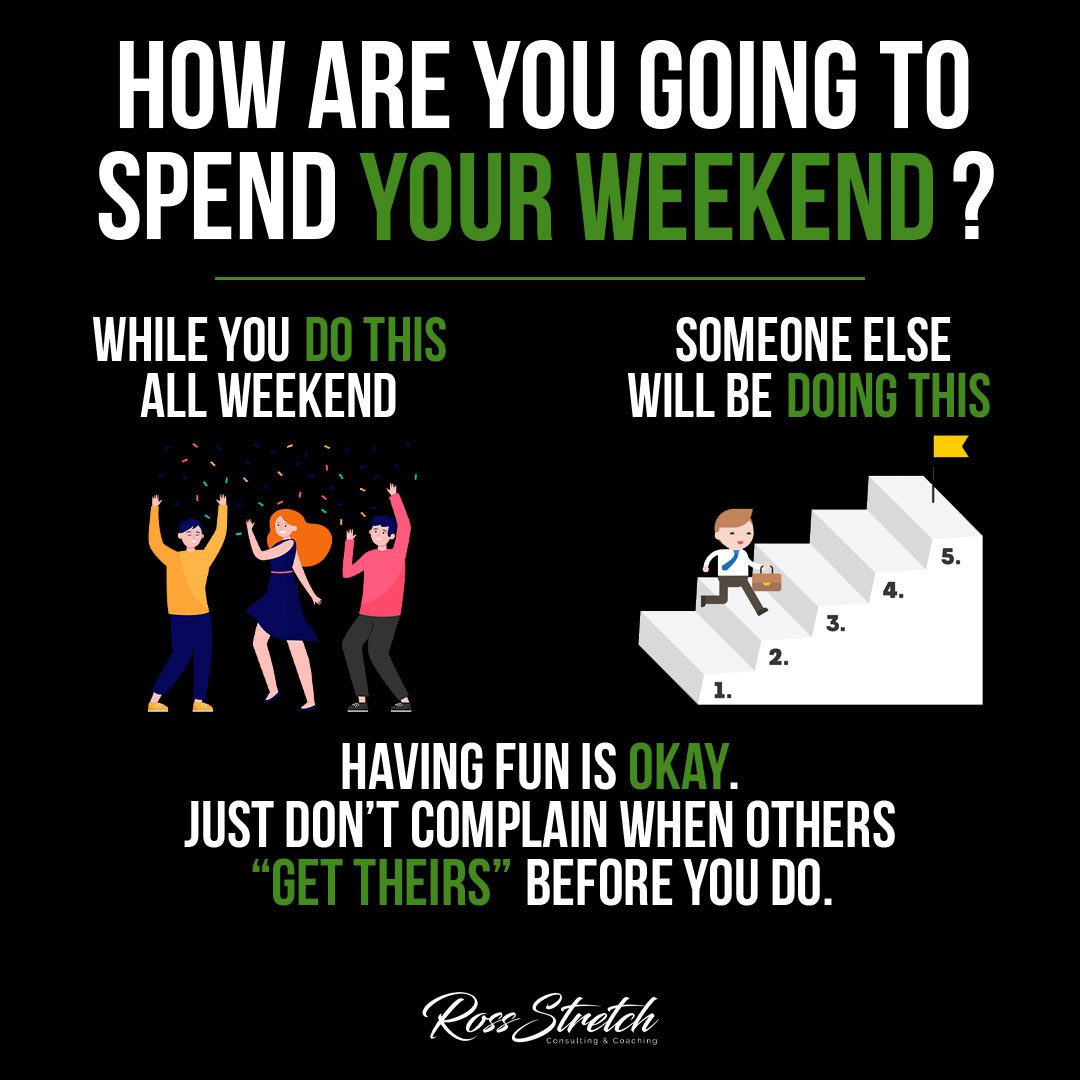
How you spend your weekends is one of the clearest indicators of where you will be in five years. That is not a judgment — it is an observation about compounding. The 48 hours between Friday night and Monday morning represent a significant portion of your discretionary time, and how you allocate that time accumulates over months and years into either capability, opportunity, or regret.
The debate between working weekends and resting them is often presented as a binary choice: hustle culture versus work-life balance. The truth is more nuanced. The most effective approach treats weekends not as time to escape your goals but as a strategic resource to be spent intentionally — sometimes on rest, sometimes on growth, and ideally on both in the right proportion for your current season of life.
The Real Cost of Unstructured Weekends
Most professionals spend their weekends reactively — sleeping in past their natural wake time, scrolling through social media without intention, watching television until midnight, and arriving at Monday feeling vaguely as though the weekend was wasted. This is not laziness; it is the absence of a plan. Without a deliberate framework for your weekend hours, the path of least resistance wins by default.
The cost of this pattern is not just lost productivity. It is the slow accumulation of undeveloped skills, unexplored opportunities, and ambitions that never advance beyond the planning stage. Each unintentional weekend is a small withdrawal from your future self’s account. Like any compounding dynamic, the effect seems invisible in the short term and becomes significant only when you look back across years.
This does not mean every weekend should be devoted to work. It means every weekend deserves intentionality — enough thought in advance to ensure that whether you choose rest, growth, or connection, you have chosen it deliberately rather than falling into it by default.
The Case for Strategic Rest
Rest is not the opposite of productivity — it is a prerequisite for it. Research consistently demonstrates that sleep quality and genuine cognitive rest directly affect decision-making ability, creative output, and emotional regulation. An entrepreneur or professional who is chronically under-rested makes worse decisions, generates fewer novel solutions, and burns out faster than one who treats recovery as a core part of the performance equation.
Strategic rest is qualitatively different from passive leisure. It means choosing activities that genuinely restore your energy rather than simply consuming it in a different medium. Scrolling social media for three hours is not rest — it is stimulus in a different form. Walking in nature, cooking a meal with real attention, reading a physical book, or spending focused and present time with friends and family are the activities that actually recharge the nervous system for the week ahead.
High performers who sustain output over the long term are almost universally deliberate about protecting their recovery time. They schedule rest with the same seriousness they schedule meetings — not because they are lazy, but because they understand that output quality is directly tied to input quality, and genuine rest is the highest-value input available on a weekend.
The Case for Weekend Work
For many ambitious professionals — especially those building side businesses, pursuing significant career transitions, or developing skills for a long-term goal — weekend hours represent the primary available window for deep, uninterrupted work. The weekday schedule is consumed by existing obligations, meetings, and the reactive demands of a current role. The weekend is where meaningful forward progress actually happens.
This is not glamorous. Working alone on a Saturday morning while everyone else is at brunch is a particular kind of sacrifice. But it is also the reality behind most meaningful achievements. The startup that launched from a garage was built on weekends. The course that generated its creator’s first passive income was recorded on Sunday afternoons. The skills that led to a major career breakthrough were developed in hours carved out specifically for that purpose.
If you have a significant goal that genuinely matters to you, it is worth honestly asking whether your current weekend allocation reflects that priority. Not every weekend needs to be a working weekend — but if you are not making visible progress toward your most important goal, the weekend hours are the most likely place to find the time you think you do not have.
Building a Weekend Strategy That Works
The most effective weekend framework is one you design deliberately, tailored to your current season and goals rather than borrowed wholesale from someone else’s productivity system. Start by identifying where you are. If you are in a heavy building phase — launching a business, completing a credential, making a significant career change — your weekends may need to skew toward focused work and skill development. If you are in a maintenance phase with established systems running, more balance between rest and growth makes sense.
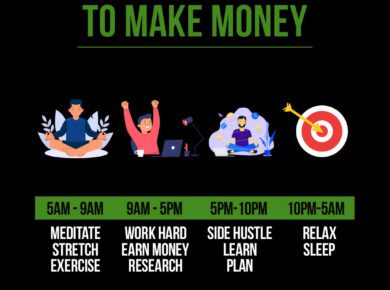
A practical approach for most ambitious professionals is a simple split: roughly 70 percent of weekend time devoted to genuine rest, relationships, and personal renewal, with 30 percent allocated to intentional progress on a specific goal. For a 48-hour weekend, this translates to approximately 14 hours of rest and connection and six hours of focused work — enough to make meaningful weekly progress without sacrificing the recovery that makes the following week’s performance possible.
The critical element is scheduling both in advance. Block your work sessions on Friday evening so they are pre-committed rather than subject to Saturday morning motivation. Block your rest activities too — because without explicit protection, both tend to be consumed by low-value time that satisfies neither goal nor recovery.
Self-Investment as a Weekend Priority
Beyond rest and project work, weekends offer an underutilized window for deliberate self-investment. Reading one business or personal development book per month — entirely achievable by reading for 45 minutes on Saturday and Sunday mornings — translates to 12 books per year. Over five years, that is 60 books more than the average professional reads. The compound knowledge effect of that habit, accumulated across a career, is one of the most significant differentiators between professionals who plateau and those who keep advancing.
Similarly, online courses, networking events, workshops, and mentorship conversations all fit naturally into weekend schedules. These investments rarely produce immediate, visible returns, which is precisely why they are easy to defer indefinitely. But the skills and relationships built through consistent self-investment become the differentiating factors that create new opportunities over time — and they are built almost exclusively by the people willing to use their discretionary hours intentionally.
Conclusion
There is no universally correct answer to how a weekend should be spent. What matters is that your choices are intentional, aligned with your actual goals, and honest about the trade-offs involved. Rest when you need to rest — genuinely, strategically, without guilt. Work when it serves your most important priorities — with a clear objective and a defined endpoint. The professionals who build remarkable careers are not necessarily those who work the most weekends. They are the ones who use their time, on weekdays and weekends alike, with the clearest and most deliberate sense of purpose.
Resources

 Ross Stretch