Becoming an entrepreneur is one of the most rewarding — and demanding — decisions you can make. The path from idea to profitable, scalable business requires more than passion: it demands strategic thinking, disciplined execution, and a willingness to learn from failure as much as from success. This guide breaks down the essential steps every aspiring entrepreneur needs to take, from the first spark of an idea through building a business that lasts.
Finding Your Passion and Identifying Opportunities
The best businesses are built at the intersection of what you love, what you are skilled at, and what the market actually needs. Start with honest self-reflection: What problems frustrate you that you would love to solve? What skills do you have that others would pay for? The entrepreneurs who sustain long-term success are not just chasing money — they are solving real problems they care deeply about.
Equally important is recognizing genuine market gaps. Consumer behavior shifts constantly, driven by technology, demographics, and cultural change. Successful entrepreneurs pay attention to emerging trends before they become obvious. Reading industry reports, following niche communities online, and having real conversations with potential customers are all ways to surface opportunities others have overlooked.
Not every passion translates into a viable business — and that is okay. The goal is to find the overlap between your strengths and a market that will pay for them. That sweet spot is where sustainable entrepreneurship begins, and where your work will feel meaningful even when the going gets hard.
Conducting Market Research
Before investing a dollar or an hour into building your product, you need to understand your market. Who exactly is your target customer? What do they currently use to solve the problem your business addresses? How much are they willing to pay, and what would make them switch to something better?
Effective market research combines both primary research — surveys, interviews, and conversations with real potential customers — and secondary research such as industry reports, competitor analysis, and public data. The goal is to build a detailed picture of your audience so you can identify your unique positioning before you build anything.
Competitor analysis is particularly valuable. Study what your competitors do well and where they fall short. Customer reviews on platforms like G2, Trustpilot, or Amazon are goldmines of insight — they reveal exactly what frustrates real users. Those pain points become your opportunity to do meaningfully better.
Developing a Solid Business Plan
A business plan is more than a document for attracting investors — it is a strategic blueprint that forces you to think rigorously about every dimension of your business. A well-constructed plan covers your value proposition, target market, revenue model, cost structure, marketing strategy, and financial projections for at least the first two to three years.
The financial section is where many first-time entrepreneurs struggle. You need to understand your startup costs, break-even point, cash flow projections, and how long your runway is before you need to generate sustainable revenue. Be conservative in your estimates — expenses almost always run higher than expected, and revenue takes longer to materialize than optimistic forecasts suggest.
Treat your business plan as a living document, not something you write once and file away. Review and update it quarterly as you learn more about your customers, your costs, and what is actually working in your market. The plan that helps you grow will look significantly different from the one you wrote on day one — and that is a sign you are learning, not failing.
Building a Strong Network
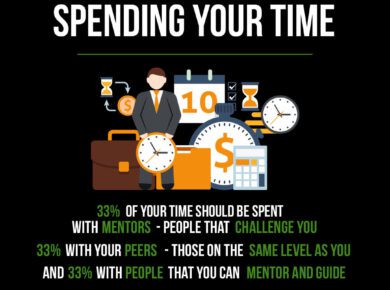
No successful entrepreneur builds in isolation. The people you surround yourself with — mentors, advisors, peers, and collaborators — dramatically shape your trajectory. A strong mentor who has already navigated the challenges you are facing can save you years of costly mistakes and open doors that would otherwise take you a decade to find on your own.
Networking is not about collecting business cards — it is about building genuine relationships with people who can provide honest feedback, open opportunities, and support you through the inevitable difficult stretches. Industry events, entrepreneurship communities, and platforms like LinkedIn are all effective starting points. Programs like SCORE, operated through the US Small Business Administration, connect aspiring entrepreneurs with experienced business leaders at no cost.
Surround yourself with people who are further along than you are. Ambition is contagious. Being in rooms with people who are building impressive things raises your standards and expands your sense of what is genuinely possible for you.
Securing Adequate Funding
Funding is one of the most common stumbling blocks for new entrepreneurs. Your first task is to understand exactly how much capital you need to reach your first meaningful milestone — not to build your entire vision at once, but to prove your concept and generate initial revenue. That number is almost always smaller than you think if you focus relentlessly on what matters first.
Bootstrap as long as you reasonably can. Using personal savings or early customer revenue to fund growth keeps you in control and forces the kind of financial discipline that serves you well for the life of the business. If you do need outside capital, explore all your options: small business loans, angel investors, venture capital for high-growth startups, or crowdfunding platforms like Kickstarter and Indiegogo for consumer-facing products.
When approaching investors, the quality of your pitch depends less on polished slides and more on the depth of your understanding of the problem, the customer, and your unit economics. Investors are ultimately betting on founders who know their market deeply and have a credible, specific plan to grow it.
Establishing Your Brand and Marketing Strategy
Your brand is how the world perceives your business — and in a crowded market, perception is often the deciding factor between a customer choosing you or your competitor. A strong brand identity, including your visual style, messaging, and core values, builds the kind of trust that converts strangers into customers and customers into advocates. Take time to define what makes your business genuinely different and why that difference matters to the people you are trying to serve.
Marketing is how you make that brand visible and drive revenue. A combination of content marketing, search engine optimization, social media, and email marketing forms the foundation for most modern businesses. The key is to choose two or three channels where your target audience actually spends time and go deep — spreading yourself across every platform at once is a reliable way to make no meaningful impact anywhere.
Track your marketing metrics with discipline. Cost per lead, customer acquisition cost, and lifetime customer value are the numbers that tell you whether your marketing investments are actually working. The most effective entrepreneurs treat marketing as a system to be tested and optimized, not just a creative exercise done once and forgotten.
Prioritizing Customer Experience and Adapting to Change
Every successful business is built on a foundation of customers who love what it offers and come back for more. Delivering an exceptional customer experience is not a nice-to-have — it is a competitive advantage. In the age of online reviews and social media, a single bad experience can go viral while consistently exceptional service builds word-of-mouth that no advertising budget can replicate.
Build feedback loops into your business from day one. Customer surveys, Net Promoter Score tracking, and direct conversations with your best and worst customers reveal what is working and what urgently needs improvement. The businesses that last are the ones that take this input seriously and act on it quickly rather than defending the status quo.
The business landscape evolves constantly. Technologies shift, consumer preferences change, and new competitors emerge in ways that are impossible to fully predict. The most enduring entrepreneurs stay curious, watch their industry closely, and remain willing to pivot their strategy when the evidence demands it. Adaptability is not a weakness — it is one of the most essential entrepreneurial skills there is.
Conclusion
Becoming a successful entrepreneur is a journey, not a single decision. It requires finding the intersection of passion and market opportunity, doing thorough research before you build, planning with financial rigor, and executing with relentless focus. No business plan survives first contact with the market unchanged — but the entrepreneurs who succeed are those who learn quickly, adapt without ego, and keep moving forward regardless of what the market throws at them.
Every step you take — from your first customer conversation to your first profitable month — builds the foundation for everything that follows. The path is not easy, but for those who commit fully to it, entrepreneurship offers a level of freedom, fulfillment, and impact that few other pursuits can match. Start with the step directly in front of you, and trust the process to carry you the rest of the way.
Resources

 Ross Stretch