Most people know what they should be doing to improve their financial situation and career trajectory. The harder truth is that success often hinges less on adding new habits and more on eliminating destructive ones. Overspending, sleeping in, and avoiding investments are three of the most common anchors holding ambitious professionals back — not because they are dramatic failures, but because they quietly accumulate into a life that consistently falls short of its potential.
Breaking these habits does not require a complete personality overhaul. It requires honest self-assessment, a practical system, and enough consistency to let the compound effects of better decisions accumulate over time. Here is what to stop doing — and how to stop doing it.
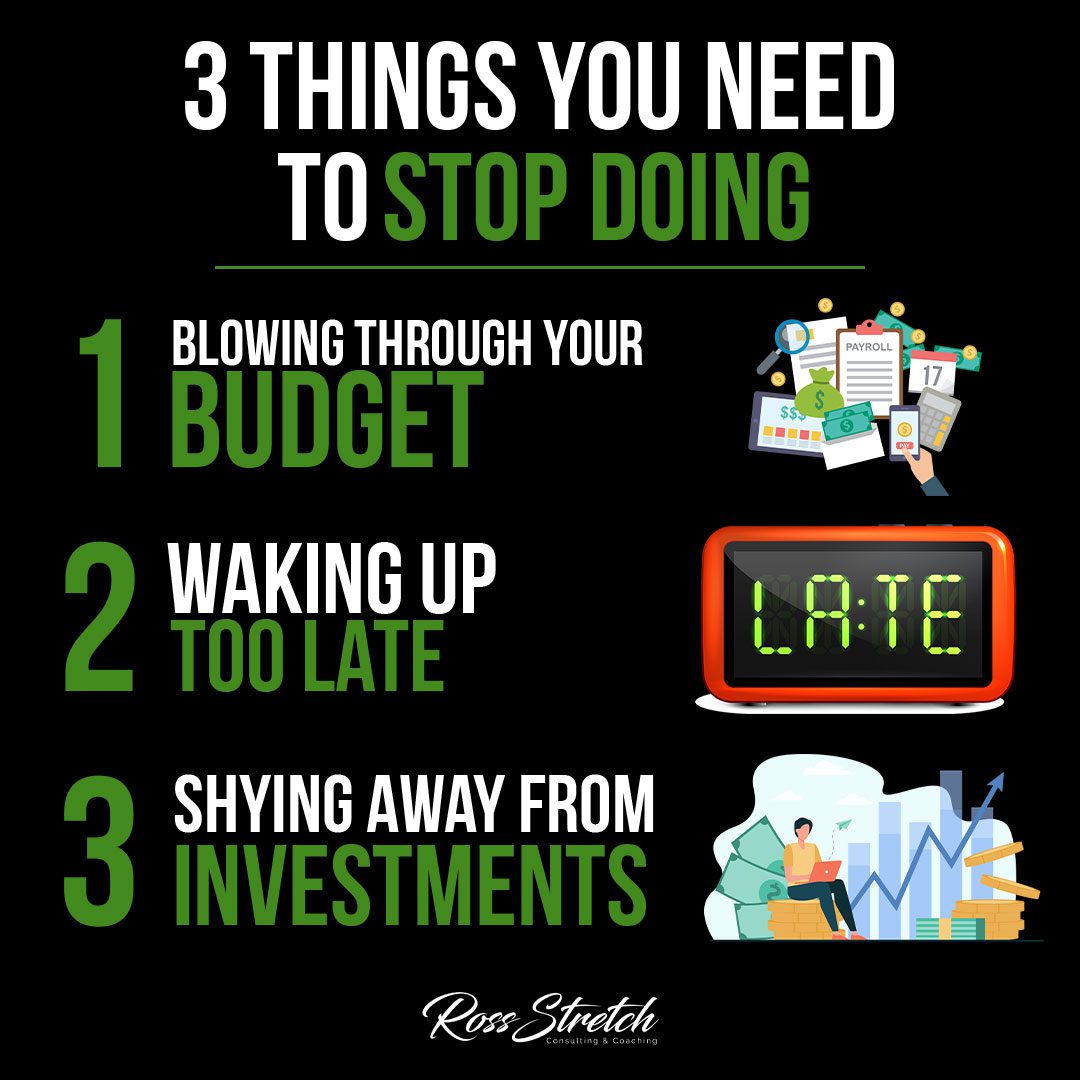
1. Blowing Through Your Budget
Spending Without a System Is the Fastest Way to Stay Stuck
Overspending is rarely about one reckless purchase. It is about the accumulation of small, unconsidered decisions made without a clear financial framework. Many professionals earn solid incomes and still feel financially constrained — not because their earnings are insufficient, but because their spending is unmanaged. Lifestyle inflation silently erodes raises and bonuses. Subscription creep quietly drains accounts every month. Without a budgeting system, money leaves as fast as it arrives, leaving you with a good income and nothing meaningful to show for it over time.
- Actionable Tip: Use a zero-based budget where every dollar of monthly income is assigned a specific purpose before you spend it. Apps like YNAB (You Need a Budget) or a simple spreadsheet make this process trackable and accountable.
- Why It Works: Zero-based budgeting forces intentional decision-making before money is spent rather than guilty analysis after. It converts vague intentions into a specific plan with real categories and limits that you review each month.
Pro Tip:
Automate your savings before your spending. Set up an automatic transfer to savings or investment accounts the day your paycheck arrives. When money is moved first, it cannot be spent. Most people save what is left over after spending — financially successful people spend what is left over after saving. That single reversal of sequence changes outcomes dramatically over a decade.
2. Waking Up Too Late
Your Morning Routine Is a Direct Investment in Your Productivity
The first hour of your day sets the tone for everything that follows. Waking up late compresses the morning into a reactive scramble, eliminating the buffer of uninterrupted time that high performers use to think, plan, and invest in themselves before the demands of others arrive. When you begin the day already behind, you spend the rest of it catching up — and that pattern compounds into weeks and months of chronic reactive living rather than intentional progress toward meaningful goals.
- Actionable Tip: Shift your alarm fifteen minutes earlier each week until you reach your target wake time. Gradual adjustment prevents the shock of a sudden change and is far more sustainable than a dramatic overnight reset of your sleep schedule.
- Why It Works: Incremental shifts to sleep timing align better with your circadian rhythm and reduce the resistance that causes most people to abandon early morning commitments within two weeks of starting.
Pro Tip:
Design your morning the night before. Set out your workout clothes, prepare your coffee setup, and decide what the first task of the morning will be. Decision fatigue is real — every choice you eliminate before 7 a.m. is energy redirected toward the work that matters. The most effective morning routines are almost entirely pre-decided rather than improvised in a groggy state when willpower is at its lowest.
3. Shying Away from Investments
Avoiding Investment Risk Is Its Own Risk
One of the most costly financial mistakes educated professionals make is treating investment avoidance as a safe strategy. Keeping money in a savings account earning negligible interest while inflation runs at 3 to 4 percent annually is a guaranteed loss of purchasing power over time. The fear of losing money in the market is understandable — but the certainty of losing value to inflation in a low-yield account is a risk that receives far too little attention. Inaction has a real, measurable cost that compounds just as surely as investment returns do.
- Actionable Tip: Start with low-cost index funds through a platform like Vanguard, Fidelity, or Schwab. A simple portfolio covering the total US stock market, international markets, and bonds provides broad diversification at minimal cost and requires no active management or stock-picking expertise.
- Why It Works: Index funds capture the long-term returns of the overall market without requiring you to predict which individual companies will outperform. The S&P 500 has historically delivered approximately 10 percent annually before inflation over long periods — a rate that roughly doubles an investment every seven years.
Pro Tip:
Treat investing like a recurring bill that cannot be skipped. Set a fixed monthly contribution to your investment accounts and automate it. Dollar-cost averaging this way removes the emotional temptation to time the market, which research consistently shows even professional fund managers cannot do reliably over long periods. Consistency beats timing every time — start with whatever amount you can commit to and increase it as your income grows.
Conclusion
The path to financial progress and professional success is rarely about discovering some hidden strategy. It is about stopping the behaviors that quietly undermine the effort you are already putting in. Spending without a plan erodes income regardless of how much you earn. Sleeping through the best hours of the day compresses your available time for work that matters most. Avoiding investment guarantees the slow erosion of inflation rather than the growth of compounding returns. Break these three habits and the gap between where you are and where you want to be becomes significantly smaller — not because everything suddenly gets easier, but because you stop working against yourself.
Resources

 Ross Stretch