The commercial drone industry is one of the fastest-growing sectors in the entrepreneurial landscape. What was once a hobbyist pastime has matured into a legitimate, high-demand service industry spanning real estate photography, agricultural surveying, construction monitoring, film production, infrastructure inspection, and emergency response. For the right entrepreneur — someone with technical aptitude and a willingness to navigate licensing requirements — starting a drone pilot business offers genuine income potential with relatively low startup costs compared to most other ventures.
The Market Opportunity for Commercial Drone Services
The demand for aerial data and imagery is expanding across virtually every industry. Real estate agents use drone footage to differentiate property listings. Construction firms rely on aerial surveys to monitor site progress and identify issues before they become expensive problems. Insurance companies deploy drones for property inspections after disasters. Wedding and event photographers have added drone videography to their packages as a premium offering that commands significantly higher rates than ground-level work alone.
What makes this market attractive for solo operators is that many industries remain underserved at the local level. Large drone service companies focus on enterprise contracts, leaving significant opportunity for skilled independent pilots to serve local real estate brokers, contractors, agricultural operations, and event planners in their regions. The FAA projects continued growth in commercial drone registrations over the coming decade, driven by expanding use cases in precision agriculture, infrastructure inspection, and public safety. Getting established now positions you ahead of an inevitable influx of competition.
Specializing in a specific vertical — such as real estate photography, construction monitoring, or agricultural mapping — allows you to develop deeper expertise and command premium rates rather than competing on price as a generalist.
Equipment: What You Need to Get Started
Your drone is your most important asset, and the right choice shapes the services you can offer. For most commercial operators, DJI remains the industry standard. The DJI Mavic 3 Pro and DJI Air 3 are strong choices for aerial photography and videography, offering excellent image quality, reliable flight stability, and flight times in the 40-to-45-minute range. For mapping and surveying work, the DJI Phantom 4 RTK or Matrice series offer greater precision and payload flexibility for demanding commercial applications.
Beyond the drone itself, budget for essential accessories: extra batteries (flight time is always a limiting factor on commercial jobs), a quality carrying case, ND filters for controlled lighting in video work, and a tablet or dedicated monitor for your controller. Invest in drone liability insurance early — many commercial clients require proof of coverage before engagement, and it protects you when flying over private property or near people.
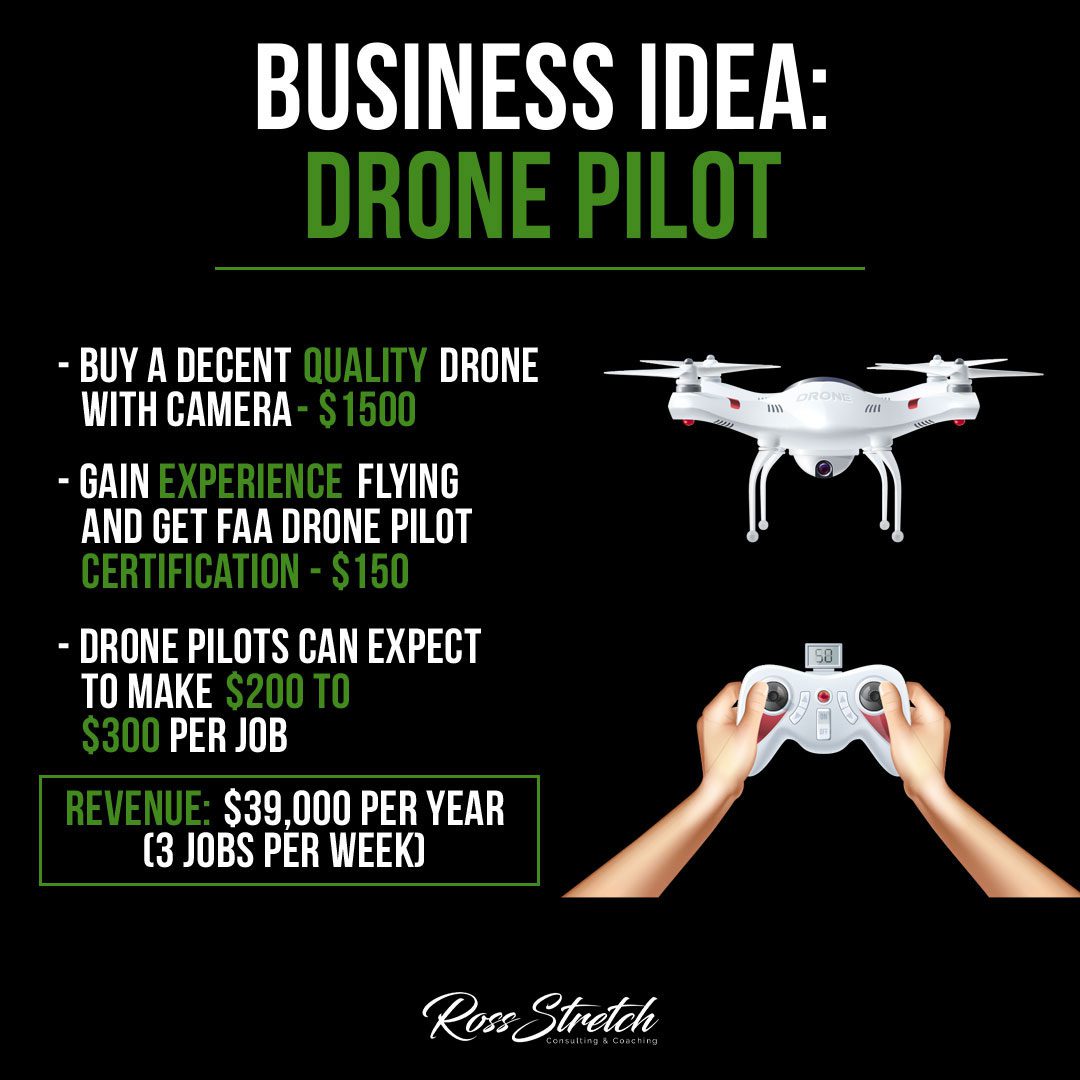
- Entry-level professional setup: $3,000–$5,000
- Premium professional setup with full accessories: $5,000–$8,000
- Annual liability insurance: approximately $500–$1,200 depending on coverage limits
- Post-processing and flight planning software: $50–$150 per month
This is a meaningful but manageable investment relative to most brick-and-mortar businesses, with a realistic payback period of three to six months for operators who land consistent local clients.
FAA Part 107 Certification and Legal Compliance
Any drone flown for commercial purposes in the United States requires the operator to hold an FAA Part 107 Remote Pilot Certificate. Flying commercially without it is a federal violation that can result in significant civil penalties — not a risk worth taking when the certification is genuinely achievable with focused preparation.
The certification involves passing a 60-question knowledge test at an FAA-approved testing center. The exam covers airspace classifications, weather interpretation, aeronautical decision-making, and FAA regulations specific to drone operations. Most candidates who study consistently for 20 to 40 hours pass on their first attempt. Study platforms like Remote Pilot 101 and Pilot Institute provide structured preparation with practice tests that closely mirror the actual exam.
Beyond initial certification, stay current on evolving regulations. Remote ID requirements now mandate that most drones broadcast identification and location data during flight. Certain airspace operations — particularly near airports or in controlled airspace — require prior authorization through the FAA’s LAANC system. Understanding and following these requirements is not just about compliance; it’s a professional differentiator that signals credibility to commercial clients.
Building a Competitive Pricing Strategy
New drone pilots commonly underprice their services — a mistake that devalues the work and leaves significant revenue uncaptured. Research market rates in your specific region before setting prices, as rates vary considerably between urban and rural markets and across different industries.
For real estate photography, independent pilots typically charge $150 to $400 per session depending on scope and deliverables. Videography for events and marketing runs $500 to $2,000 or more. Agricultural surveying and construction monitoring are priced by acreage or project complexity, often ranging from $500 to several thousand dollars per engagement. Structure your pricing to reflect true costs: drone depreciation, insurance, software subscriptions, travel time, and editing or post-processing time.
- Create tiered packages so clients can self-select based on their budget and scope
- Price specialty services such as thermal imaging or LiDAR mapping at a premium
- Offer retainer agreements to real estate agencies and construction firms for predictable recurring income
Marketing Your Drone Business Effectively
Your portfolio is your most powerful marketing asset. Before approaching clients, build a reel demonstrating the quality of your aerial footage and imagery across different environments and lighting conditions. Post this content consistently on Instagram, YouTube, and LinkedIn — platforms where real estate agents, marketing directors, and construction managers actively search for service providers.
Direct outreach consistently outperforms passive marketing for local service businesses. Introduce yourself to real estate agencies, commercial contractors, and event planners with a targeted pitch and a link to your portfolio. Offering a discounted or complimentary shoot to one or two anchor clients in each vertical gives you material that markets your services to their networks. A well-maintained Google Business Profile with client reviews and sample imagery helps you appear when local businesses search for drone services in your area.
Networking and Growing Your Client Base
Long-term success in drone piloting is built on relationships. The Association for Unmanned Vehicle Systems International (AUVSI) provides professional development resources, networking events, and access to enterprise-level clients. Local chapters of real estate and construction industry groups are equally valuable — these sectors have ongoing and repeat demand for aerial services throughout the year.
Collaborating with photographers, videographers, and marketing agencies — complementing rather than competing with them — expands your reach without additional marketing spend. Client retention should be a deliberate strategy: follow up after every completed project, ask for referrals, and build annual retainer packages for high-volume clients who need regular aerial work.
Conclusion
A drone pilot business rewards those who treat it as a professional service rather than a side gig. The technical barrier to entry — equipment cost and FAA certification — filters out casual competitors, creating consistent opportunity for operators who invest in their craft and run their business with intention. With a clear niche, realistic pricing, and deliberate marketing, drone piloting offers a genuine path to full-time income doing work that commands respect in any local market.
Resources


 Ross Stretch