The coworking industry has matured from a niche concept into a mainstream commercial real estate category. What began as shared desks for freelancers has evolved into a diversified market that includes private offices, enterprise flex space, creator studios, and hybrid work hubs. As companies increasingly embrace distributed and hybrid work models, the demand for professional, community-driven work environments continues to expand. For entrepreneurs with the right location, operational discipline, and genuine enthusiasm for building community, launching a coworking space is one of the more durable business opportunities available today.
The entry barriers are meaningful but not insurmountable. This is not a business you can bootstrap from a laptop — it requires capital for lease deposits, buildout, equipment, and a runway to reach membership capacity. But for those who execute well, the combination of recurring membership revenue, community flywheel effects, and relatively predictable unit economics makes coworking a compelling long-term venture.
Location: The Most Important Decision You Will Make
In commercial real estate, location is not just important — it is foundational. A coworking space in the wrong location will fail regardless of how well-designed or well-managed it is. Your ideal location sits where your target member base already spends time: accessible via transit, walkable from nearby restaurants and amenities, and in a neighborhood that attracts the kind of professionals you want to serve. A space frequented by freelancers, remote workers, and early-stage founders needs to be in a place those people already want to be.
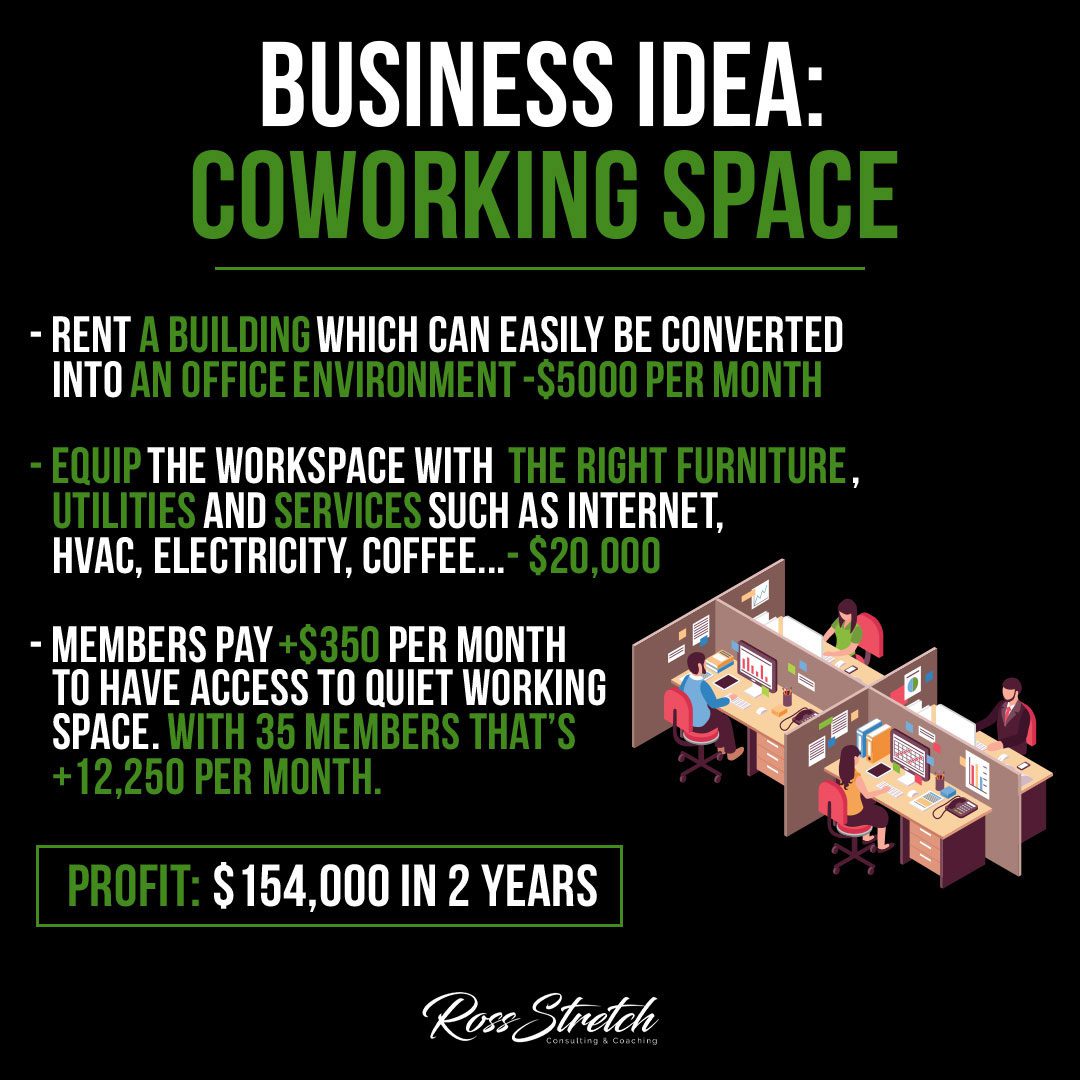
Beyond neighborhood, the physical space itself matters enormously. You need sufficient square footage to support a realistic membership capacity — most coworking operators plan for 50 to 100 square feet per workstation, meaning a 2,500-square-foot space might support 25 to 40 open-plan members plus a small number of private offices. Ceiling height, natural light, HVAC capacity, and electrical infrastructure all affect how the space feels and what it costs to operate. A raw commercial shell may require significant investment to become functional; a recently vacated office suite may need far less.
Lease terms matter as much as monthly rent. Negotiate for tenant improvement allowances — landlord-funded buildout credits that reduce your upfront capital requirement. Seek a lease term long enough to build membership — typically three to five years — without locking yourself into an inflexible commitment if market conditions shift. The strength of your lease negotiation can mean the difference between a profitable launch and a capital shortfall before you reach break-even.
Building Out the Space
A coworking space needs to feel like a place people want to spend their entire workday, not just a room with desks. That means investing in quality furniture, reliable high-speed internet with redundant connections, proper lighting design, comfortable seating zones that allow both deep focus and casual collaboration, and baseline amenities like coffee, printing access, and well-maintained restrooms. These are not luxuries — they are the minimum expectations of any professional paying a monthly membership fee.
Buildout costs vary depending on the condition of the space, your market, and how you position your offering. A functional workspace in a secondary market with cosmetic updates can come together for $20,000 to $50,000. A design-forward space competing with premium operators in a major urban market may require $100,000 or significantly more for a buildout that supports the membership pricing you need to be profitable. Be realistic about what your target members will expect and ensure your pricing reflects the quality of the environment you are creating.
Technology infrastructure is consistently underbudgeted by first-time coworking operators. Professional-grade Wi-Fi with capacity for 100 or more simultaneous devices, access control systems for keyless entry, AV equipment in meeting rooms, and a management platform like Cobot or OfficeRnD for member booking and billing all add meaningful cost — and all are necessary for a professional operation. Budget $5,000 to $15,000 for technology infrastructure as a baseline, depending on your space size and feature set.
Membership Structure and Pricing
Successful coworking spaces offer tiered membership structures that serve different user types and usage patterns. A common and effective framework includes:
- Day passes for occasional users who want flexibility without a monthly commitment
- Part-time memberships (10 to 15 days per month) for professionals splitting time between home and office
- Full-time hot desk memberships for remote workers who need daily access to a professional environment
- Dedicated desk memberships where members have a permanently assigned workstation
- Private offices for small teams or individuals who need consistent privacy and a business address
Pricing should reflect your local market and the quality of your offering. In mid-size North American cities, full-time hot desk memberships typically run $200 to $450 per month. Private offices for one or two people generally command $700 to $1,800 per month depending on size and amenities. Research your local competitors carefully — including national chains like WeWork and Regus and established local independents — and position deliberately relative to what already exists in your market.
Private offices, though they require the most buildout investment, typically offer the highest per-square-foot revenue and the most stable recurring income. Members in private offices churn less frequently than hot desk members and tend to stay for months or years rather than weeks. Including several private offices in your floor plan — even in a smaller space — meaningfully improves revenue predictability and reduces the dependence on constant new member acquisition to stay profitable.
Building a Community, Not Just a Space
The most successful coworking spaces are communities that happen to have desks, not just desk rentals with occasional social events. Members join for the space but stay for the people and the connections it facilitates. Your job as an operator is to cultivate those connections actively — through curated introductions between members with complementary expertise, events that attract your target demographic, and an atmosphere that rewards collaboration.
Host programming that your members would genuinely attend: skill-sharing workshops, industry panels, founder meetups, wellness sessions. Partner with local organizations to co-host events that bring potential new members through the door. Build a private member communication channel — a Slack workspace or similar — where members can connect, make referrals, and collaborate between visits. These investments in community have a direct and measurable impact on retention, and retention is the single most important driver of coworking profitability.
Community management is not a nice-to-have — it is a competitive advantage. A skilled community manager who knows every member by name, makes warm introductions, resolves friction before it becomes complaints, and owns the member experience is worth their cost many times over in reduced churn and organic referrals. If you cannot hire one at launch, plan to perform this role yourself with genuine intentionality, not as an afterthought.
Financial Reality and Path to Profitability
Coworking spaces typically require 12 to 24 months to reach sustainable profitability. The critical variable is how quickly you fill membership capacity. A space generating $18,000 to $25,000 in monthly membership revenue at capacity — from a mix of hot desks, dedicated desks, and private offices — can support reasonable rent, utilities, staffing, and marketing costs while generating a meaningful operating profit. Getting to that revenue level requires consistent marketing, excellent member retention, and patience during the ramp-up phase.
Fixed operating costs — lease payments, utilities, internet, insurance, and staffing — represent the floor your revenue must exceed each month. Understanding your break-even membership count clearly before launch, and planning your capitalization to cover the gap between opening and break-even, is essential. Many coworking businesses fail not because the business model is flawed but because operators underestimated their runway requirement and ran out of capital during the membership ramp-up period.
Conclusion
Launching a coworking space is a capital-intensive, operationally demanding business — but for operators who combine real estate instincts, hospitality sensibilities, and genuine enthusiasm for community building, it offers recurring revenue, meaningful impact, and a scalable model that can grow to multiple locations over time. The professionals who succeed in this space create places their members are genuinely glad to come back to every day. Build that, and the business follows.
Resources


 Ross Stretch