The decade leading up to your 30s is one of the most consequential periods of your life. The decisions you make, the habits you build, and the skills you develop during this window compound over time in ways that are difficult to replicate later. This is not about following a rigid checklist — it’s about setting yourself up so that your 30s, 40s, and beyond are built on a foundation of intention and momentum. Here are six pivotal goals to pursue before 30 that can reshape your personal and professional trajectory.
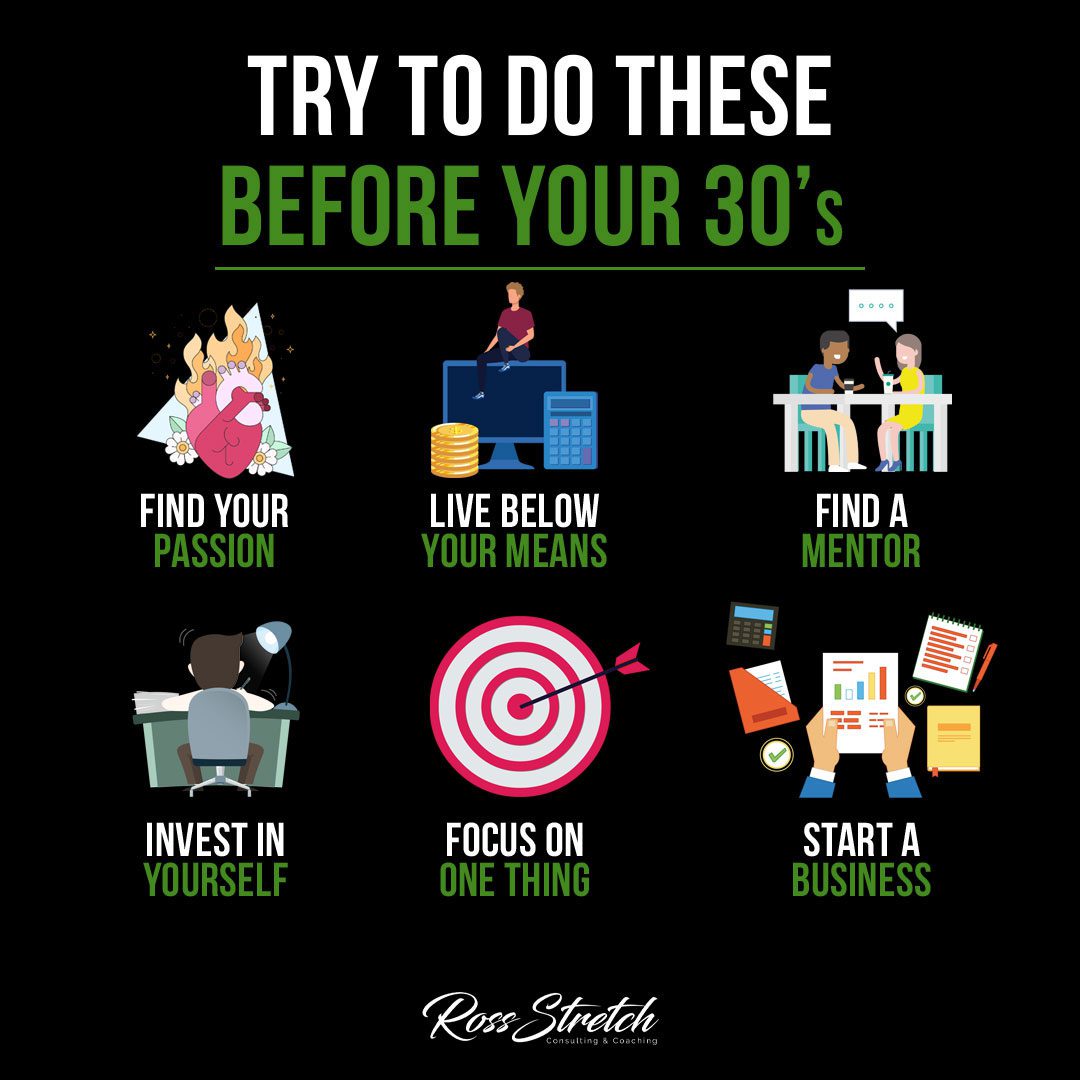
1. Find Your Passion: The Quest for Meaningful Work
Align What You Do With What Drives You
Discovering what you’re genuinely passionate about is one of the most valuable things you can do before 30. It’s not about landing on a dream job overnight — it’s about actively experimenting with different paths, paying attention to what energizes you, and having the courage to pursue that thing even when it feels uncertain. People who align their work with their intrinsic motivations consistently report higher performance, greater resilience, and longer career satisfaction. The clarity you develop in your 20s about what drives you will inform every major career decision that follows.
- Actionable Tip: Spend 90 days trying something new — a side project, a volunteer role, or a course in a field you’ve been curious about. Notice what activities make you lose track of time.
- Why It Works: Passion isn’t something you find passively — it emerges from action. The more you engage with different areas, the clearer your direction becomes.
Pro Tip: Don’t Confuse Passion With Ease
The work you’re most passionate about will still be hard. The difference is that you’ll push through the difficulty because the outcome matters to you. Cal Newport’s research in “So Good They Can’t Ignore You” shows that passion often follows mastery — not the other way around. Do the work first, and the passion deepens with competence.
2. Live Below Your Means: The Foundation of Financial Freedom
Spend Less Than You Earn, Every Single Month
Financial independence doesn’t begin with a windfall — it begins with the gap between what you earn and what you spend. Living below your means in your 20s is not about deprivation. It’s about creating breathing room: the ability to invest, take calculated risks, weather emergencies, and eventually exit the paycheck-to-paycheck cycle for good. The earlier you establish this discipline, the more powerful its effects become through compounding. A person who saves and invests consistently starting at 22 will dramatically outpace someone who starts at 32, even if the latter earns more.
- Actionable Tip: Apply the 50/30/20 rule — 50% of take-home income to needs, 30% to wants, 20% to savings and investments. Automate the savings portion so it moves before you can spend it.
- Why It Works: Automating savings removes the willpower requirement. You build wealth passively while still living your life, and the habit becomes invisible and effortless over time.
Pro Tip: Avoid Lifestyle Inflation
Every time your income rises, resist the urge to upgrade your lifestyle proportionally. Redirect at least half of any raise directly into savings or investments. The people who build wealth fastest are rarely those who earn the most — they’re the ones who keep their spending relatively flat while their income grows steadily upward.
3. Find a Mentor: Guidance on the Road to Achievement
Borrow Decades of Experience in a Single Conversation
A good mentor can compress years of learning into months. They’ve already navigated the mistakes you haven’t made yet, built the relationships you’re still trying to form, and developed the judgment that only comes from hard experience. In your 20s, access to that perspective is invaluable. The right mentor doesn’t just give advice — they challenge your thinking, open doors, and hold you accountable to a higher standard than you’d hold yourself. Research consistently shows that professionals with mentors advance faster, earn more, and report higher job satisfaction.
- Actionable Tip: Identify two or three people whose career or lifestyle you genuinely admire. Reach out with a specific, respectful ask — not “Can you be my mentor?” but “Could I buy you coffee and ask a few questions about how you navigated X?”
- Why It Works: Specific, targeted requests are far more likely to get a yes. People who’ve succeeded want to help — give them a low-friction way to do it.
Pro Tip: Give Before You Ask
The fastest way to build a mentorship relationship is to add value first. Share an article relevant to their work, introduce them to someone useful, or offer help on a project. When you lead with generosity, mentorship becomes a natural outcome of the relationship rather than a transactional request that puts pressure on both sides.
4. Invest in Yourself: The Best Investment You’ll Ever Make
Treat Learning as a Core Asset
No market crash can wipe out the skills, knowledge, and perspective you accumulate in your 20s. Self-investment takes many forms: formal education, online courses, books, travel, workshops, and even uncomfortable experiences that push you outside your comfort zone. The return on investment for learning is among the highest available — a single skill or insight can redirect your entire career or unlock opportunities that weren’t previously visible. Warren Buffett has credited his habit of reading 500 pages a day as the single most important contributor to his success.
- Actionable Tip: Set a personal development budget — even $50 to $100 per month earmarked exclusively for books, courses, or experiences. Treat it as non-negotiable, the same way you’d pay rent.
- Why It Works: When you budget for learning, it becomes a habit rather than an afterthought. Small, consistent investments in your growth accumulate into significant capabilities and career advantages over time.
Pro Tip: Prioritize High-Leverage Skills
Focus your self-investment on skills that compound across every role and industry: communication, sales, writing, financial literacy, and critical thinking. These aren’t industry-specific — they apply everywhere and make every other skill you develop more effective. A great technologist who can also communicate clearly will always outperform one who can’t, regardless of the technical gap between them.
5. Focus on One Thing: The Power of Concentrated Effort
Depth Beats Breadth at the Start of Your Career
Your 20s come with energy and curiosity, but also a risk: spreading yourself across too many pursuits and excelling at none. The most successful people in any field reach the top by going deeper than everyone else in one specific area — at least initially. Gary Keller’s concept of “The ONE Thing” captures this well: extraordinary results almost always come from narrowing your focus to the activity that matters most and protecting time for it relentlessly. Trying to maintain 10 simultaneous priorities is the same as having no priorities at all.
- Actionable Tip: Identify your single highest-value skill or career goal. Time-block at least two hours every morning — before checking email or social media — to work on it without interruption.
- Why It Works: Deep, uninterrupted work produces results that scattered attention cannot. Protecting your most productive hours for your most important priority creates exponential progress over weeks and months.
Pro Tip: Learn to Say No Strategically
Every yes is a no to something else. When you say yes to a distraction, you’re saying no to your main priority. Practice declining politely but firmly. Remember that saying no to the wrong things is what creates space for the right things to grow. The most focused people aren’t necessarily the most disciplined — they’re the ones who’ve become ruthless about what deserves their attention.
6. Start a Business: The Entrepreneurial Spirit
Your 20s Are the Lowest-Risk Time to Build Something
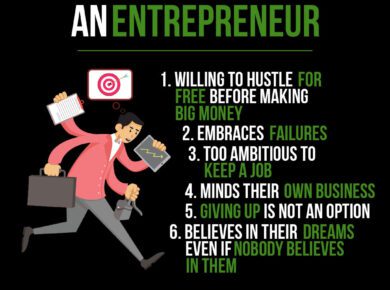
Starting a business in your 20s doesn’t mean you need to go all-in immediately. A side project, a freelance service, or a small e-commerce venture counts. What matters is experiencing the full cycle of building something from scratch — identifying a problem, creating a solution, finding customers, and handling the inevitable failures. This experience builds a kind of mental toughness and practical intelligence that no classroom or corporate job can fully replicate. Your obligations are lower, your recovery time from failure is faster, and the lessons you learn will compound throughout your career.
- Actionable Tip: Start with a service business — freelancing, consulting, or coaching in an area of your existing expertise. It requires minimal capital, generates direct market feedback, and teaches you to sell, which is the most valuable skill in any business.
- Why It Works: Service businesses validate your ideas quickly and with real money. You learn what people will actually pay for — and that knowledge is directly transferable to every future venture you build.
Pro Tip: Embrace the Failures Early
Your first business will almost certainly not be your last or your most successful. That’s exactly as it should be. The failures you experience in your 20s, while your financial obligations are lowest and your recovery capacity is highest, are among the most valuable lessons you’ll ever receive. Treat them as tuition — expensive perhaps in time and ego, but cheap compared to what they’d cost later in life.
Conclusion: The Decade That Sets Everything in Motion
None of these goals require you to have everything figured out. They require you to start. The habits, skills, and mindsets you develop in your 20s don’t just serve you in that decade — they compound across your entire life. Find what drives you, manage your money with intention, learn from people ahead of you, invest relentlessly in yourself, go deep on what matters, and build something. Do these six things, and your 30s will be built on a foundation most people spend decades trying to construct.
Resources
- The ONE Thing by Gary Keller — the definitive guide to focused effort and eliminating distractions
- So Good They Can’t Ignore You by Cal Newport — why passion follows mastery, not the other way around
- Investopedia: The 50/30/20 Budget Rule — a practical framework for managing your money in your 20s
- SCORE.org — free mentorship and resources for aspiring entrepreneurs at any stage

 Ross Stretch