
Laziness is one of the most common obstacles to achieving our goals. It creeps in silently, disguised as rest or ‘I’ll do it tomorrow,’ and slowly erodes the momentum we need to create the life we want. But here’s the truth: laziness is rarely about character — it’s almost always about systems, motivation, and environment.
1. Redesign Your Environment to Make Action Easier
Your surroundings have an enormous influence on your behavior. A cluttered desk, a phone full of notifications, and a to-do list buried in an app all conspire to keep you stuck. When taking action requires effort, laziness wins by default.
Actionable Tip:
The night before, lay out everything you need for tomorrow’s most important task. Remove friction — have your gym clothes ready, your workspace clear, your tools within reach.
Why It Works:
Behavioral science shows that humans default to whatever is easiest. When the path of least resistance leads toward your goal, you’ll naturally follow it.
Pro Tip:
Use temptation bundling — pair an activity you enjoy (a podcast, coffee, music) with a task you avoid. This conditions your brain to associate the task with pleasure.
2. Shrink the Task Until It’s Impossible to Avoid
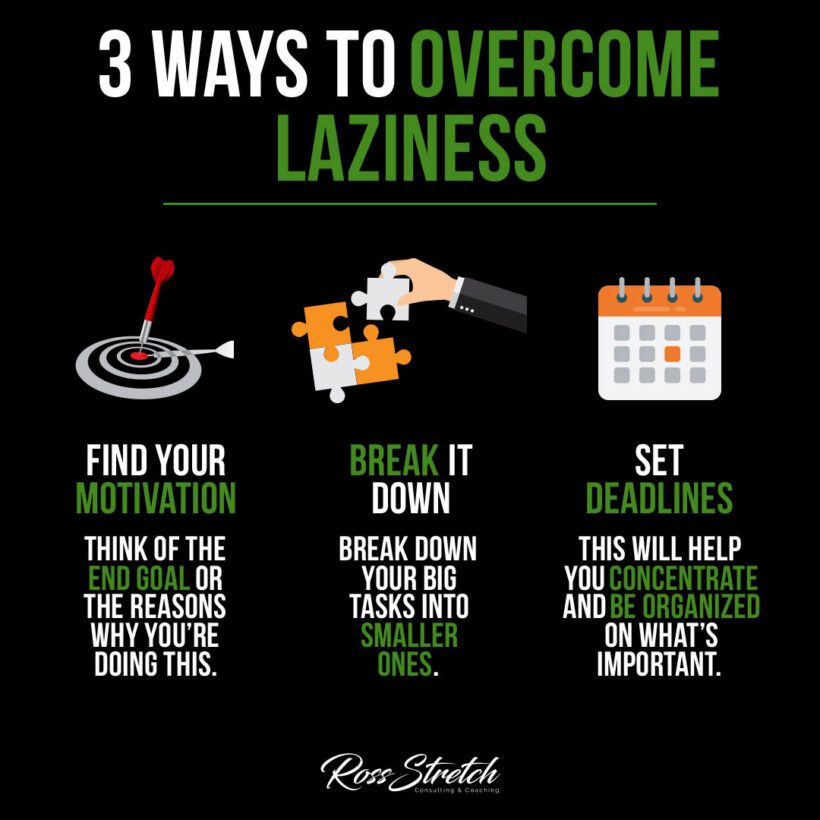
The size of a task is often what makes it feel overwhelming. When a project looks enormous, your brain retreats into avoidance mode. The solution isn’t more willpower — it’s making the task so small that starting becomes trivial.
Actionable Tip:
Apply the ‘2-minute rule’: if a task takes less than two minutes, do it immediately. For larger tasks, commit to working on them for just five minutes. Often, starting is the hardest part.
Why It Works:
Momentum builds on itself. Once you begin, the psychological resistance drops dramatically. Five minutes often becomes thirty — because motion creates motivation, not the other way around.
Pro Tip:
Break large projects into a checklist of micro-tasks. Each checkbox you tick releases a small dose of dopamine, rewarding the behavior and making it easier to continue.
3. Reconnect With Your ‘Why’ Every Single Day
We often become lazy not because we’re incapable, but because we’ve lost sight of why the work matters. When the purpose fades, the effort feels pointless — and laziness rushes in to fill the void.
Actionable Tip:
Write your top three life goals on a card and read them every morning. Keep a ‘wins journal’ where you record daily progress, no matter how small. Visibility keeps purpose alive.
Why It Works:
Purpose-driven action is far more sustainable than discipline-driven action. When your tasks connect to a meaningful outcome, you naturally invest more energy in them.
Pro Tip:
Create a vision board or write a vivid description of your ideal future. Review it weekly to reconnect with the emotional pull of your goals — this emotional fuel is more powerful than any productivity hack.
Breaking the Laziness Cycle: Final Thoughts
Combating laziness is about more than ‘trying harder.’ It requires examining your environment, breaking tasks into achievable steps, and staying connected to a purpose larger than the immediate moment. Implement these three strategies consistently and you’ll find that laziness loses its grip — replaced by clarity, momentum, and genuine motivation.
- Set up your environment to reduce friction and make action the default path
- Use the 5-minute rule to break through avoidance and build momentum
- Reconnect with your purpose daily through journaling and visual reminders

 Ross Stretch