Success is one of the most discussed and least understood concepts in professional development. The word gets applied to everything from net worth to social media reach to feelings of inner peace, making it nearly impossible to pursue without first getting honest about what it actually means to you — and what the patterns of genuinely successful people actually look like up close.
What research and real-world evidence consistently show is that achievement is less about circumstances and more about repeatable patterns of behavior and thought. The variables most predictive of long-term success are not talent or luck — they are mindset, personal accountability, and the willingness to keep going when stopping would be easier. These are learnable, practicable, and available to anyone willing to commit to them.
This article breaks down the core principles behind sustained achievement and makes them concrete enough to apply starting today — not as motivation, but as actionable operating practices for ambitious professionals who want results, not just inspiration.
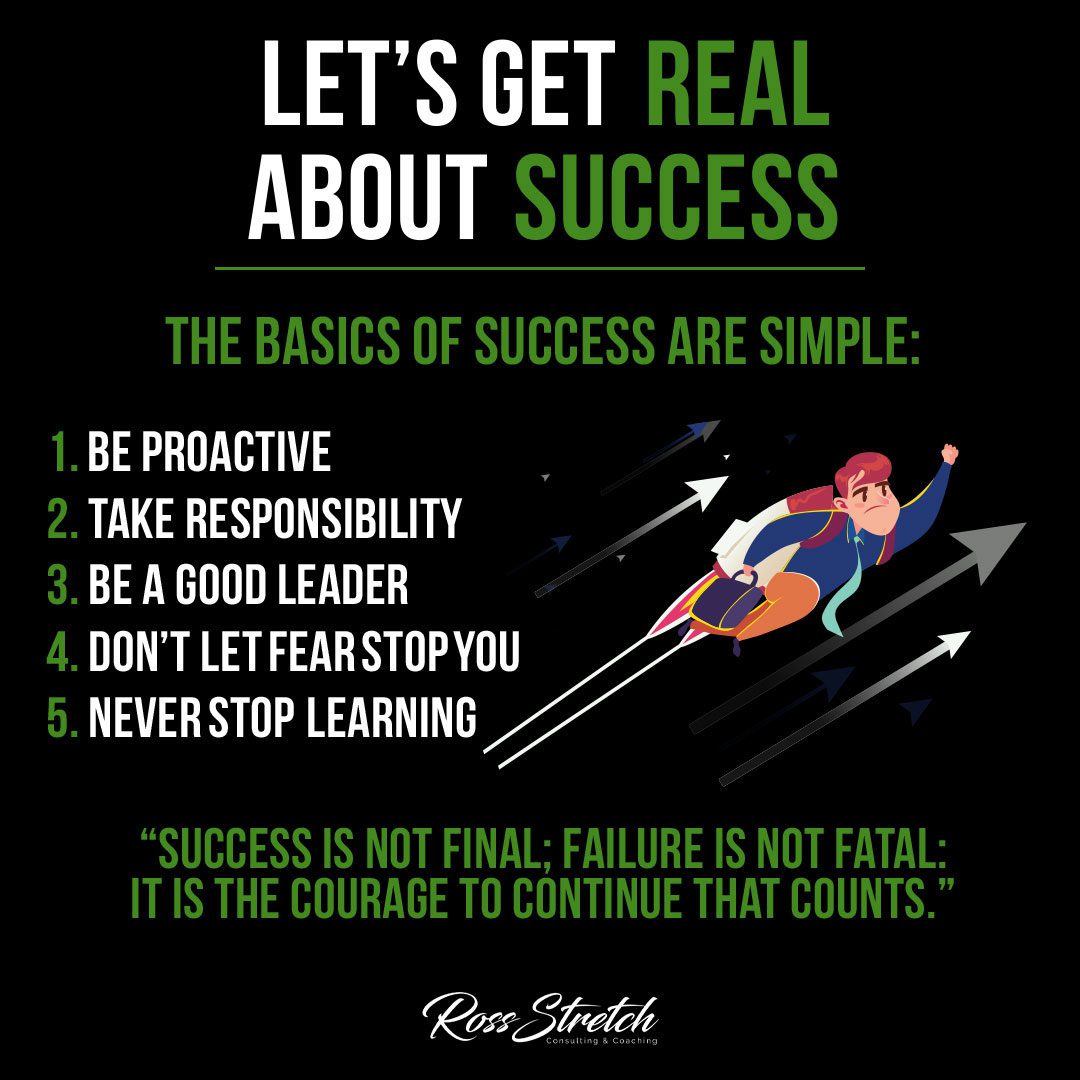
Embracing Proactivity: Taking Charge of Your Trajectory
The difference between people who achieve their goals and those who perpetually plan to is often a single habit: initiation. Proactive individuals do not wait for the right moment, the right resources, or external permission. They start — imperfectly, with what is currently available — and iterate forward from there. The conditions will never be perfect, and waiting for them to become so is a strategy for indefinite inaction.
Proactivity does not mean recklessness. It means maintaining a bias toward action even when conditions are incomplete, which they nearly always are. It means approaching obstacles as problems to solve rather than signals to stop. And it means maintaining agency over your trajectory even when external circumstances make that difficult or uncomfortable.
In practical terms, proactivity shows up in daily habits: responding to important tasks before they become urgent, anticipating obstacles rather than reacting to them as surprises, and making consistent progress toward long-term goals even when immediate demands compete aggressively for your attention. The compounding effect of sustained proactive action over months and years is substantial — and measurably different from the outcomes produced by reactive people with comparable talents.
- Initiate action on your most important goals rather than waiting for ideal conditions
- Anticipate obstacles in advance and prepare responses before they materialize
- Build a daily practice of consistent small actions that compound toward long-term outcomes
The Power of Radical Responsibility
High achievers share an uncomfortable trait: they take responsibility for nearly everything in their domain, including outcomes they did not fully control. This is not about self-blame — it is about agency. If you accept responsibility for a result, you retain the power to influence it differently next time. If you attribute it to external factors, you lose that leverage entirely.
The alternative — blaming circumstances, timing, or other people for poor outcomes — might feel psychologically comfortable in the short term. But it systematically removes your ability to improve, because it prevents honest diagnosis of what actually went wrong. People who habitually deflect accountability rarely develop the self-awareness required to identify and correct the actual causes of underperformance.
Radical responsibility means studying your failures with honest curiosity: what did I do, or not do, that contributed to this outcome? What would I do differently with better information? This approach is uncomfortable and requires genuine ego strength — but it is the mechanism through which sustained improvement happens at both the individual and organizational level.
- Accept accountability for both successes and failures, including those you did not fully control
- Analyze setbacks with honest curiosity rather than defensiveness or blame
- Recognize that taking responsibility is an act of empowerment, not self-punishment
Leadership: Starting With Yourself
Most people think of leadership as something that happens at the organizational level — executives, managers, and team leads directing the work of others. But the most fundamental form of leadership is self-leadership: the ability to direct your own behavior, manage your own emotional responses, and sustain commitment to your own goals without external accountability structures forcing you to do so.
The principles that make great organizational leaders effective apply with equal force at the individual level. Clear vision. Consistent follow-through on commitments. Honest assessment of strengths and development areas. The willingness to make difficult decisions and live with their consequences without constant second-guessing. These qualities produce results whether you are leading a team of fifty or a team of one.
People who develop strong self-leadership also tend to become natural leaders of others — not because they sought the title, but because their behavior generates visible credibility. Competence and integrity are observable over time. Others notice and naturally organize around people who consistently demonstrate both.
- Set clear personal goals and articulate them specifically enough to track progress against them
- Build accountability structures for yourself that do not depend entirely on external pressure
- Lead by consistent example — the standard you hold yourself to sets the standard others observe
Overcoming Fear: The Courage to Move Anyway
Fear is the most consistent obstacle to achievement, and it is almost never precisely what it appears to be on the surface. The fear of launching a business is rarely about the business — it is about what failure might mean for your identity. The fear of publishing your ideas publicly is rarely about the ideas — it is about exposure to judgment from people whose opinions you have unconsciously elevated above your own.
Understanding the actual object of fear is the first step to moving through it. When you can name precisely what you are afraid of and examine whether that fear is proportionate to the actual risk involved, you often discover it is not. The gap between perceived risk and real risk is where most people get permanently stuck — not because the threat is real, but because it has never been honestly examined.
The practical method for overcoming fear is behavioral, not motivational. Take the smallest possible version of the feared action. Write one post. Make one cold call. Apply for one opportunity. Action precedes confidence — it does not follow it. Waiting until you feel ready is, for most meaningful pursuits, a strategy for waiting indefinitely.
- Name your fear specifically and evaluate whether the actual risk justifies the level of avoidance
- Take the smallest possible version of the feared action rather than requiring perfect readiness
- Recognize that confidence develops through accumulated action, not before it
Lifelong Learning: The Compounding Advantage
In an economy changing as rapidly as today’s, the willingness to keep learning is not just admirable — it is a competitive survival requirement. Skills that were differentiated five years ago may be commoditized today. Industries that appeared permanent are being disrupted by technology and new business models. The professionals who maintain relevance and compound their advantage over time are those who treat learning as an ongoing practice rather than a completed phase of life.
Effective learning is not passive. Reading broadly matters and provides important context, but the largest skill gains come from deliberate practice in areas just beyond your current competence, combined with honest feedback on performance. Seeking out environments where you are the least experienced person in the room — uncomfortable as that is — accelerates development faster than staying in familiar territory.
The long-term compounding of continuous learning is one of the most powerful dynamics available to ambitious professionals. Skills build on each other. Knowledge from one domain creates unexpected insight in another. The person who commits to learning consistently across a decades-long career ends up in a genuinely different place than the one who treated education as something that happened before the career began.
- Invest time in expanding knowledge and skills in areas just beyond your current competence
- Seek feedback on performance rather than only consuming information passively
- Apply new learning to concrete situations quickly — application accelerates retention and mastery
Conclusion
Real achievement is the accumulation of daily decisions that almost no one sees. It is the proactive action taken when reactive would have been easier. It is the responsibility accepted when blame would have been more comfortable. It is the fear walked through when avoidance was readily available. And it is the commitment to learning maintained long after formal education has ended and institutional pressure to keep growing has disappeared.
These are not innate personality traits reserved for exceptional people — they are cultivated practices available to anyone willing to adopt them consistently. Start with the one that resonates most clearly, build the habit until it no longer requires effort, then layer the next one on top. Over time, these practices compound into outcomes that look, from the outside, like exceptional talent or extraordinary luck — but are, in reality, the predictable result of a principled operating system applied consistently over years.
Resources

 Ross Stretch