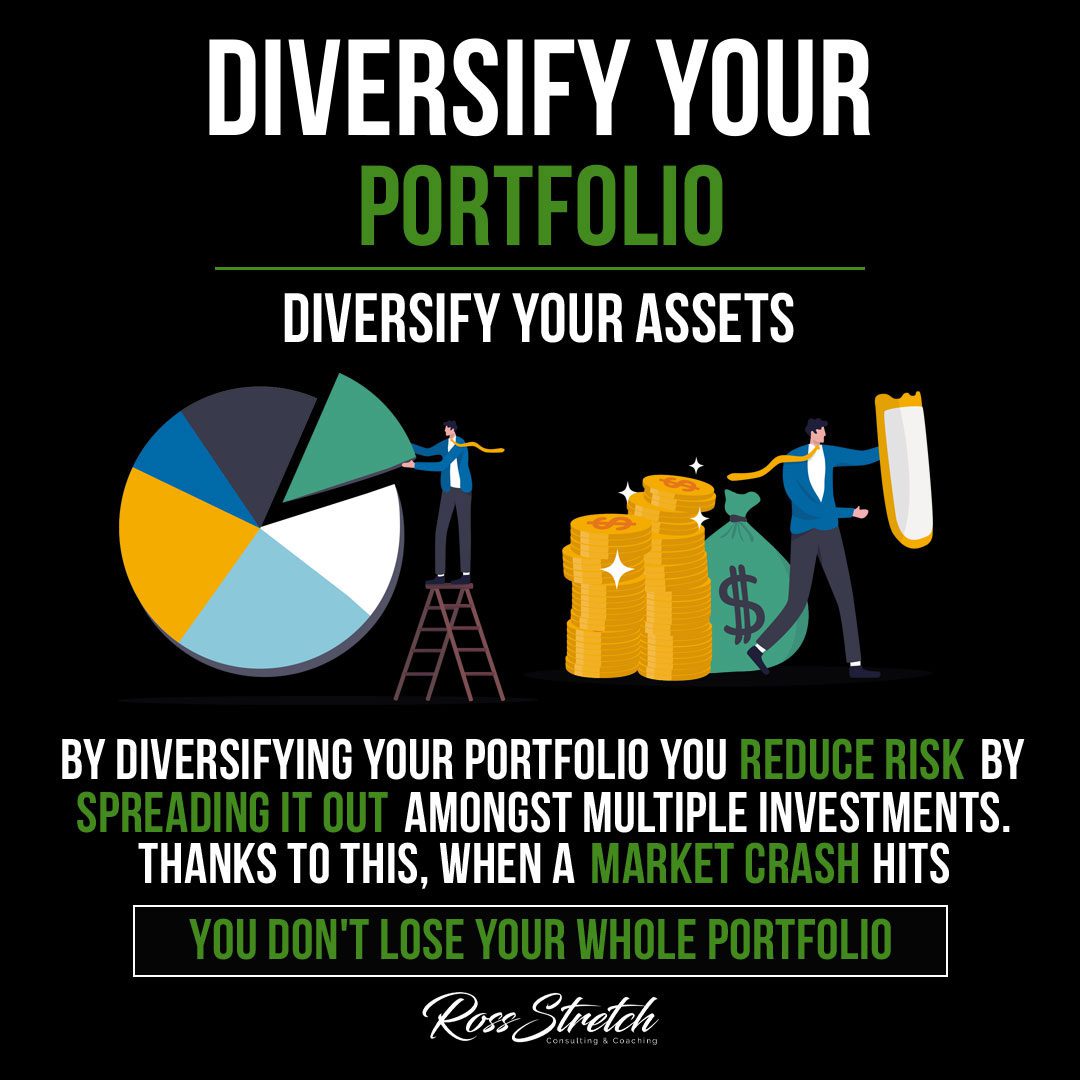
Portfolio diversification is one of the most fundamental principles in personal finance — and one of the most misunderstood. Many investors think diversification means owning a handful of different stocks. In reality, true diversification spans asset classes, geographies, sectors, and investment strategies. The core objective is straightforward: by spreading your investments across assets that do not move in lockstep, you reduce the risk that any single loss will devastate your financial position. Mastering risk management through diversification is one of the most reliable long-term wealth-building moves available to any investor.
What Portfolio Diversification Actually Means
Diversification is not about owning more — it is about owning differently. A portfolio of fifty technology stocks is not truly diversified; it is heavily concentrated in one sector. True diversification means allocating your capital across multiple asset classes: equities, bonds, real estate, commodities, and cash equivalents. Each of these behaves differently in response to economic conditions.
When equities decline sharply during a recession, bonds often hold their value or appreciate. When inflation surges, commodities like gold and energy tend to outperform. Real estate investments can provide steady income through rental yields even during equity market volatility. The goal is to ensure that when one part of your portfolio struggles, other parts are positioned to absorb or offset those losses.
This does not mean every segment of your portfolio will perform equally at all times. It means that no single loss or downturn should be capable of eliminating the gains you have built across your other holdings. That protection is the foundation of sustainable long-term investing.
The Core Benefits of Diversification
The most immediate benefit of a diversified portfolio is risk reduction. By not concentrating capital in any single investment, you limit exposure to company-specific risks — a corporate scandal, a failed product launch, or a regulatory change that devastates one business while leaving others untouched. This principle, known as reducing unsystematic risk, is the clearest argument for diversification.
Beyond risk reduction, diversification can improve your risk-adjusted returns over time. While a concentrated bet on a single winning stock might produce spectacular short-term gains, the mathematical reality is that very few investors consistently pick winners year after year. A diversified portfolio captures the broad growth of markets rather than depending on any single outcome going right.
Diversification also provides psychological stability. Investors who hold highly concentrated portfolios often panic and sell during downturns, locking in losses at the worst possible moment. A well-diversified portfolio tends to be less volatile, making it easier to stay invested through market turbulence and benefit from the inevitable recovery that follows.
Practical Strategies for Building a Diversified Portfolio
The most foundational diversification strategy is asset allocation — deciding what percentage of your portfolio to assign to each major asset class. Your ideal allocation depends on your age, risk tolerance, and investment time horizon. A younger investor with decades until retirement can afford to hold more equities. Someone approaching retirement may shift toward bonds and stable income-generating assets to preserve what they have accumulated.
Index funds and exchange-traded funds (ETFs) are among the most efficient vehicles for diversification. A single broad-market index fund can give you exposure to hundreds or thousands of companies across multiple sectors at a very low cost. Rather than picking individual stocks, you capture the overall market return — which has historically outperformed most active managers over long periods.
Geographic diversification adds another important layer. Concentrating only in domestic markets leaves you vulnerable to country-specific risks — political instability, currency weakness, or localized economic downturns. International ETFs and developed and emerging market funds allow you to participate in growth happening around the world, not just in your home market.
Sector diversification ensures you are not overexposed to any single industry. Technology, healthcare, financials, consumer staples, energy, and industrials all perform differently across economic cycles. A balanced allocation across sectors reduces the impact of any one industry’s difficult year on your overall returns.
Rebalancing — The Maintenance Step Most Investors Skip
Diversification requires ongoing maintenance. Over time, different assets in your portfolio will grow at different rates, causing your allocation to drift away from your original targets. If equities have a strong year, they may come to represent a much larger percentage of your portfolio than intended — effectively making your holdings less diversified and more risky than you planned for.
Rebalancing means periodically selling a portion of your overweight assets and reinvesting into underweight ones to restore your target allocation. Most financial advisors recommend reviewing your portfolio at least annually, or whenever any single asset class drifts more than five to ten percent from its target. Automating this process through a robo-advisor or target-date fund removes the behavioral friction that causes most people to skip it.
This discipline — selling what has risen and buying what has lagged — is counterintuitive but mathematically sound. It forces you to systematically buy low and sell high rather than chasing recent winners, which is one of the most common and costly mistakes individual investors make.
Protecting Your Wealth During Market Downturns
The real test of diversification comes during market crashes. When equity markets fell sharply in early 2020 at the onset of the pandemic, investors who held diversified portfolios saw their losses cushioned by bonds and other assets that held up relatively better. When rising interest rates hit equity valuations hard in 2022, commodity holdings and certain real estate positions offered meaningful relative stability.
A diversified portfolio does not make you immune to losses during crashes. What it does is prevent catastrophic, portfolio-wiping declines that force you to sell at the worst moment or permanently impair your financial position. It keeps you in the game long enough to benefit from the recovery that has historically followed every major market downturn in modern financial history.
Long-term investors who maintain diversification through volatile periods consistently outperform those who concentrate bets, panic sell, or attempt to time the market. Patience and structure are among the most powerful competitive advantages available to the individual investor — and diversification is what makes that patience sustainable.
Conclusion
Diversification is not a get-rich strategy — it is a stay-rich strategy. By spreading your investments intelligently across asset classes, sectors, and geographies, you protect the wealth you have already built while giving yourself multiple pathways to future growth. The discipline of regular rebalancing, combined with a long-term perspective, turns diversification from a simple concept into a genuine wealth-preservation tool. Assess where your concentration risks lie today and take concrete steps to broaden your exposure. The best time to diversify is before you need it.
Resources


 Ross Stretch