
Money is shockingly easy to waste — and most of us do it in ways we don’t fully recognize until the damage is done. Some spending habits quietly drain your finances and make it nearly impossible to build wealth, no matter how much you earn. Here are seven of the most common and costly money mistakes people make, why they happen, and how to break the cycle before it breaks your financial future.
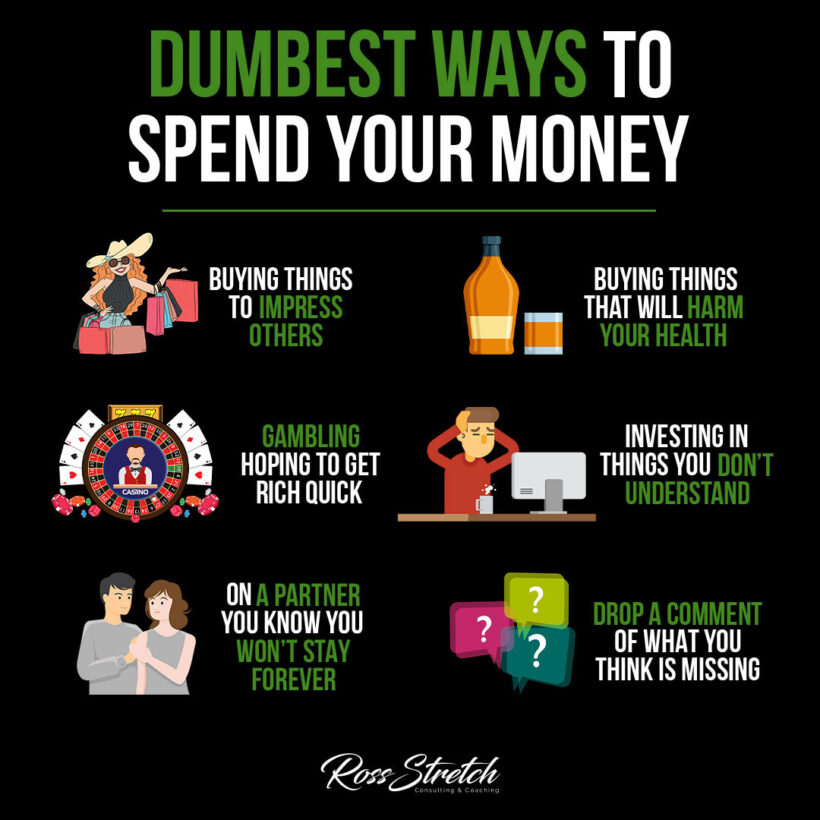
1. Buying Things to Impress Others
The Status Trap That Keeps You Broke
Spending money to look good in front of others is one of the oldest financial traps in existence. Designer clothes, luxury cars, and the latest gadgets signal status in the short term but create financial drag for years. The uncomfortable truth: most people you’re trying to impress aren’t paying attention — and those who are won’t respect you more for it.
- Actionable Tip: Before any non-essential purchase, ask one question: “Would I buy this if nobody could see it?” That single filter eliminates most status-driven spending immediately.
- Why It Works: It forces you to distinguish between purchases that add genuine value to your life versus those that exist purely for external validation — which is almost always a losing transaction.
Pro Tip:
Morgan Housel’s “The Psychology of Money” makes the point perfectly: the people in the fancy cars are rarely wealthy — they’re performing wealth. The quietly rich are usually driving something unremarkable and investing the difference.
2. Buying Things That Harm Your Health
Paying Now and Paying Again Later
Cigarettes, excessive alcohol, fast food eaten daily — these feel like small expenses in the moment, but they compound in two directions at once: direct cost and future medical cost. A pack-a-day smoking habit costs over $3,000 per year in Canada and up to $5,000 in the United States. Add the downstream healthcare costs and productivity losses, and the true price is staggering.
- Actionable Tip: Calculate your annual spend on any health-damaging habit and redirect even half of that toward a gym membership, quality food, or a health savings account. The contrast in compounding is dramatic.
- Why It Works: Health is your highest-return asset. Investing in it reduces future medical costs, increases your earning capacity, and raises your quality of life in ways no consumer product can match.
Pro Tip:
Think of every dollar spent on health-damaging habits as borrowing against your future self — and paying compound interest. The math on quitting almost any unhealthy habit is overwhelmingly positive within two to three years.
3. Gambling in Hopes of Getting Rich Quick
When Entertainment Becomes a Financial Strategy
Gambling is designed to be entertaining, and there is nothing wrong with spending a defined entertainment budget at a casino. The problem arises when gambling becomes a financial strategy — when people genuinely believe they can win their way to wealth. The house edge in most casino games runs between 1% and 15%, meaning every dollar wagered is expected to lose a portion of itself every time. Over volume, the math is unambiguous.
- Actionable Tip: If you gamble for entertainment, treat it exactly like a movie ticket — a fixed amount for the experience, with no expectation of return. Never gamble money you cannot afford to lose entirely.
- Why It Works: Framing gambling as entertainment rather than investment removes the emotional trap of chasing losses, which is where most serious financial damage occurs.
Pro Tip:
The same psychological appeal driving gambling — the dopamine hit of uncertain reward — is why lottery tickets, get-rich-quick schemes, and meme stocks are so compelling. Recognizing the mechanism protects you from all of them simultaneously.
4. Investing in Things You Don’t Understand
Enthusiasm Without Knowledge Is Just Expensive Speculation
Investing is one of the most powerful wealth-building tools available — but only when you understand what you’re doing. Jumping into complex stocks, leveraged products, NFTs, or speculative crypto positions without genuine understanding is not investing. It’s gambling with extra steps. Warren Buffett’s first rule of investing: never invest in a business you cannot understand. That principle has kept him out of virtually every bubble of the past four decades.
- Actionable Tip: If you cannot explain an investment in plain language to a non-investor, do not put money into it. Start with index funds that track broad markets — simple, diversified, and historically effective.
- Why It Works: Low-cost index funds have outperformed the majority of actively managed funds over 15-year periods, according to S&P Global’s SPIVA reports. Understanding beats complexity when you’re starting out.
Pro Tip:
Read one solid investing book before committing real capital. “The Little Book of Common Sense Investing” by John Bogle or “A Random Walk Down Wall Street” by Burton Malkiel will give you more practical edge than most financial advisors.
5. Spending Heavily on a Partner You Won’t Stay With
Confusing Financial Generosity with Relationship Quality
Early in relationships, spending freely on gifts, travel, and experiences feels natural — and some of that is healthy and worthwhile. But overspending to impress or secure a partner you’re not serious about is a costly mistake. The financial damage compounds quickly when the relationship ends, and the spending doesn’t build anything lasting in either direction.
- Actionable Tip: Set a monthly budget for dating expenses and stick to it regardless of how things are going. Creative, thoughtful experiences cost less than expensive ones — and reveal more about your character too.
- Why It Works: Financial discipline in early relationships establishes healthy patterns and signals to potential long-term partners that you have your priorities in order — which is actually more attractive than extravagance.
Pro Tip:
The best relationships are built on genuine connection and shared values, not on what you spend. If spending feels like the primary bond, that’s information worth acting on early.
6. Spending for Social Media Approval
Trading Real Wealth for Digital Validation
Social media has created an entirely new spending driver: the curated life. New outfits for each post, restaurant visits for the photo, travel for the story. The spending is real. The approval is fleeting. And the financial impact — when multiplied by the algorithm’s constant demand for new content — can quietly drain thousands of dollars a year from people who genuinely can’t afford it.
- Actionable Tip: Track any purchase you make primarily because you planned to post it. Tally that number monthly. Most people are genuinely shocked by how large the figure gets over a year.
- Why It Works: Awareness is the first intervention. Once you see the pattern clearly, the pull loses much of its unconscious power and becomes a deliberate choice you can make or refuse.
Pro Tip:
The accounts generating the most aspirational content are often sponsored, gifted, or deeply in debt. What looks like an abundant life online is frequently a financial performance. Don’t fund someone else’s brand with your real money.
7. Paying Only the Minimum on Credit Cards
The Minimum Payment Trap That Makes Banks Rich
Credit cards are one of the most powerful financial tools available — and one of the most dangerous when misused. Paying only the minimum on a $5,000 balance at 20% annual interest can take over 15 years to eliminate and cost more than double the original amount in interest. Minimum payments are deliberately designed to maximize the bank’s interest revenue, not to help you get out of debt.
- Actionable Tip: Pay your credit card balance in full every month if at all possible. If you carry a balance, always pay significantly more than the minimum — even an extra $50 per month dramatically reduces total interest paid and time to payoff.
- Why It Works: Every dollar of high-interest debt you eliminate delivers a guaranteed, tax-free return equal to your interest rate — often 18 to 24%. No investment reliably beats that guaranteed return.
Pro Tip:
Use a credit card payoff calculator (available free at Bankrate.com or NerdWallet) to see exactly what your minimum payment strategy will cost you in total. The number is almost always enough to permanently change behavior.
Conclusion
These seven habits don’t feel catastrophic in the moment — they rarely do. They feel like small choices made one at a time. But money is cumulative in both directions. The same compounding that builds wealth can just as quietly drain it, one poor decision at a time. Awareness of these traps is the first and most important step.
You don’t need a perfect financial plan. You need to stop making the same expensive mistakes on repeat. Cut one of these habits this month and redirect that money toward something that builds your future instead of someone else’s bottom line.
Resources
- Investopedia — Bad Financial Habits to Break Now
- NerdWallet — Common Money Mistakes and How to Avoid Them
- Forbes Advisor — How Credit Card Interest Works
- Psychology Today — The Psychology of Money and Spending


 Ross Stretch