The adage “the early bird catches the worm” is more than folk wisdom — it encapsulates a set of compounding advantages that waking up early creates across every dimension of your life. From enhanced mental clarity to stronger career performance, the practice of rising before the world wakes up gives you something that no amount of evening hustle can fully replicate: uninterrupted time that belongs entirely to you. For ambitious professionals, that quiet morning window isn’t just a lifestyle choice — it’s a strategic asset. Understanding why early rising works, and how to make it stick, is where the real advantage begins.
Why This Matters More Than You Think
Most people begin their day reactively — phone in hand, scanning notifications, responding to the demands of others before they’ve had a moment to orient themselves. Early risers, by contrast, begin their day with agency. They determine the tone, the priorities, and the focus before the external world makes its requests. This seemingly simple difference compounds dramatically over months and years. The professional who owns the first two hours of their day five days a week gains the equivalent of an entire extra workday every week — invested entirely in their own priorities.
Research from Harvard Medical School and the Brigham and Women’s Hospital found that students who identified as morning people had significantly higher GPAs than those who identified as evening people — even after controlling for total hours of sleep. Separate research published in the journal Emotion linked morning routines with greater positive affect, better mood regulation, and higher levels of life satisfaction throughout the day. These outcomes aren’t coincidental — they reflect the downstream effects of starting each day with intention rather than reaction.
For entrepreneurs and high-performing professionals, the case becomes even more compelling. The morning hours provide the cognitive quiet required for deep work — the kind of focused, uninterrupted thinking that produces real breakthroughs. Cal Newport, in his influential work on deep work, notes that most knowledge workers spend their days in shallow, reactive mode. The early morning is one of the last reliable windows of true cognitive depth available in a distraction-saturated world. Protecting that window is a competitive advantage.
The Science Behind It
Early rising aligns with human circadian biology in ways that support peak performance. Morning light exposure triggers the release of cortisol — not as a stress hormone, but as a natural performance enhancer that sharpens focus, elevates mood, and prepares the body for physical and cognitive activity. This cortisol awakening response (CAR) is most pronounced in the first 30 to 45 minutes after waking and is significantly amplified by natural light exposure. Early risers who get outside or near a bright window in the morning are literally programming their brains for peak cognitive performance.
There is also a compounding sleep quality benefit to early rising. Waking at a consistent time each day — even on weekends — is one of the most evidence-backed interventions for improving sleep quality. It anchors the circadian rhythm, making it easier to fall asleep at night and producing deeper, more restorative sleep cycles. The virtuous cycle works in both directions: better sleep enables earlier rising, and consistent early rising produces better sleep. For professionals who dismiss sleep as a performance variable, this connection between wake time, sleep architecture, and daily output is worth understanding deeply.
How to Apply This in Your Life
Step 1: Build the Exercise Window
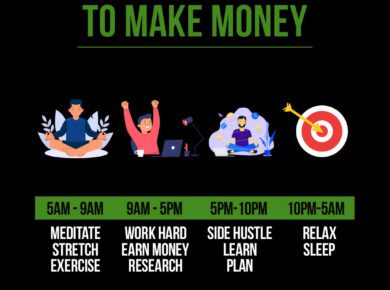
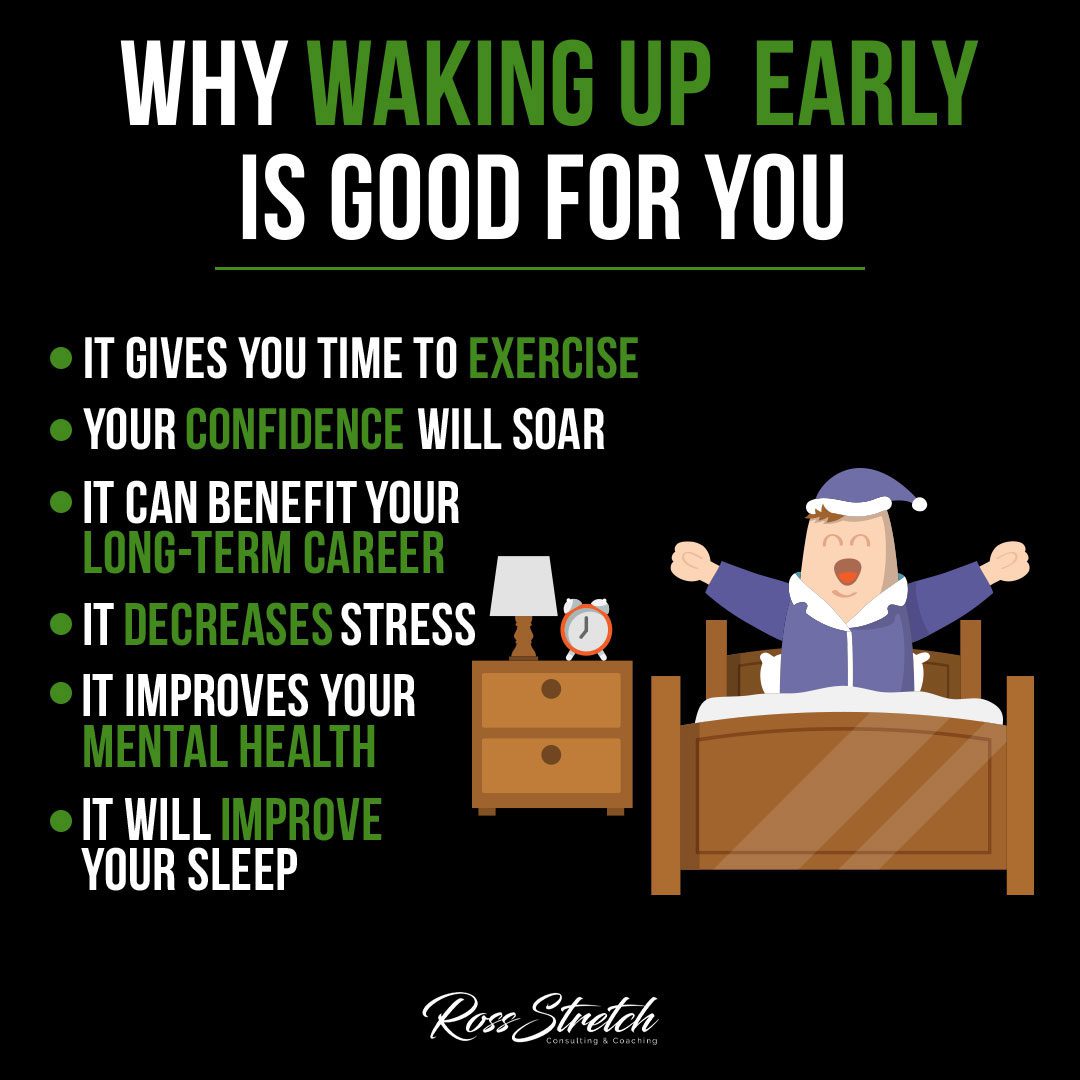
Waking up early opens the door to uninterrupted time for physical training that virtually no other part of the day can reliably provide. Morning workouts kickstart your metabolism, release endorphins that elevate mood for hours afterward, and eliminate the single most common reason people skip exercise: running out of time later in the day. Consistent morning exercisers are significantly more likely to maintain long-term fitness habits because they make physical training non-negotiable before the day’s obligations can displace it.
- Actionable Tip: Prepare your workout gear the night before. Removing the friction of morning preparation makes showing up dramatically easier when your alarm sounds.
- Why It Works: Decision fatigue is lowest in the morning. Automating the decision to exercise by preparing in advance means willpower is never a limiting factor.
Step 2: Use Morning Wins to Build Confidence
Starting your day early creates a cascade of small wins — a completed workout, a healthy breakfast prepared intentionally, 30 minutes of reading, a chapter of a book, a journal entry — that accumulate before most people have finished their first scroll through social media. These accomplishments build genuine confidence rooted in real action rather than wishful thinking. Confidence is a byproduct of achievement, and early risers manufacture achievement before 8 AM every single day.
- Actionable Tip: Identify two or three specific morning activities that give you a sense of accomplishment. Do those before checking your phone. The sequence matters.
- Why It Works: Behavioral momentum is real. Each completed action in the morning makes the next action more likely, creating a positive chain reaction that carries into the rest of the day.
Step 3: Protect Your Peak Hours for Career-Defining Work
The early morning hours are neurologically optimal for strategic thinking, creative problem-solving, and deep focus. Before the cognitive load of emails, meetings, and decisions accumulates, your prefrontal cortex — the seat of executive function and complex reasoning — operates at peak capacity. Ambitious professionals who direct that window toward their most important work — not their most urgent work — gain a compounding advantage over colleagues who spend those peak hours clearing their inbox.
- Actionable Tip: The night before, identify the single most important task that would make tomorrow genuinely productive. Reserve the first 60 to 90 minutes of your morning exclusively for that work.
- Why It Works: Early-morning deep work, done before meetings and messages fragment your attention, produces higher-quality output in less time than the same work done amid afternoon distractions.
Step 4: Create a Calm Morning That Reduces Daily Stress
An early start allows you to approach the day with a sense of control and deliberate purpose rather than scrambled reaction. By avoiding the morning rush — the frantic search for keys, the skipped breakfast, the late departure — you grant yourself a composed, intentional beginning that sets a fundamentally different emotional tone for everything that follows. People who begin their days calmly tend to make better decisions, respond rather than react to stress, and maintain cognitive performance later into the afternoon.
- Actionable Tip: Build a 10-minute mindfulness or journaling practice into your morning before the day’s demands begin. Consistency matters far more than duration.
- Why It Works: Mindfulness practices have strong empirical support for reducing cortisol levels, improving emotional regulation, and increasing cognitive flexibility — all of which pay dividends throughout the workday.
Step 5: Optimize Your Sleep to Make Early Rising Sustainable
Early rising is only sustainable when it’s paired with consistently earlier sleep. This requires treating your sleep schedule with the same discipline you bring to your morning routine. That means a consistent bedtime, a wind-down ritual that signals to your nervous system that sleep is approaching, and an environment optimized for deep sleep — cool, dark, and free from screens. Sleep isn’t a passive recovery period — it’s when the brain consolidates learning, regulates emotion, and prepares for the demands of tomorrow.
- Actionable Tip: Set a consistent “screens off” time 60 minutes before bed. Replace that hour with reading, light stretching, or preparation for the following morning.
- Why It Works: Blue light from screens suppresses melatonin production for up to two hours after exposure, directly impairing sleep onset and reducing slow-wave sleep depth — the most restorative phase.
Common Mistakes People Make
- Starting too aggressively: Jumping from a 7:30 AM wake time to 5:00 AM overnight is a recipe for failure. Shift your alarm 15 minutes earlier every three to four days to let your circadian rhythm adjust naturally.
- Keeping the same late bedtime: Early rising without earlier sleep creates chronic sleep deprivation that erases any productivity gains within two to three weeks.
- Filling the morning with low-value activities: Checking social media or responding to messages in the first hour wastes the neurological advantage that the morning window provides.
- Treating weekends as exceptions: Sleeping in significantly on weekends creates “social jet lag” — a circadian disruption that makes Monday mornings harder and undermines the sleep quality improvements that consistent early rising builds.
The Bottom Line
The benefits of waking up early extend far beyond the extra hours gained. It’s about the quality of your morning activities and the cumulative effect they have on your physical health, mental clarity, emotional resilience, and professional performance. Each morning represents a fresh opportunity to act with intention before the world makes its demands — to exercise, to think clearly, to build momentum, and to invest in the work that matters most. Over months and years, that daily compounding becomes the difference between a life lived reactively and one built deliberately.
The early rising habit isn’t available only to natural morning people — it’s a skill that can be built by anyone willing to go to bed earlier and treat their sleep schedule with genuine discipline. The professionals who protect their mornings with the same intensity they bring to their best work will consistently outperform, outlearn, and outlast those who surrender the morning to habit and inertia. Embrace the early hours — the advantage they provide is real, measurable, and available every single day.
Resources
- Why Your Sleep and Wake Cycles Affect Your Mood — Harvard Health
- Healthy Morning Routines and Your Wellbeing — Mayo Clinic
- Are Morning People Really Happier? — Psychology Today
- The Importance of Sleep Consistency — Sleep Foundation

 Ross Stretch