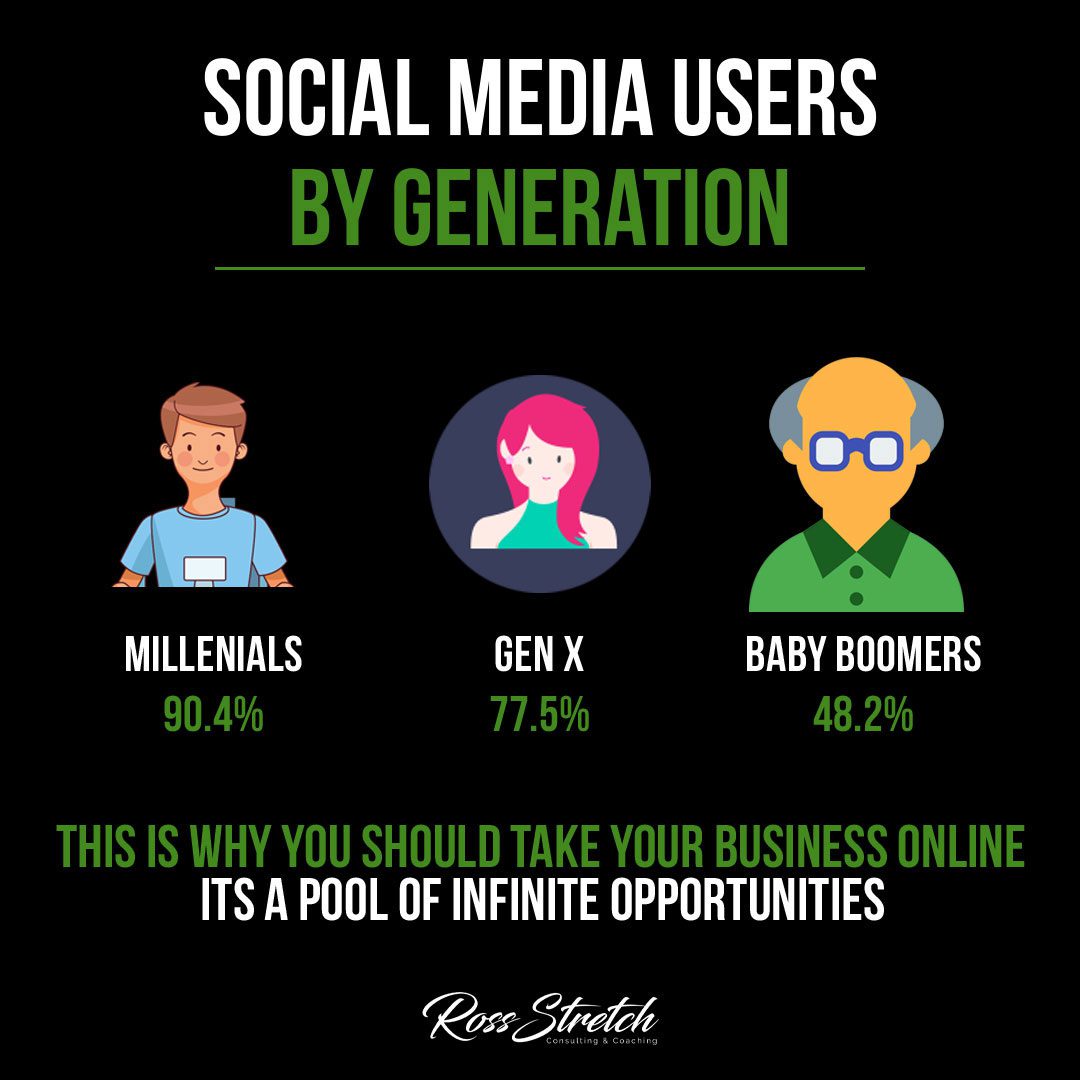
Social media has quietly become the most powerful customer acquisition tool available to online entrepreneurs, and the generational data makes this impossible to ignore. With 90.4% of Millennials, 77.5% of Gen X, and nearly half of Baby Boomers actively using social platforms, the total addressable market for any online business is enormous. Understanding how each generation engages online — and what drives their purchasing decisions — is no longer a marketing advantage. It is a baseline requirement for any entrepreneur serious about building sustainable online revenue. The brands winning in this environment are not the ones with the biggest budgets; they are the ones who understand that generational nuance is the key to unlocking genuine consumer trust.
The Generational Breakdown: Who Is Online and Why It Matters
The story of social media adoption is not simply about age demographics — it is about purchasing behavior, content preferences, and trust signals. Each cohort brings a distinct digital footprint that shapes how they discover products, evaluate brands, and decide to buy. Treating every generation as a single homogenous audience is one of the costliest mistakes an online business can make.
Millennials, born between 1981 and 1996, came of age as the internet was being built and are now the dominant working-age consumer group. They use social media for product discovery, peer reviews, and direct purchasing. They trust user-generated content and influencer recommendations far more than branded advertising, making them highly responsive to community-driven marketing. Gen X, born between 1965 and 1980, combines established career income with a pragmatic approach to technology. With 77.5% active on social platforms, they research carefully before buying, engage heavily on Facebook and LinkedIn, and respond well to value-driven, evidence-based messaging. Baby Boomers represent the most overlooked opportunity — with nearly half active online and commanding the greatest household wealth of any living generation, they are active buyers in categories from health and wellness to financial services, yet most digital brands still underinvest in reaching them.
Why Multi-Generational Reach Transforms the Business Model
When a business limits its social strategy to a single generation, it is leaving revenue on the table by design. The most scalable online businesses build layered audience strategies — creating platform-specific content that speaks to each demographic’s values while maintaining a unified brand identity underneath. This is not about spreading thin; it is about structured intentionality applied across different channels.
Consider a wellness brand selling supplements online. TikTok content for Millennials might highlight lifestyle transformation and real customer results. Facebook posts targeting Gen X and Boomers might emphasize clinical research, ingredient transparency, and long-term health outcomes. Both audiences buy the same product — but the conversation that converts them looks completely different. Recognizing this dynamic is what separates thriving e-commerce brands from those stuck at a revenue ceiling, repeating the same campaigns to diminishing returns.
Platform Selection: Matching Your Audience to the Right Channel
Choosing the right platforms is one of the highest-leverage decisions an online business makes. Not all social networks attract equal engagement from each generation, and attempting to maintain a strong presence everywhere simultaneously wastes resources without producing proportional results.
Facebook remains the dominant platform for Gen X and Boomers, with robust tools for community building, paid advertising, and marketplace selling. Instagram and TikTok index heavily toward Millennials, rewarding creative, fast-paced content and making them natural homes for direct-to-consumer product launches. LinkedIn serves professional audiences across age groups and is often the most effective platform for B2B services and high-ticket consulting. Pinterest drives significant e-commerce referral traffic in lifestyle categories, with a user base skewed toward Millennial women with strong purchasing intent. A focused strategy means building a primary presence on two platforms that best match your core customer and expanding only after those channels are consistently producing measurable results.
Cost-Effective Marketing With Measurable Returns
Social media advertising offers something traditional channels cannot: precision targeting at a variable cost. Rather than paying for impressions in front of a broad, generic audience, platforms like Meta and TikTok allow advertisers to target by age, income bracket, interests, location, and even purchase history. For a bootstrapped online business, this means every dollar of ad spend can be validated, tested, and adjusted in real time — a level of accountability that television and print advertising never offered.
Organic content, while slower to generate results, builds compound returns that paid advertising cannot replicate. A well-crafted educational video, a community post that sparks conversation, or a behind-the-scenes content series can generate thousands of views and new followers without incremental spend. The most effective online businesses run both in parallel — organic content for trust and authority building, paid advertising for targeted reach and scalable customer acquisition — rather than treating them as alternatives to choose between.
The Real-Time Feedback Loop: From Engagement to Business Intelligence
One of social media’s most underrated advantages is the direct feedback channel it creates between businesses and their customers. Comments, direct messages, polls, and sentiment patterns give online entrepreneurs a near-instant read on what their audience wants, what frustrates them, and what they would willingly pay more for. This is market research that would have required expensive focus groups and surveys just two decades ago — now available at no cost to any brand willing to listen.
Entrepreneurs who treat social media as a listening tool rather than just a broadcasting channel develop products and offers with a built-in audience before they even launch. Reading comments on competitors’ posts reveals unmet needs. Engaging directly with followers through live sessions and Q&As builds the kind of trust that converts lurkers into loyal customers. Running polls to test messaging turns the social media audience into an ongoing product development resource — one that most businesses never fully utilize.
Conclusion
The opportunity created by multi-generational social media adoption is real, measurable, and still underutilized by most online businesses. Entrepreneurs who invest the time to understand how Millennials, Gen X, and Baby Boomers differ in their digital behavior — and build strategies that speak authentically to each — will find that the internet is not the crowded, saturated space it might appear. It is a vast market with room for any brand willing to show up with clarity, consistency, and genuine value at the intersection of the right platform and the right audience.
Resources

 Ross Stretch