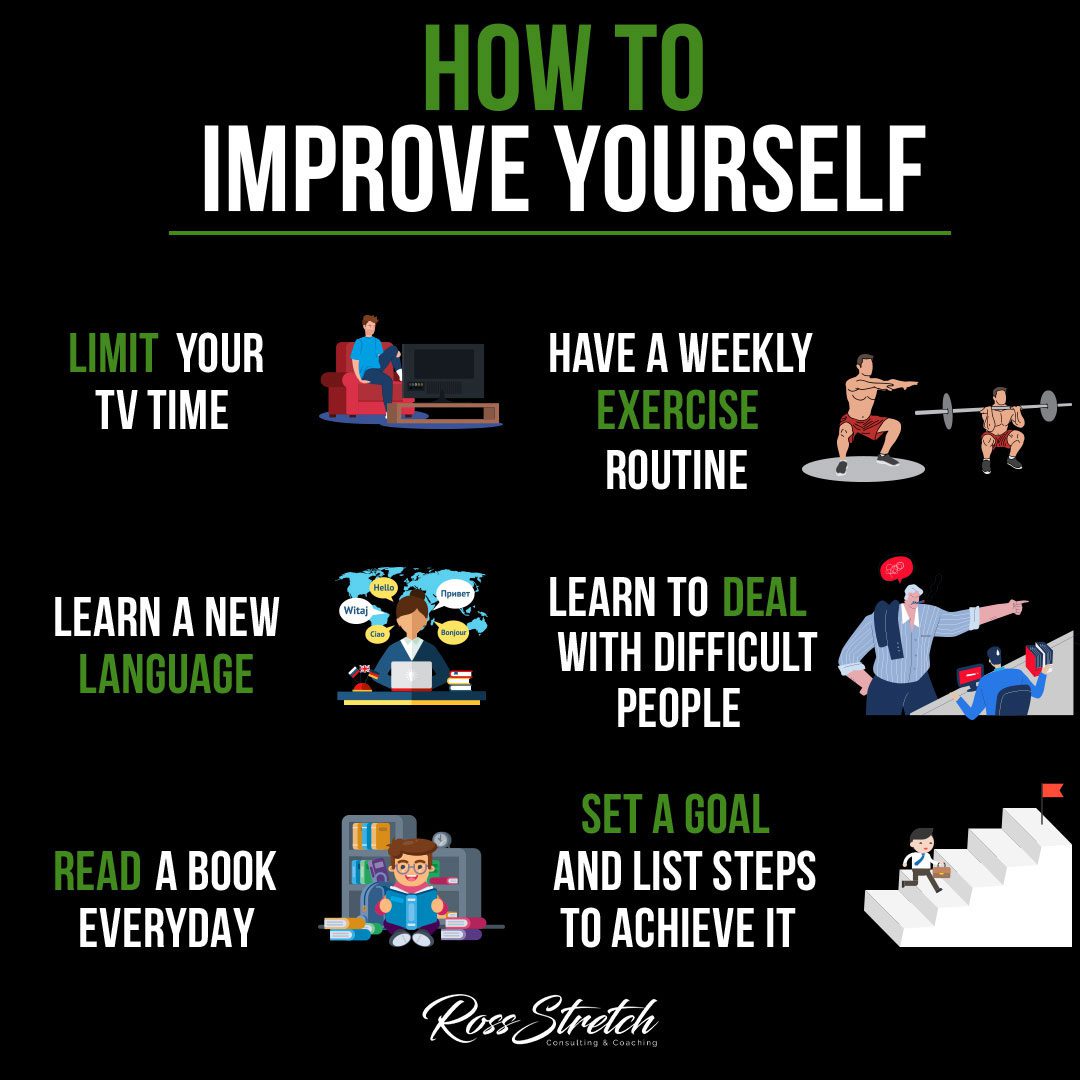

Personal growth doesn’t require a radical life overhaul. The most effective changes come from small, consistent shifts in daily behavior. Whether you’re aiming to sharpen your focus, expand your knowledge, or build stronger relationships, intentional action is the differentiator between those who wish for a better life and those who build one. These six strategies are practical, evidence-backed, and immediately actionable — no gimmicks, no life coaches required.
1. Limit Your Screen Time to Reclaim Productivity
The hidden cost of passive consumption
Most people dramatically underestimate how much passive screen consumption drains their cognitive resources. Research from the American Psychological Association links excessive screen time to increased anxiety, disrupted sleep, and reduced interpersonal connection. The average American spends over seven hours per day in front of screens — a significant portion of which delivers no measurable return. Reclaiming even 60 minutes of that time and redirecting it toward something intentional changes the trajectory of a week, a month, and eventually a year.
- Actionable Tip: Use your phone’s built-in screen time tools — Screen Time on iOS, Digital Wellbeing on Android — to set a firm daily limit. Start with a 30-minute reduction per day and treat it as a non-negotiable boundary, not a suggestion.
- Why It Works: Reduced passive consumption creates mental space for creative thinking and intentional activity. When you stop feeding your brain a constant stream of content, it begins to generate ideas rather than merely absorb them.
Pro Tip:
Schedule your screen time in advance — treat TV and social media like a calendar appointment with a defined start and end time. Unscheduled screen time is where hours disappear without a trace.
2. Build a Consistent Exercise Routine
Your most important long-term asset is your physical health
Exercise is the single most well-researched lifestyle intervention for both mental and physical health. Regular aerobic activity increases levels of BDNF (brain-derived neurotrophic factor), a protein that supports cognitive function, memory consolidation, and mood regulation. Even three 30-minute sessions per week produce measurable improvements in energy, focus, and stress resilience — benefits that compound across every other area of life. A body that moves regularly performs better in every context, and that performance compounds over years.
- Actionable Tip: Choose a form of exercise you genuinely enjoy — weight training, cycling, swimming, or a brisk daily walk. Commit to three sessions per week for 30 days. Track your workouts in a journal or with an app like Strong or Nike Training Club.
- Why It Works: Consistency beats intensity, especially early on. Enjoyment drives consistency. When exercise feels like something you want to do rather than something you have to endure, it becomes self-sustaining behavior rather than a battle of willpower.
Pro Tip:
Stack your workout habit with something you already do. Exercise right after your morning coffee, or use your lunch break to walk. Habit stacking is one of the most effective behavioral techniques for making new routines stick without relying on willpower.
3. Learn a New Language for Cognitive and Career Growth
One of the highest-return cognitive investments available
Language learning is among the most cognitively demanding and rewarding activities a person can take on. Research published in Annals of Neurology found that bilingualism may delay the onset of cognitive decline by up to five years. Beyond the neurological benefits, a second language opens doors to new markets, cultures, and professional opportunities in an increasingly globalized economy. The practical return on this investment — in career advancement, travel, and cross-cultural relationships — is difficult to overstate.
- Actionable Tip: Commit to 15–20 minutes of daily practice using apps like Duolingo, Babbel, or Pimsleur. Supplement with immersion — watch foreign-language content with subtitles, change your phone’s language settings, or find a conversation partner on Tandem or HelloTalk.
- Why It Works: Daily micro-practice compounds over time. Consistency over six months produces conversational ability; consistent daily practice over two years produces genuine fluency. Session length matters far less than frequency — the daily habit is the asset.
Pro Tip:
Choose a language with clear personal or professional relevance — one spoken in a place you plan to visit, used in a market you want to enter, or spoken by people in your immediate network. Purpose-driven language learning is exponentially more effective than abstract study without a clear goal.
4. Develop the Skill of Navigating Difficult People
Interpersonal competence is a high-leverage life skill
Every relationship — professional or personal — will eventually encounter friction. The people who thrive over the long term are those who have developed the capacity to navigate conflict without escalating it. Interpersonal competence directly affects promotions, partnerships, team dynamics, and the overall quality of your daily experience. The ability to remain calm, empathetic, and solution-focused when others are reactive is genuinely rare — and remarkably valuable in every domain of life.
- Actionable Tip: In any tense interaction, practice the pause. Before responding, take a breath and ask: “What does this person actually need right now?” This single habit shifts you from reactive to thoughtful. For a deeper framework, read Crucial Conversations by Patterson, Grenny, McMillan, and Switzler.
- Why It Works: Most conflict is not really about the surface issue — it’s about unmet needs, miscommunication, or perceived disrespect. Addressing the underlying need defuses the situation more effectively than winning the argument on its stated terms.
Pro Tip:
After any difficult conversation, do a brief self-debrief. What did you do well? What would you change next time? Deliberate reflection — not just repeated exposure — is what builds genuine interpersonal skill over time. A simple journal of challenging interactions and your responses turns experience into growth.
5. Cultivate a Daily Reading Habit
The compounding returns of consistent reading
The most successful entrepreneurs, investors, and leaders across history — from Warren Buffett to Oprah Winfrey — consistently cite reading as the foundation of their personal development. Buffett reportedly spends the majority of his workday reading. While that’s not practical for most people, even 20–30 minutes of focused, intentional reading per day produces remarkable results over time. You accumulate perspectives, frameworks, and knowledge that begin to interact with each other in ways that generate new insight — insight that passive content consumption simply cannot replicate.
- Actionable Tip: Set a specific reading goal — one book per month is achievable for most people. Use Goodreads to track your reading list and progress. Keep a book on your nightstand and read for 20 minutes before sleep instead of scrolling your phone.
- Why It Works: A book delivers one expert’s deepest thinking, distilled over years of research and experience, in a format you can absorb in hours. That density of insight is unmatched by shorter content formats, and reading activates analytical thinking in ways passive media doesn’t.
Pro Tip:
Read across categories. Mixing personal finance, biography, history, and science gives you cross-domain thinking that is genuinely rare and valuable. The best ideas consistently emerge from the intersection of disciplines — they rarely come from consuming more of what you already know.
6. Set Clear, Measurable Goals
Direction without a destination is just wandering
Goal setting is not about making lists — it is about creating a structure that converts ambition into action. Research by Dominican University psychologist Gail Matthews found that people who wrote down their goals and shared them with an accountability partner were 33% more likely to achieve them than those who simply thought about them. Written goals activate a different level of commitment than mental intentions. They create a clear reference point against which daily decisions can be evaluated.
- Actionable Tip: Apply the SMART framework — Specific, Measurable, Achievable, Relevant, Time-bound. Write your top three goals on paper every Sunday. Review them each morning. Update your progress weekly and adjust your approach as you learn.
- Why It Works: Written goals create a feedback loop. Seeing the gap between where you are and where you want to be in black and white creates cognitive tension your brain is motivated to resolve — driving consistent action toward closure.
Pro Tip:
Pair each goal with a process commitment, not just an outcome target. Instead of “I want to lose 20 pounds,” commit to “I will exercise four times per week and track my food daily.” You cannot directly control outcomes — but you can control behavior. Sustained behavior, over time, produces outcomes.
Conclusion
Personal growth is not a destination — it’s a direction. These six strategies work not because they’re complicated but because they’re consistent. The compounding effect of intentional action across screen habits, physical health, language acquisition, interpersonal skill, daily reading, and clear goal setting will look unrecognizable at the end of three years. Start with one strategy this week. Add another next month. The trajectory is what matters, not the starting point.
Resources

 Ross Stretch