In a world where personal finance is managed through apps, investments are tracked online, and business operations live in the cloud, cybersecurity is no longer just an IT concern — it is a financial concern. A single compromised account can drain a bank balance, expose client data, or derail years of business building. For ambitious professionals and entrepreneurs, the cost of a breach extends well beyond inconvenience.
The good news is that the most effective cybersecurity measures are not complicated or expensive. They are consistent habits applied across your digital life. The following guide covers the essential practices that protect your accounts, your data, and your financial assets from the most common and dangerous threats targeting individuals and small business owners today.
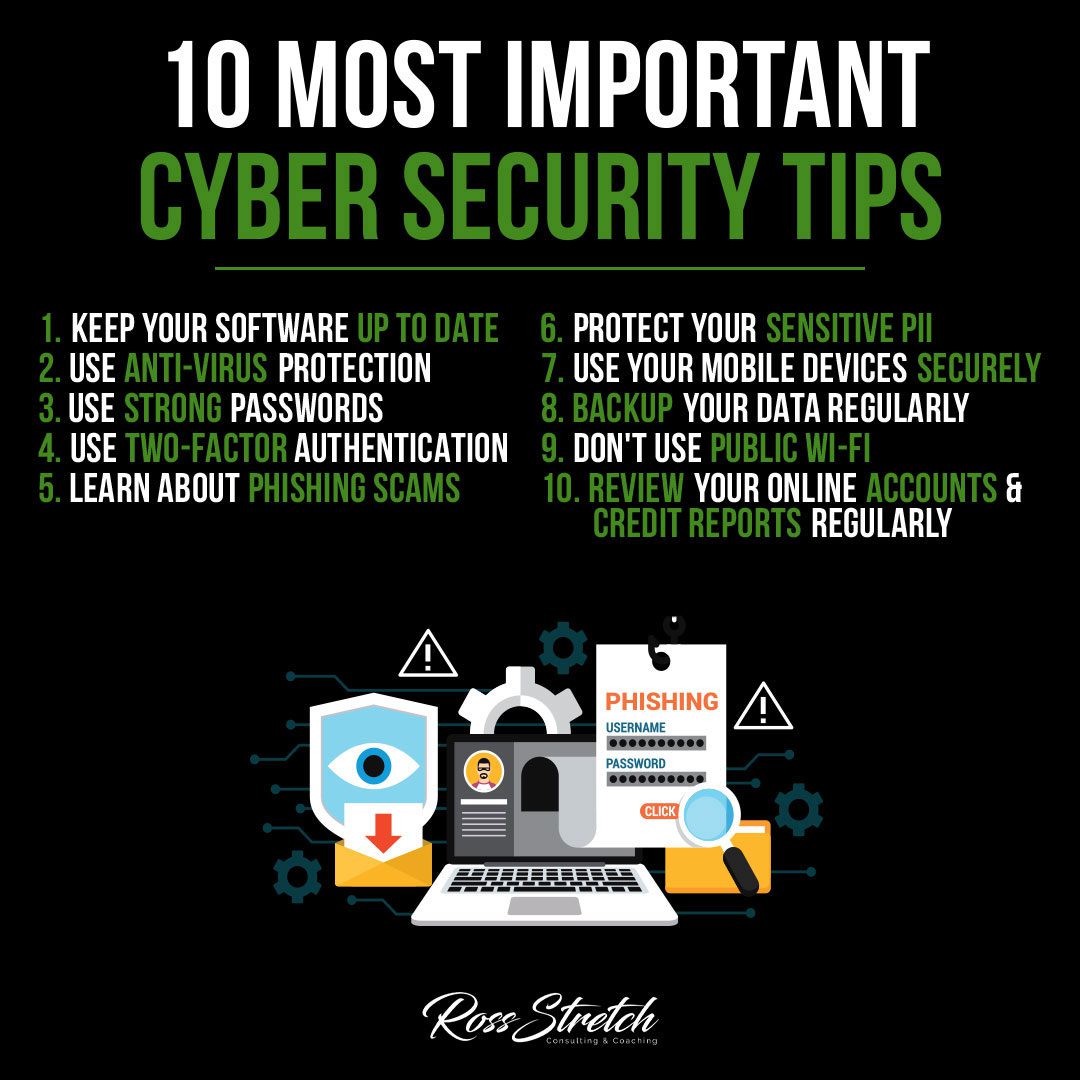
Keep Your Software Current
Outdated software is one of the most exploited vulnerabilities in cybersecurity. When developers discover security flaws in their products, they release patches — but those patches only protect users who actually apply them. Delaying updates leaves known entry points open for attackers who systematically scan for unpatched systems.
This applies to everything: your operating system, your browser, your apps, your business tools, and the firmware on your home router. Enable automatic updates wherever possible, and build a weekly habit of reviewing and manually applying updates on any system where auto-update is unavailable. The few minutes this takes can prevent incidents that take months to recover from financially and reputationally.
Use Strong, Unique Passwords for Every Account
Password reuse is one of the most dangerous and most common security habits. When a data breach exposes credentials from one service — and these breaches happen constantly, affecting even major platforms — attackers systematically test those credentials against banking sites, email accounts, and business platforms. If you reuse passwords, one breach can compromise everything.
The practical solution is a password manager. Tools like 1Password, Bitwarden, or Dashlane generate and store strong, unique passwords for every account, so you only need to remember one master password. A strong password is at least sixteen characters, combines uppercase and lowercase letters, numbers, and symbols, and contains no common words, phrases, or personal information. For most people, a password manager is the single highest-impact security upgrade available.
Enable Two-Factor Authentication on Critical Accounts
Two-factor authentication (2FA) requires a second form of verification beyond your password to access an account. Even if an attacker obtains your password — through a breach, phishing, or guessing — they cannot log in without the second factor. This simple step blocks the vast majority of automated account takeover attempts.
Enable 2FA on every account that supports it, and prioritize in this order: your primary email account first (since email recovery controls access to virtually everything else), followed by banking and investment accounts, then business platforms and social media. For the second factor itself, an authenticator app like Google Authenticator or Authy is significantly more secure than SMS text codes, which are vulnerable to SIM-swapping attacks. Physical security keys such as YubiKey offer the strongest protection available for high-value accounts.
Recognize and Avoid Phishing Attacks
Phishing — impersonating legitimate organizations to steal credentials or install malware — is responsible for the majority of successful cybersecurity breaches against individuals and businesses. Modern phishing attempts are sophisticated. They accurately replicate real company branding, use plausible-seeming domain names, and construct convincing scenarios that create urgency: your account has been suspended, a payment failed, immediate action is required.
Developing phishing awareness means building specific defensive habits: hover over links before clicking to verify the actual destination URL, treat any unsolicited message requesting login credentials or personal data with immediate suspicion, and verify unexpected requests by contacting the organization directly through a known, independent channel — not through any contact information provided in the suspicious message itself. When in doubt, do not click. Go directly to the official website by typing the address yourself.
Phishing is increasingly delivered through channels beyond email: text messages, social media direct messages, and even phone calls. The pattern is always the same — artificial urgency, a request for sensitive information or action, and social pressure to comply quickly. Recognizing the pattern makes the specific delivery method irrelevant.
Protect Your Personal and Financial Information
Your personal identifiable information — Social Security number, banking details, investment account credentials, home address — is the raw material for identity theft. Once this data is in the wrong hands, it can be used to open fraudulent accounts, file false tax returns, apply for loans in your name, and create years of credit damage that takes significant time, legal effort, and emotional energy to reverse.
Share sensitive information only through verified, encrypted channels and only with parties you have independently confirmed as legitimate. Shred physical documents — financial statements, insurance paperwork, anything containing account numbers or personal identifiers — before discarding them. Monitor your credit reports regularly through AnnualCreditReport.com. Consider placing a credit freeze with all three major bureaus: it is free, reversible when needed, and prevents new accounts from being opened in your name without your explicit authorization.
Secure Your Mobile Devices and Avoid Risky Networks
Mobile devices carry enormous amounts of sensitive personal and financial data and are frequently less well-protected than computers. Use a strong PIN or biometric lock, ensure device encryption is enabled (the default on modern iOS and Android devices), and download apps exclusively from official app stores. Review app permissions carefully — few legitimate applications need access to your location, contacts, or microphone to function.
Public Wi-Fi networks in airports, hotels, and cafes are frequently unsecured and can expose your traffic to interception by other users on the same network. Avoid accessing banking, investment, or business accounts on public networks entirely. When you must use public Wi-Fi for sensitive tasks, a VPN (Virtual Private Network) encrypts your connection and significantly reduces the exposure risk. Services like ProtonVPN, Mullvad, and ExpressVPN offer reliable protection for this use case.
Back Up Your Data Consistently
Ransomware attacks — where malicious software encrypts your files and demands payment to restore access — have become common against individuals and small businesses. The most effective protection is a backup that is not connected to your primary system, making your data recoverable even if your devices are fully compromised.
Follow the 3-2-1 backup rule: three copies of your data, stored on two different types of media, with one copy kept off-site or in the cloud. For most individuals, this means automatic regular backups to an external hard drive plus a cloud backup service like Backblaze or iCloud. Test your backups periodically by actually restoring files — an untested backup may fail precisely when you need it most.
Conclusion
Cybersecurity is not about achieving perfect protection — it is about making yourself a sufficiently difficult target that attackers move on to easier alternatives. The practices described here address the most common and consequential threat vectors and provide a strong baseline of protection for anyone managing money, running a business, or simply living a digitally connected life.
Start with the highest-impact changes — a password manager, two-factor authentication, and phishing awareness — and build from there. Each additional layer of protection compounds the effectiveness of everything beneath it. The time investment is modest. The alternative cost is not.
Resources

 Ross Stretch