
Most people live their entire careers on a timeline decided by someone else — the traditional five-year plan, the decade-long grind, the slow accumulation of experience before anything significant happens. But what if the conventional timeline is less a reflection of how long things actually take and more a reflection of how little urgency most people bring to their goals? The concept of achieving your ten-year plan in six months isn’t magical thinking — it’s about applying compressed intensity and radical prioritization to collapse the distance between where you are and where you want to be. It demands a fundamental shift from passive patience to active, deliberate pursuit.
Why This Matters More Than You Think
The reason most people take a decade to achieve what could be done in a fraction of that time has less to do with the complexity of the goal and more to do with the pace at which they pursue it. When you give yourself ten years to accomplish something, you unconsciously spread the effort across ten years. Parkinson’s Law — the well-documented observation that work expands to fill the time available — applies as powerfully to life goals as it does to task deadlines. The psychology behind rapid achievement begins with challenging that relationship with time itself.
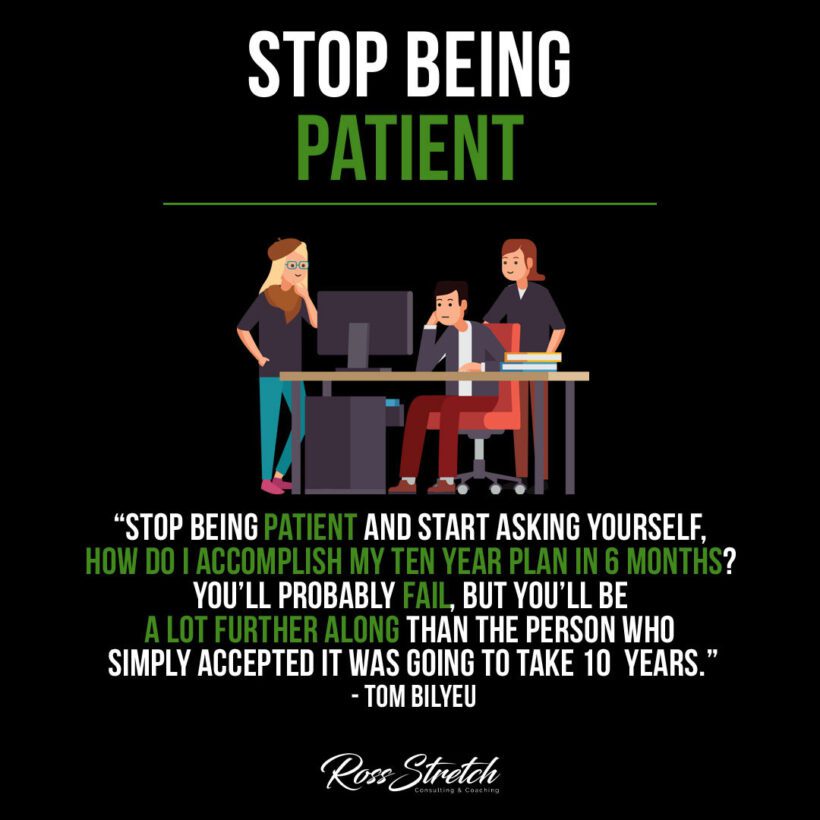
High performers throughout history share a common trait: they operate with a compressed sense of urgency that others view as unrealistic. The difference between a 10-year goal and a 6-month goal isn’t the goal — it’s the intensity of focus, the clarity of priorities, and the willingness to make the sacrifices that most people indefinitely postpone. This isn’t about cutting corners or seeking instant gratification; it’s about asking yourself a genuinely uncomfortable question — “What would I do differently if I only had six months instead of ten years?” — and then living the answer.
This mindset shift is supported by research. Stanford psychologist Carol Dweck’s work on growth mindset demonstrates that people who believe their capabilities are expandable consistently outperform those who see them as fixed. Combined with behavioral economist research on goal gradient theory — which shows that people accelerate their effort as they perceive themselves closer to a goal — the science strongly supports the idea that ambitious, compressed timelines produce disproportionate results compared to long-horizon planning.
The Science Behind Compressed Achievement
Immersion learning — the technique behind language acquisition programs that teach conversational fluency in months rather than years — demonstrates that concentrated, high-intensity exposure produces dramatically faster results than low-frequency, spaced effort. The same mechanism applies to business skills, financial milestones, fitness transformations, and creative disciplines. When you immerse yourself completely in a goal, your brain forms neural pathways at an accelerated rate, compressing the learning curve dramatically. Total commitment creates quantum leaps that incremental approaches never generate.
Entrepreneurs who give themselves 90 days to launch a product consistently outperform those with 12-month roadmaps — not because 90 days is always sufficient, but because the compressed timeline forces ruthless prioritization, eliminates perfection paralysis, and demands execution over deliberation. The urgency itself becomes a performance enhancer. The goal, then, isn’t necessarily to complete a decade of work in six months — it’s to bring the focus, discipline, and resourcefulness of a six-month deadline to goals that most people approach with a decade of comfortable drift.
How to Apply This in Your Life
Step 1: Define the 10-Year Goal with Precise Specificity
Vague ambitions produce vague results at any timeline. Before you can compress your journey, you need crystal-clear specificity about the destination. Don’t say “I want to be financially independent” — define exactly what that means: the net worth figure, the passive income monthly number, the business revenue target, the debt-free date. Specificity allows you to reverse-engineer a pathway; ambiguity keeps you running in circles no matter how fast you move or how hard you work.
- Actionable Tip: Write your 10-year goal as a specific, measurable statement. Then ask: “What single milestone, if achieved in the next 90 days, would prove I’m on track for this goal?”
- Why It Works: Specificity activates the brain’s reticular activating system, making relevant opportunities and information visible that previously went unnoticed.
Step 2: Apply Strategic Planning with Ruthless Prioritization
Strategic planning for compressed timelines involves identifying the smallest number of high-leverage actions that would produce 80% of the results. This is the direct application of the Pareto Principle to your goal architecture. Most 10-year goals can be significantly accelerated by identifying the three to five critical milestones that unlock everything else — and then pursuing those with single-minded intensity while systematically eliminating everything that doesn’t directly contribute to those milestones.
- Actionable Tip: List every action you believe is required to reach your goal. Circle the top three that, if completed, would make most other items irrelevant or dramatically easier.
- Why It Works: Constraint forces creativity. When you can’t do everything, you discover which things actually matter — and that clarity is the foundation of genuine acceleration.
Step 3: Leverage Technology, Mentors, and Your Network
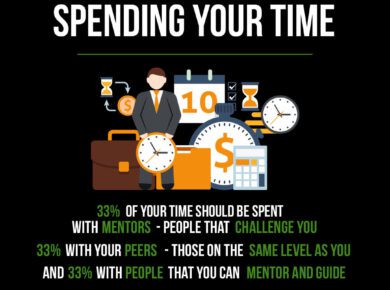
In today’s connected world, leveraging technology and networks can shave years off the journey toward your goals. Online courses compress what used to require years of traditional education into months of focused study. Mentors who’ve already walked your path help you avoid years of costly trial and error. Strategic partnerships give you access to resources, audiences, and opportunities that would take years to build independently. The smart use of your existing network isn’t a shortcut — it’s the defining competitive advantage available to ambitious professionals today.
- Actionable Tip: Identify one person who has already achieved your 10-year goal. Find a way to get into their orbit — through a warm introduction, their online community, or a direct, value-first outreach.
- Why It Works: Proximity to people operating at your target level accelerates growth through osmosis, access, and the powerful psychological effect of seeing your goal as normal rather than exceptional.
Step 4: Embrace Failure as Compressed Feedback
A key aspect of accelerating your goals is fundamentally reframing your relationship with failure. When you compress your timeline, you will fail faster and more visibly than if you moved slowly. This is a feature, not a bug. Each setback reveals information that would otherwise take years to surface. The entrepreneur who launches a product, fails, pivots, and relaunches in 12 months has learned more than the one who spent three years planning a perfect market entry that never happened.
- Actionable Tip: After each setback, conduct a 15-minute “failure debrief” — what happened, what you learned, and what you’ll do differently. Treat it as data collection, not self-judgment.
- Why It Works: Rapid iteration cycles are how the most successful people and companies compress years of learning into months of experimentation.
Step 5: Master Your Schedule and Protect Your Foundation
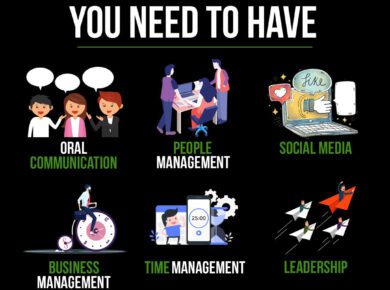
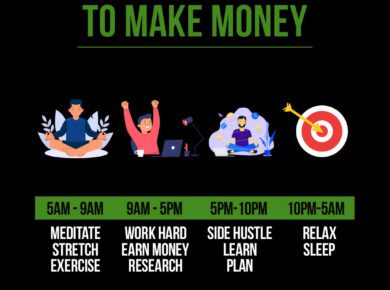
Time management is the infrastructure of accelerated achievement. Mastering your schedule, eliminating time-wasters, and protecting your highest-energy hours for your most important work are non-negotiable practices for anyone pursuing a compressed timeline. But none of this is sustainable without a strong foundation of physical and mental health. Prioritizing sleep, exercise, and recovery isn’t an indulgence when operating at this intensity — it’s the fuel that powers everything else. Neglect it, and the compressed timeline becomes a burnout timeline.
- Actionable Tip: Time-block your three most important daily tasks before checking email or social media. Guard those blocks as non-negotiable appointments with your future self.
- Why It Works: Decision fatigue is real. By protecting peak cognitive hours for high-leverage work, you multiply output without multiplying hours worked.
Common Mistakes People Make
- Confusing activity with progress: Staying constantly busy feels productive but often substitutes frantic motion for deliberate movement toward the actual goal.
- Pursuing too many goals simultaneously: Splitting focus across five goals doesn’t compress five timelines — it extends all of them by fragmenting the focused energy that acceleration requires.
- Waiting for perfect conditions: Compressed timelines require executing with the resources available now, not waiting for the ideal moment that perpetually recedes into the future.
- Neglecting recovery under pressure: Burning out halfway through a 6-month sprint doesn’t compress the timeline — it extends it by months of recovery, lost momentum, and the psychological damage of a failed attempt.
The Bottom Line
Accelerating your goals is not about cutting corners or chasing shortcuts — it’s about bringing a higher degree of intentionality, focus, and urgency to the goals you claim to care about most. When you ask yourself “How can I achieve my ten-year plan in six months?” you aren’t setting yourself up for failure. You’re forcing yourself to eliminate everything inessential and concentrate on what genuinely matters. That compression of focus is itself transformative, regardless of whether you hit the exact timeline you imagined.
The people who accomplish decade-defining things in years rather than decades aren’t superhuman — they’re simply operating with a fundamentally different relationship to time, effort, and urgency. That relationship is a choice, available to anyone willing to challenge the invisible timelines they’ve unconsciously accepted as fixed. Dispel the myth of overnight success, but also dispel the myth that meaningful progress requires decades of patient waiting. Start there, and the trajectory changes everything.
Resources
- How to Set Goals That Actually Work — Harvard Business Review
- 9 Ways to Achieve Your Goals Faster — Inc.
- 6 Ways to Shift Your Mindset for Faster Growth — Forbes
- The Real Secret to Achieving Your Goals — Psychology Today

 Ross Stretch