The pursuit of financial freedom has changed dramatically over the past decade. For ambitious professionals, a single salary — no matter how large — is increasingly seen as a fragile foundation. Markets shift, companies downsize, and economic conditions evolve in ways that no paycheck can fully buffer. Building passive income streams is not just a wealth strategy — it is a form of financial resilience that separates those who thrive from those who merely survive economic disruption.
Passive income does not mean effortless income. Every stream requires upfront investment, whether that is capital, time, or intellectual effort. But once established, these income sources work in the background while you focus on other priorities. That is what makes them powerful: they break the direct link between your time and your earnings, eventually giving you the flexibility to choose how you spend your hours rather than being required to sell them.
Whether you are starting from scratch or looking to diversify beyond a primary career, the strategies below represent some of the most proven pathways to income that does not depend on you showing up every day.
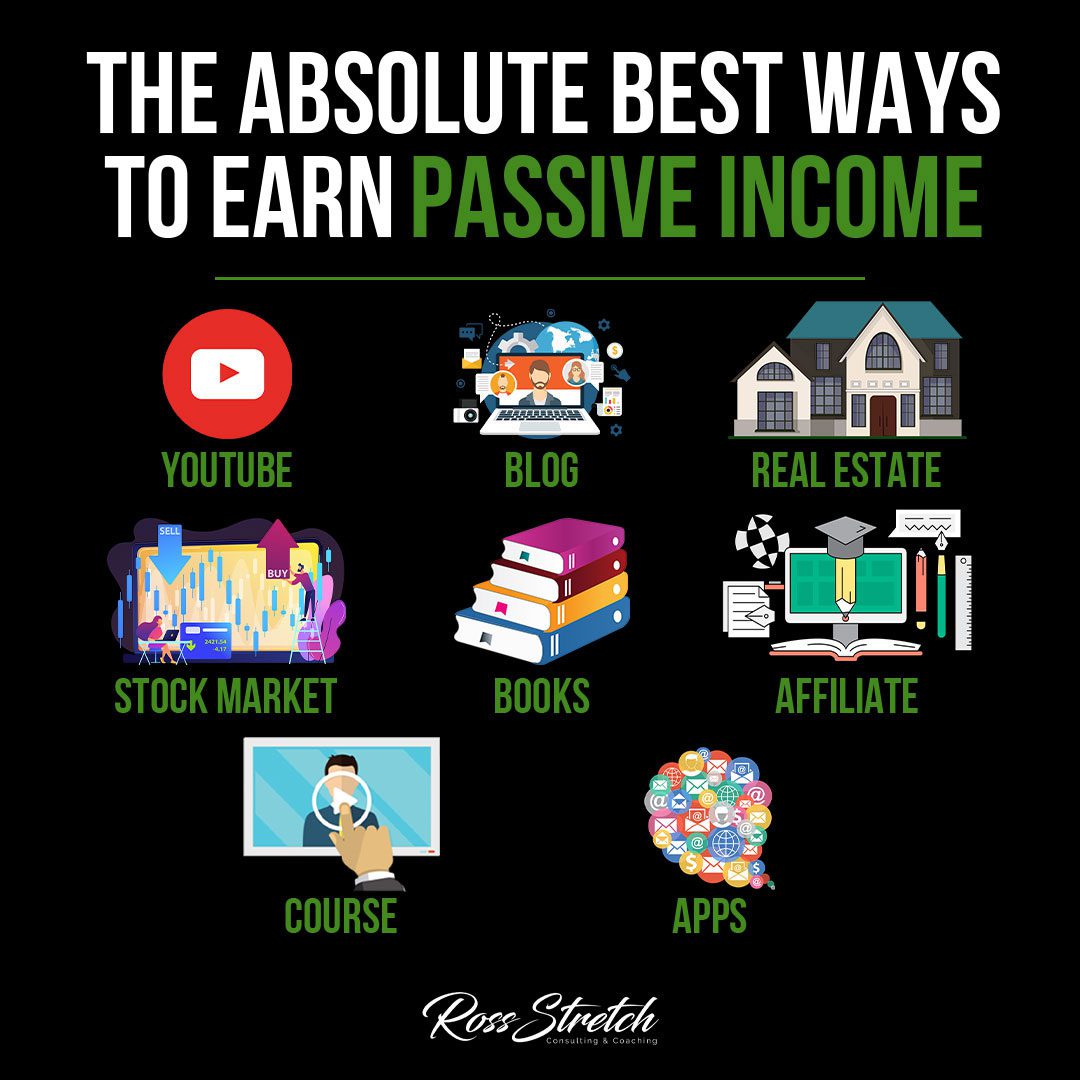
The Digital Domain: YouTube and Blogging
The internet has fundamentally democratized publishing. A decade ago, reaching a substantial audience required institutional backing or significant capital. Today, anyone with genuine expertise and consistent effort can build an audience — and monetize it at scale. This shift has made digital content one of the most accessible entry points into passive income for professionals across virtually every field.
YouTube channels monetized through Google AdSense generate ad revenue on videos that continue accumulating views long after publication. A well-optimized blog post ranking on the first page of Google can drive consistent organic traffic for years with minimal updates. Both platforms reward consistency and quality over time, and both require a real investment period before income materializes — but the payoff is a content library that generates revenue around the clock.
The differentiating factor between creators who build sustainable income and those who burn out is search engine optimization. Creators who invest early in keyword research and content strategy build compounding traffic instead of chasing short-lived viral moments. Tools like Ahrefs, SEMrush, and Google Search Console make this process accessible even without a technical background.
- Monetize YouTube through AdSense, brand sponsorships, and channel memberships
- Earn from blogs via display ads, affiliate links, and sponsored content
- Build SEO-driven traffic that compounds over years rather than depending on social media algorithms
Real Estate: The Time-Tested Investment
Real estate has built more generational wealth than almost any other asset class. Rental properties generate monthly cash flow while simultaneously appreciating in value — a dual return that is difficult to replicate elsewhere. For investors with the capital to acquire property, this combination of income and appreciation creates a compounding wealth engine over multi-decade time horizons.
Real estate investment trusts (REITs) have opened the door for investors who want real estate exposure without the responsibilities of direct property ownership. REITs are legally required to distribute at least 90% of their taxable income as dividends, making them one of the most reliable income-generating instruments available to retail investors. They trade on major exchanges, providing the kind of liquidity that physical real estate cannot match.
Short-term rental platforms like Airbnb have created additional yield opportunities, particularly in high-tourism markets. A well-located property can meaningfully outperform traditional long-term rentals — though it requires either active management or a property management service to remain genuinely passive. Carefully underwriting the numbers before purchasing is non-negotiable; real estate rewards the disciplined and punishes the impulsive.
- Purchase rental properties for monthly cash flow and long-term appreciation
- Invest in REITs for dividend income without the burden of direct property management
- Explore short-term rentals in high-demand markets for higher yield potential
Stock Market Investments: Dividends and Long-Term Growth
Dividend investing is one of the oldest and most reliable wealth-building strategies available. Companies that consistently pay dividends tend to be financially stable businesses with strong balance sheets and durable competitive positions. Reinvesting those dividends triggers compounding: your payouts buy additional shares, which generate additional dividends, accelerating portfolio growth exponentially over a long time horizon.
For professionals who do not want to pick individual stocks, index funds and ETFs offer a low-cost, diversified alternative. Funds that track the S&P 500 have historically returned an average of roughly 10% annually before inflation over the long term — outperforming the majority of actively managed funds in the process. This makes broad index exposure a sensible core holding for any passive income portfolio.
Robo-advisors like Betterment and Wealthfront have made market investing even more accessible by automating portfolio construction, rebalancing, and tax-loss harvesting. These platforms allow nearly anyone to begin building market-based income with minimal ongoing effort, starting with modest initial capital and growing contributions over time without requiring investment expertise.
- Build a diversified portfolio of dividend-paying stocks for predictable, growing income
- Use low-cost index funds for broad market exposure with minimal management overhead
- Reinvest dividends automatically to harness the full power of compounding over time
Publishing for Profit: Books and Online Courses
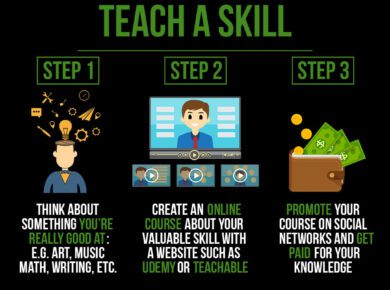
The ability to productize your expertise is one of the most underutilized passive income opportunities available to knowledge workers. If you have developed real skills in any domain — finance, marketing, software development, fitness, design, or anything else in serious demand — you can package that knowledge into a product that sells repeatedly without ongoing input from you.
E-books published through Amazon Kindle Direct Publishing reach a global audience and generate royalties indefinitely. Online courses hosted on platforms like Udemy, Teachable, or Kajabi can be sold hundreds or thousands of times after being created once. The upfront production effort is real, but the income that follows is genuinely scalable: the course does not get more expensive to deliver as it sells more copies.
The critical variable is distribution. A high-quality course that no one discovers earns nothing. Successful knowledge creators build audiences first through content marketing, email lists, and social media — then convert that audience into buyers over time. The digital product model works best when paired with a sustained content strategy that keeps attracting new traffic and building trust before a sale is ever made.
- Publish e-books on Amazon KDP to earn royalties from a global audience with no inventory costs
- Create online courses on Udemy or Teachable using expertise you have already developed
- Build an email list to market and resell digital products repeatedly over time
Affiliate Marketing: Earning Through Referrals
Affiliate marketing allows you to earn commissions by recommending products or services you have genuinely used and believe in. When a reader clicks your referral link and makes a purchase, you earn a percentage of the sale — often ranging from 5% to 50% depending on the product category and program structure. Done with integrity, affiliate income can become one of the most scalable revenue streams available to content creators.
The most effective affiliate marketers build trust long before they make recommendations. Rather than inserting promotional links into thin content, high-performing affiliates create detailed reviews, comparison guides, and tutorials that help readers make informed purchasing decisions. This approach earns both audience trust and higher conversion rates — the two factors that ultimately determine affiliate income over the long term.
Major affiliate programs through Amazon Associates, ShareASale, and direct brand partnerships offer enormous product variety. The key is aligning with products that genuinely match your audience’s interests and needs, so recommendations feel like trusted advice rather than sales pitches. Authenticity is not just an ethical standard here — it is a business model requirement.
- Partner with companies whose products align authentically with your audience’s real needs
- Create high-value content like reviews and tutorials rather than purely promotional posts
- Use SEO to drive consistent traffic to affiliate content long after it is published
Conclusion
Building passive income is a long game, not a shortcut. Each of the approaches described above requires real investment upfront — whether that is capital, time, or knowledge. There is no version of this that requires nothing from you. But the payoff is a financial foundation that does not depend on your continuous presence and daily effort.
The most resilient income portfolios combine multiple streams: a dividend portfolio, a real estate or REIT position, and a digital asset like a blog, course, or affiliate site. Start with one stream, build it to consistency, then expand. Over time, these streams compound and reinforce each other, creating the kind of financial flexibility most people spend their careers hoping for but never quite building.
Resources


 Ross Stretch