Building a successful business and building personal wealth are two distinct skills — and many entrepreneurs excel at the first while neglecting the second entirely. The same hustle and vision that drives business growth can become a liability when applied to personal finance without structure. Entrepreneurs face unique challenges: irregular income, blurred lines between personal and business spending, and the constant temptation to reinvest everything back into the company. Mastering the financial side of entrepreneurship requires the same intentionality as mastering business strategy — clear goals, disciplined cash management, and a long-term view that extends well beyond the next quarter.
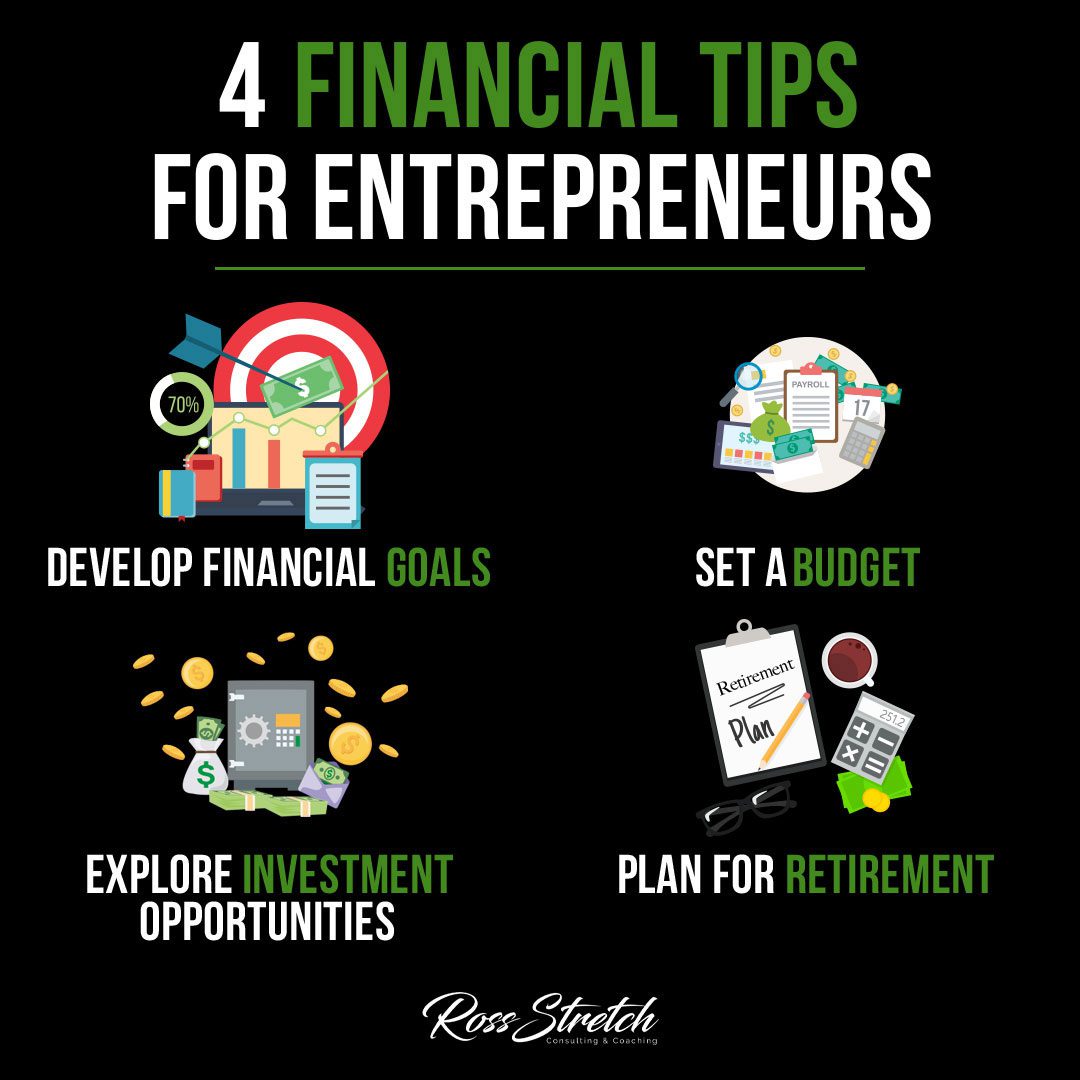
1. Define Your Financial Goals Before You Scale
Clarity Creates the Map to Wealth
Most entrepreneurs have a vague sense of wanting financial success, but relatively few have written down what that actually means in specific, measurable terms. Revenue milestones for the business are common; personal wealth targets are rare. This gap is a problem because business and personal financial goals can pull in opposite directions — and without clarity on both, you’ll often sacrifice one for the other without realizing it. A high-revenue year means very little if poor personal finance habits leave you with nothing to show for it personally at the end of that year.
- Actionable Tip: Write three explicit financial goals: a business revenue target for the next 12 months, a personal savings target for the same period, and a net worth goal for five years out. Review all three monthly alongside your standard business metrics.
- Why It Works: Entrepreneurs who treat personal wealth-building as a measurable goal — not an afterthought — make consistently different and better decisions about compensation, reinvestment, and business structure than those who don’t.
Pro Tip: Pay Yourself a Fixed Salary First
One of the most powerful moves an entrepreneur can make is to establish a consistent personal salary from the business from day one, separate from profit distributions. This creates financial predictability for your personal life and forces the business to operate on its remaining cash — simultaneously improving your personal financial stability and the business’s financial discipline. Both benefit from the structure.
2. Build a Budget and Protect Your Cash Flow
Revenue Is Vanity, Cash Flow Is Sanity
More businesses fail due to poor cash flow management than due to lack of revenue. A company can be profitable on paper while running out of money in practice — the result of invoices paid late, expenses front-loaded, and reserves insufficient to bridge the gap. Entrepreneurs must maintain a sharp distinction between what has been earned and what is actually available in the bank. This requires both a rigorous business budget and a personal budget that doesn’t depend on variable business income for fixed monthly expenses.
- Actionable Tip: Maintain a cash runway target for your business — ideally three to six months of operating expenses — in a dedicated business savings account. On the personal side, build an emergency fund of three to six months of living expenses before aggressively scaling or investing.
- Why It Works: A cash buffer eliminates the desperation decisions that damage both businesses and personal finances. When you’re not operating from scarcity, you negotiate better, turn down bad clients, and make decisions with a longer time horizon — a significant competitive advantage.
Pro Tip: Invoice Immediately and Follow Up Consistently
Cash flow is directly tied to collections discipline. Invoice clients the day work is delivered or milestones are hit, and set up automatic payment reminders at 7, 14, and 30 days past due. Slow collections are one of the most common and most preventable causes of cash flow crunches for small businesses. The discomfort of following up on unpaid invoices costs far less than the alternative of running short on cash when expenses are due.
3. Diversify Your Investments Beyond Your Own Business
Don’t Put All Your Wealth Into One Asset You Also Operate
Your business is already your primary financial risk — your time, your energy, and often a significant portion of your savings are concentrated there. Building additional wealth exclusively through reinvestment in the business means that if the business faces a downturn, a competitive disruption, or a personal health crisis, everything is exposed simultaneously. Diversification is not disloyalty to your company — it’s risk management that protects both your personal financial future and the business itself by removing desperation from your decision-making.
- Actionable Tip: Once your business generates consistent profit, redirect a defined percentage — 10 to 20% of personal take-home — into assets outside the business: broad market index funds, real estate, or bonds. Start with low-cost, diversified investments that don’t require active management or ongoing attention.
- Why It Works: External investments build financial independence that isn’t tied to your business’s performance. This independence removes financial desperation from business decision-making — one of the most powerful advantages a business owner can have when navigating difficult markets or difficult clients.
Pro Tip: Work with a Fee-Only Financial Advisor
Entrepreneurs benefit more than most from professional financial guidance because of the complexity of managing business and personal finances simultaneously. A fee-only financial advisor — one who charges a flat fee rather than earning commissions on products they recommend — provides unbiased guidance on investment strategy, tax optimization, and wealth-building without a conflict of interest. Their cost is typically recovered many times over in smarter decisions.
4. Plan for Retirement and Minimize Your Tax Burden
Build for the Future While Keeping More of What You Earn Today
Entrepreneurs don’t have an employer setting aside pension or 401(k) contributions on their behalf — retirement wealth is entirely self-funded. This makes proactive retirement planning not optional but essential. At the same time, taxes represent one of the largest expenses a self-employed person faces, and strategic planning can legally reduce that burden significantly. These two areas — retirement savings and tax strategy — are deeply interconnected for entrepreneurs and deserve coordinated, professional attention from the early stages of the business.
- Actionable Tip: Explore retirement accounts designed for the self-employed: a SEP-IRA allows contributions of up to 25% of net self-employment income, while a Solo 401(k) offers both employee and employer contribution options that together allow for significantly higher annual limits. Maximize whichever is appropriate for your income level, as contributions are tax-deductible.
- Why It Works: Contributions to tax-advantaged retirement accounts serve double duty — they reduce your taxable income today while building a nest egg that grows tax-deferred. A consistent annual retirement contribution of $15,000 starting at age 30 grows to over $1 million by age 65 at a 7% average annual return, demonstrating just how powerful starting early actually is.
Pro Tip: Work with a CPA Who Specializes in Small Business
General tax software is not designed for the complexity of entrepreneurial income, entity structure choices, and available deductions. A CPA with small-business expertise will identify deductions, optimal entity structures, and timing strategies that software misses. The cost of a skilled CPA is typically recovered many times over in legitimate tax savings. Treat it as a business investment, not a personal expense — because that’s exactly what it is.
Conclusion
Financial success as an entrepreneur doesn’t happen automatically as a byproduct of business success. It requires the same intentionality, structure, and consistency you bring to growing your company. Define clear financial goals for both your business and personal life, protect your cash flow with disciplined budgeting, diversify your investments beyond the business, and plan aggressively for retirement while minimizing your tax burden. These four disciplines, practiced consistently over time, are the foundation on which lasting entrepreneurial wealth is built — not the windfall of one exceptional year, but the compounding result of smart habits applied over a career.
Resources
- SBA: Managing Your Business Finances
- Investopedia: Retirement Plans for Self-Employed Individuals
- IRS: Self-Employed Individuals Tax Center
- Harvard Business Review: Financial Mistakes Entrepreneurs Make


 Ross Stretch