
Not all debt is created equal. While the word “debt” carries a negative connotation in many personal finance conversations, strategic borrowing is one of the most powerful tools available to anyone building wealth. The real question isn’t whether to use debt — it’s how to distinguish between debt that works for you and debt that quietly drains your financial future.
What Makes Debt “Good”?
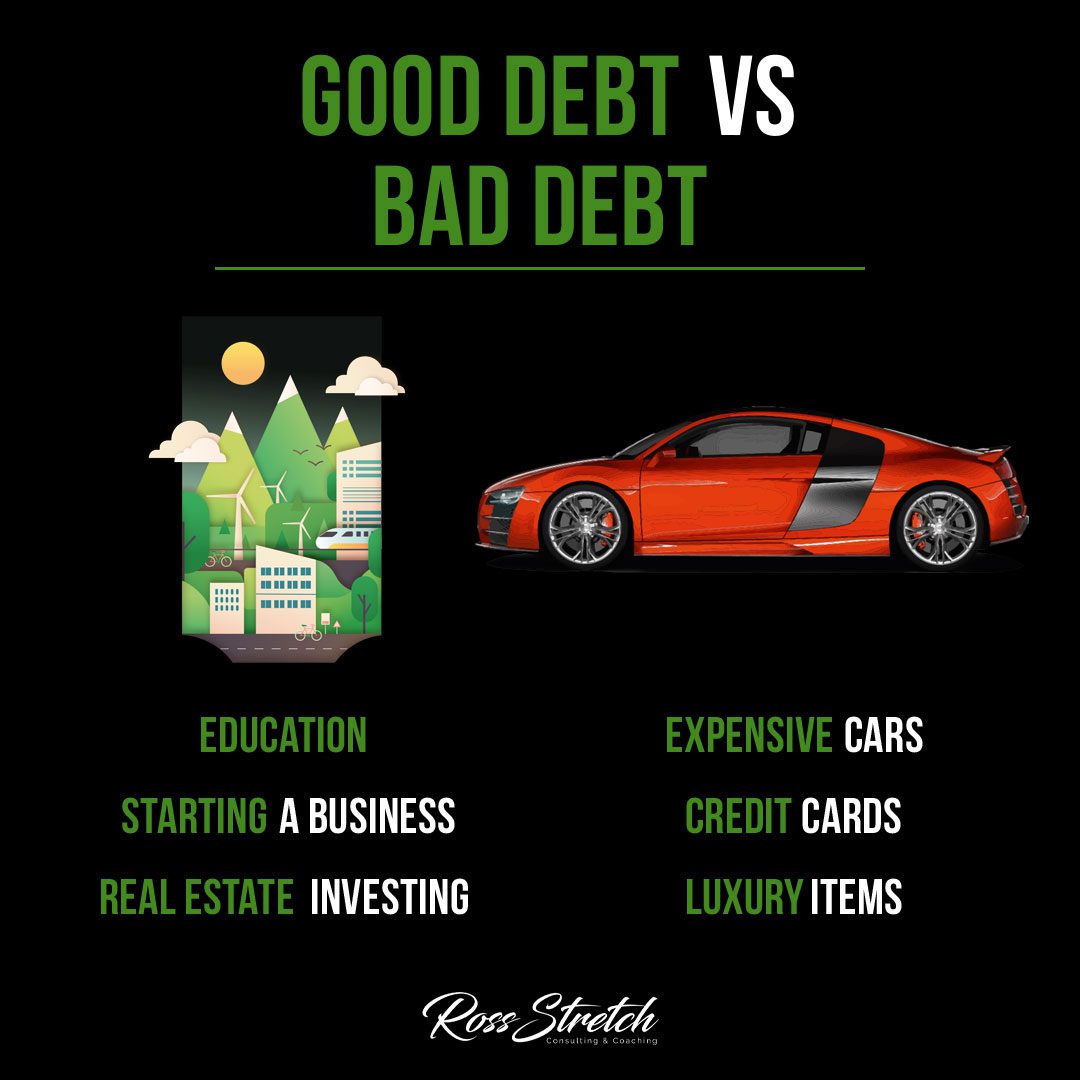
Good debt is borrowed money used to acquire assets or build capabilities that generate returns over time. The defining characteristic is that the expected benefit — financial or otherwise — exceeds the total cost of borrowing. When used correctly, good debt accelerates your wealth-building timeline rather than slowing it down.
A mortgage on a rental property is one of the clearest examples. You’re using the bank’s capital to acquire an appreciating asset that simultaneously generates monthly income. Over time, both the property value and your equity grow while your tenant effectively pays down the loan. The borrowed money is actively working in your favor — that’s the essence of good debt.
Business loans used for revenue-generating activities follow the same logic. If borrowing $30,000 to purchase equipment allows your business to generate $60,000 in new revenue annually, the return on that debt is obvious. The debt created something of greater value than its cost — which is the test every good debt should pass.
Common Examples of Good Debt
- Mortgages on appreciating property: Real estate typically grows in value over time, and leverage amplifies your return on equity.
- Business loans for revenue-generating purposes: Equipment, inventory, or working capital that directly produces income can justify the cost of borrowing.
- Education loans for high-ROI credentials: Degrees or certifications that unlock significantly higher income potential can pay back many times their cost — when chosen carefully.
- Investment property financing: Rental income covers the mortgage while the underlying asset appreciates.
What Makes Debt “Bad”?
Bad debt is borrowed money spent on depreciating assets or consumption — things that lose value the moment you buy them and generate no future financial return. The cost of the loan adds to the total price of something that’s already declining in value, creating a compounding financial drag that’s difficult to escape.
Credit card debt is the most damaging and widespread form. With average interest rates between 20–29% in many markets, carrying a balance from month to month means paying an enormous premium on purchases that are often discretionary to begin with. A $500 purchase that takes 18 months to pay off at 24% interest can ultimately cost $650 or more — a painful surcharge on something you’ve likely already forgotten about.
Auto loans on luxury vehicles follow a similar pattern. A new car loses roughly 15–20% of its value in the first year and continues depreciating rapidly. Financing a $65,000 vehicle means paying compounding interest on an asset that is actively losing worth every single day. By the time the five-year loan is paid off, the car may be worth less than a third of its original price.
Common Examples of Bad Debt
- Credit card balances carried month to month: High interest rates compound quickly and the purchases rarely hold any value.
- Payday loans: Extremely high effective interest rates — often 200–400% APR — designed to trap borrowers in a cycle of rollover debt.
- Auto loans on depreciating vehicles: Especially damaging when the loan balance exceeds the vehicle’s actual market value.
- Personal loans for vacations or luxury goods: Pure consumption financed at a premium — the experience or item is gone long before the debt is repaid.
The Gray Area: Not Everything Is Black and White
Not all debt fits neatly into good or bad categories. A mortgage becomes bad debt if you borrow more than you can comfortably service, or if you buy in a market that subsequently declines. Student loans become bad debt when the degree program doesn’t lead to income that meaningfully exceeds what you could have earned without it. The label depends heavily on the terms, the amount borrowed, and how the money is actually used.
The interest rate is often the single most important variable. Borrowing at 3% when inflation is running at 5% means your debt is being eroded in real terms — your dollars of repayment are worth less than the dollars you borrowed. That’s a very different situation than borrowing at 25% on a credit card, where the interest charges compound against you regardless of what the economy is doing.
How to Use Debt Wisely
Before taking on any new debt, run through a simple mental framework. First, does this borrowing produce something of lasting value — an asset, a skill, or reliable income? Second, can you comfortably meet the repayments without destabilizing your monthly budget? Third, is the interest rate low enough that the return on the borrowed capital exceeds its cost? If the answer to any of these is no, reconsider.
Prioritize eliminating high-interest bad debt before focusing on anything else in your financial plan. Every dollar of 22% credit card debt you pay off represents a guaranteed 22% return — better than the long-run average return of most investment portfolios. Once bad debt is eliminated, you free up cash flow to deploy into genuinely productive opportunities.
- Only borrow for things that hold value, appreciate, or increase your earning capacity.
- Eliminate high-interest consumer debt before investing elsewhere.
- Keep total debt service below 36% of gross income — a widely used benchmark for financial health.
- Always have a clear, realistic repayment plan before signing any new obligation.
Conclusion
The difference between good debt and bad debt comes down to one question: does this borrowing create more value than it costs? When the answer is yes, debt is a wealth-building tool that the most financially successful people use deliberately and strategically. When the answer is no, it’s a wealth-draining burden that compounds over time. Build the habit of asking that question before signing anything, and your financial decisions will improve dramatically as a result.
Resources


 Ross Stretch