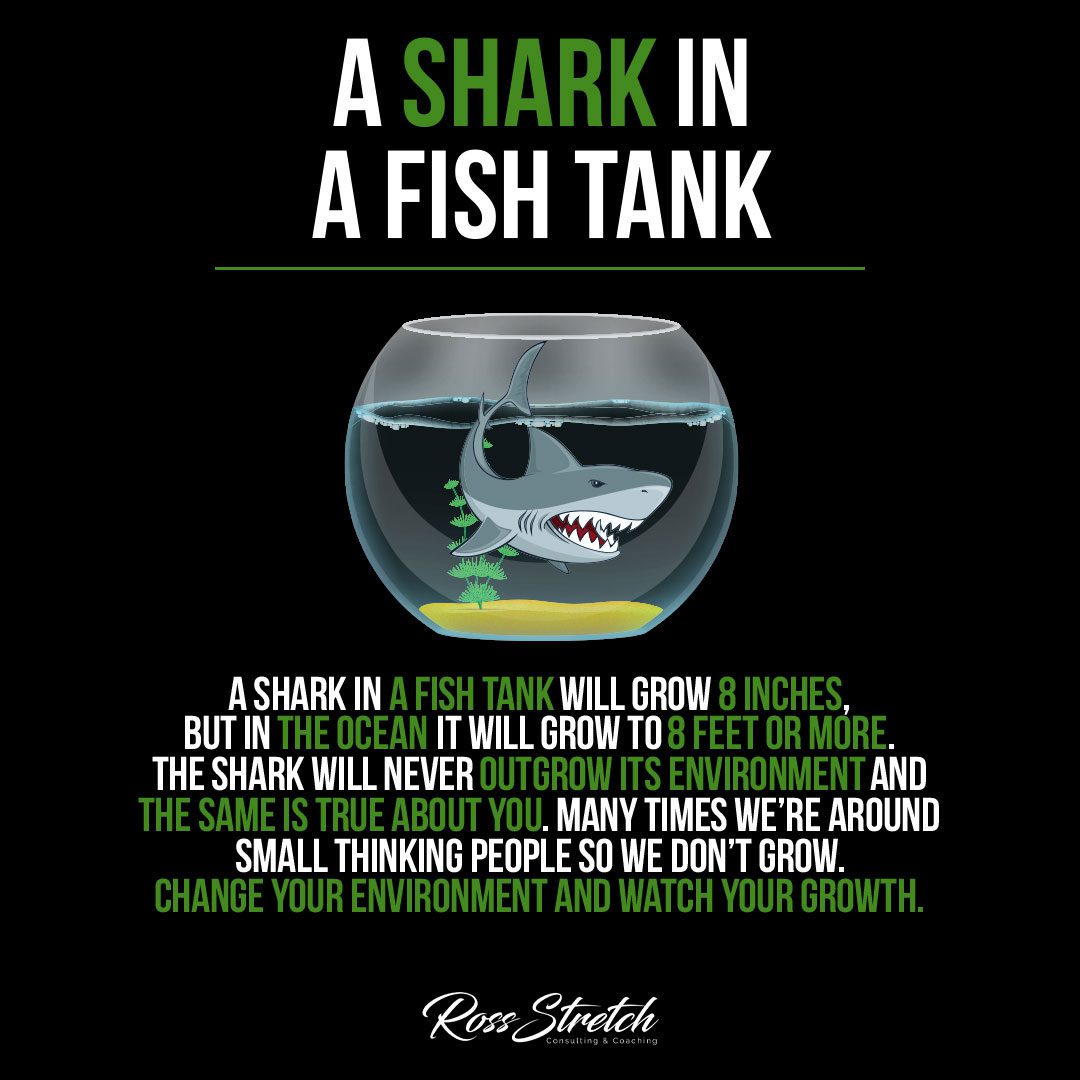
There’s a well-known observation about sharks: they tend to grow in proportion to their environment. Keep a shark in a small tank and it stays small. Release it into the ocean and it grows to a far greater size. As a metaphor for human development, this captures something genuinely important. The environment in which we operate — the size of the challenges we face, the people we spend time with, the standards we’re held to — shapes us more than most people recognize. Understanding this dynamic is the first step toward using it deliberately.
How Environment Shapes Potential
Most people think of personal development as an internal project — something worked on through willpower, habit formation, and individual discipline. These things matter, but they operate within a broader environmental context that quietly determines what’s possible. The research on social influence is clear: the people you spend the most time with shape your attitudes, your vocabulary, your standards, and your sense of what’s achievable. Jim Rohn’s observation that you become the average of the five people you spend the most time with has become a cliché, but clichés persist because they keep proving true.
This doesn’t mean environment is destiny. People break out of limiting circumstances all the time. But they tend to do it by deliberately exposing themselves to a different environment — through books, through mentors, through new professional communities, or through geographic relocation. The mechanism is always the same: changing what surrounds you changes what feels normal, what feels possible, and ultimately what you become.
Identifying Your Fish Tank
The fish tank in the analogy isn’t always obvious. It’s rarely a dramatic constraint like poverty or explicit gatekeeping. More often it’s subtler: a social circle that treats financial ambition as distasteful, a workplace culture that punishes creative risk-taking, a community where settling for “good enough” is the invisible standard. These environments don’t prohibit growth explicitly — they just make staying small feel normal and reasonable.
The signal that you’re in a constraining environment is usually a quiet sense that your ideas are too ambitious, that your goals are unrealistic, or that the people around you regard your aspirations with gentle skepticism. Complacency disguised as contentment is one of the most reliable signs that the tank has become too small. The honest question worth sitting with is: are the people around me growing, or are we all collectively standing still and calling it stability?
This isn’t about scorning where you came from or dismissing relationships that have real value. It’s about being honest with yourself about whether your current environment is actively expanding your sense of what’s possible, or quietly compressing it.
The Science Behind Environmental Influence
The research on environmental influence supports the shark metaphor more rigorously than casual observation alone. Nicholas Christakis and James Fowler’s landmark research, documented in their book Connected, demonstrated that behaviors and attitudes spread through social networks up to three degrees of separation. Your habits, your moods, and your economic outcomes are meaningfully influenced by the friends of your friends’ friends — people you’ve never met. This finding has significant implications: the social environment you choose to inhabit is not a neutral backdrop but an active input into who you become.
Stanford psychologist Carol Dweck’s research on growth mindset adds another dimension. Her work found that people who believe their capabilities are fixed by nature tend to avoid challenges that might expose their limits, while those who believe capabilities develop through effort actively seek out harder challenges. Crucially, this mindset is itself shaped by environment — the language that teachers, peers, and mentors use, the examples of growth and failure they model, and the standards they set all contribute to which mindset becomes dominant over time.
Expanding Your Ocean: Practical Strategies
Breaking out of a limiting environment doesn’t always require dramatic upheaval. Sometimes the most effective interventions are targeted and modest. Joining a mastermind group or professional community that operates at a level above your current one exposes you to higher standards and different assumptions about what’s normal. Reading detailed profiles of people who have achieved what you’re aiming for recalibrates your sense of what’s realistic. Attending industry events outside your immediate professional circle brings you into contact with people whose frame of reference for ambition and achievement differs meaningfully from your usual environment.
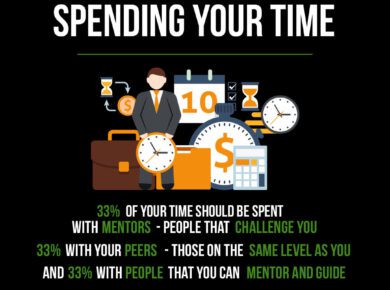
Mentorship is one of the highest-leverage environmental interventions available. A mentor who has navigated the territory you’re trying to cross doesn’t just provide advice — they implicitly expand the horizon of what you can imagine achieving, because you can see it embodied in a person you know. Access to mentors is more democratized than it once was; podcasts, newsletters, and online communities mean that exposure to high-performing people is no longer limited to those with the right geographic or institutional connections.
For some people and some goals, geographic relocation remains the highest-leverage move available. Cities with dense concentrations of ambitious professionals in a particular field create ambient standards of excellence that are genuinely difficult to replicate remotely. Being physically surrounded by people building significant things changes what feels ordinary and what feels aspirational — and that shift in perception drives behavioral change.
The Peer Effect: Choosing Your Comparison Group
One of the most underappreciated levers of personal growth is the deliberate selection of your comparison group — the people against whose standards you implicitly measure your own progress. If your comparison group consists entirely of people who are struggling or standing still, average performance feels like success. If your comparison group includes people who are genuinely thriving and building, average performance becomes a visible gap to close. This isn’t about cultivating dissatisfaction — it’s about using social comparison constructively as a feedback mechanism that keeps your personal standards calibrated to your actual potential.
The people you admire and aspire to become don’t need to be personally accessible. Studying the biographies, writing, and habits of high achievers in your field creates a form of environmental influence — one that operates through aspiration and pattern recognition rather than daily proximity. The goal is to make excellence feel familiar and attainable, not exceptional and remote.
Conclusion
The shark doesn’t debate with itself about whether to grow — it simply responds to the size of the water it inhabits. For humans, the analogy holds in both directions: a small environment quietly constrains, while a larger one quietly expands. The difference is that humans can choose their environment with intention. Recognizing the fish tanks in your own life — the relationships, the communities, the standards, the unexamined assumptions — and deliberately seeking larger water is one of the highest-leverage investments you can make in your own trajectory. Growth doesn’t wait for permission. It responds to the environment you build around yourself.
Resources
- Mindset: The New Psychology of Success by Carol Dweck — The foundational research on growth mindset and how beliefs about capability shape outcomes
- Connected by Nicholas Christakis and James Fowler — Research on how social networks influence behavior, health, and achievement
- James Clear: Environment Design — Practical guidance on using environmental design to build better habits and outcomes
- Mindset Works: Growth Mindset Science — Research summaries and practical applications of growth mindset in business and education

 Ross Stretch