The handmade jewelry market is one of the most accessible entry points in e-commerce — low startup costs, a passionate customer base, and platforms that make selling straightforward even for first-time entrepreneurs. If you have been looking for a business model that blends creative expression with genuine commercial potential, this space deserves serious attention.
This guide walks through the practical steps of building a profitable online jewelry business from scratch — from choosing a niche and sourcing products to building a brand on Instagram and running a Shopify store that converts. Whether you are looking for supplemental income or a full-time operation, the fundamentals here apply at any scale.
Understanding the Handmade Jewelry Market
Handmade and artisan jewelry continues to grow in consumer demand. Shoppers increasingly favor products with a story — items that feel personal and distinct from mass-market retail. This shift is partly cultural, a reaction to homogenized product feeds, and partly economic: buyers are willing to pay meaningful premiums for pieces that feel exclusive and crafted with intention.
The global jewelry market generates hundreds of billions of dollars annually, and the handmade segment captures an increasing share of that. Platforms like Etsy, Instagram, and TikTok Shop have created direct lines between independent sellers and buyers who actively seek out unique pieces. This is a market with proven purchasing behavior, real demand, and significant upside for entrepreneurs who approach it strategically rather than casually.
Choosing Your Niche
One of the most important early decisions is committing to a specific niche within the broader jewelry space. Trying to sell all types of jewelry to all types of people dilutes your brand and makes marketing exponentially harder. Focusing on a single category — minimalist gold necklaces, beaded bracelets, gemstone rings, or celestial-themed earrings — allows you to build a coherent aesthetic and speak directly to a defined customer.
A well-chosen niche also simplifies sourcing and inventory decisions. Rather than managing dozens of unrelated product categories, you can go deep in one area, develop genuine expertise, and let that expertise show up in your product descriptions, photography, and customer interactions. That depth becomes part of your brand authority.
Research potential niches by browsing Etsy’s bestseller lists, exploring relevant hashtags on Instagram and Pinterest, and using Google Trends to spot what is gaining momentum. Look for categories where demand is clear but visual identity is still underdeveloped — spaces where a distinctive brand could cut through.
Sourcing Your Products
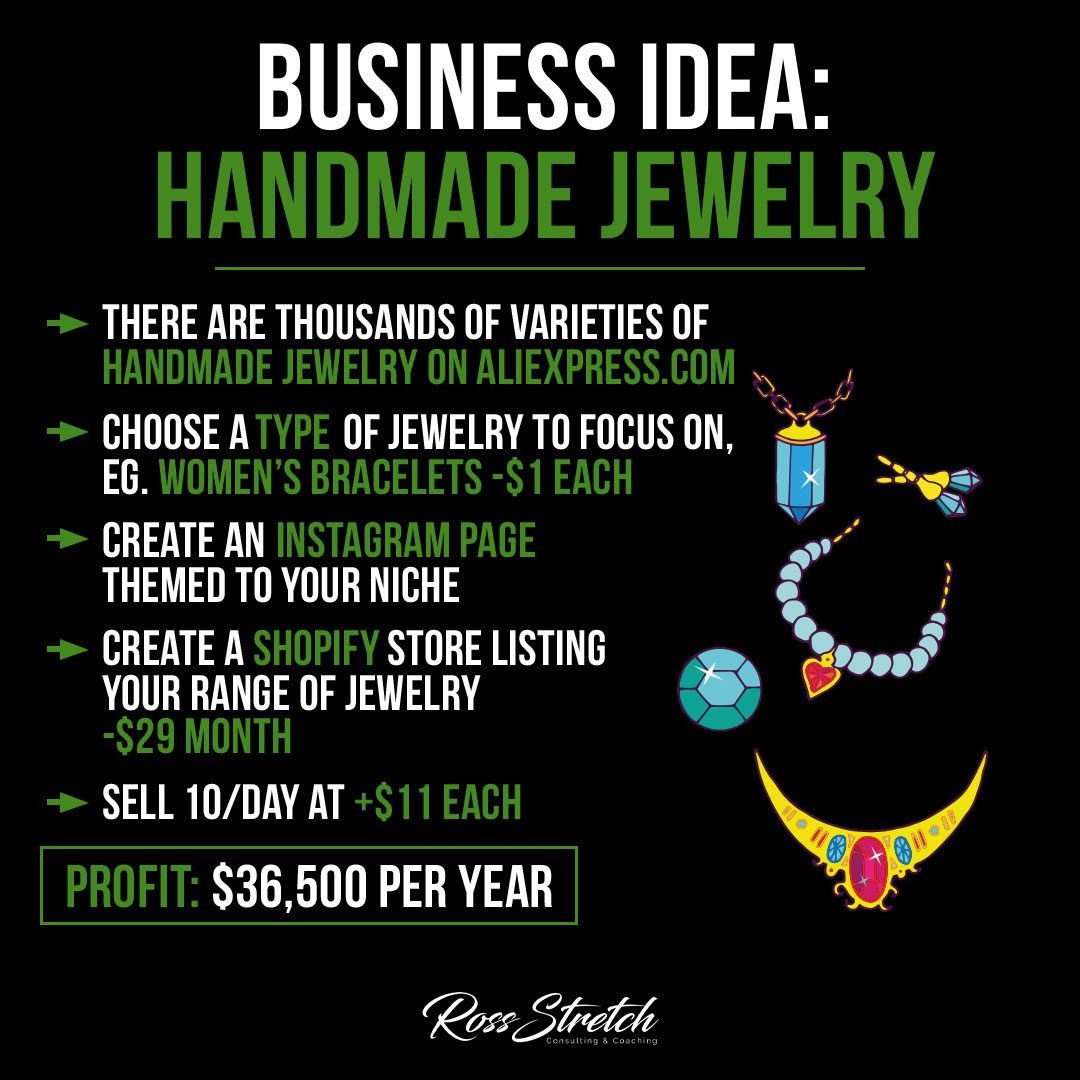
For entrepreneurs who want to sell jewelry without manufacturing it themselves, product sourcing is the business model’s foundation. Wholesale platforms offer access to thousands of jewelry styles at prices that leave significant room for retail markup. Simple bracelets, layered necklaces, and earring sets can often be acquired at wholesale for under three dollars per piece, enabling strong margins at retail price points of fifteen to thirty-five dollars or more.
When evaluating suppliers, prioritize three factors: product quality (always order samples before committing to inventory), shipping reliability (understand lead times and communicate them clearly to customers), and consistency (can the supplier reliably restock your bestsellers at the same quality). Building a relationship with two or three trusted suppliers is more valuable than maintaining a long list of untested vendors.
If you prefer to create jewelry yourself, sourcing raw materials from wholesale bead and findings suppliers allows you to maintain full control over quality and authenticity. The margins on handmade products are typically higher, and the story behind the pieces is a natural marketing advantage that mass-sourced jewelry cannot replicate.
Building Your Brand on Instagram
Instagram remains one of the most effective platforms for jewelry brands because it is fundamentally visual. A well-curated presence functions as both a portfolio and a sales channel. The key elements are a consistent aesthetic — controlled lighting, cohesive backgrounds, a defined color palette — a mix of product and lifestyle photography, and regular engagement with your audience through comments, stories, and direct messages.
Hashtag strategy matters in the early stages when you do not yet have an established audience. Use a mix of tiers: high-volume tags with broad reach, mid-tier tags with fifty thousand to five hundred thousand posts, and niche-specific tags your exact customer is likely to follow. That combination gives your content a chance to surface in both competitive and targeted searches.
Influencer collaborations can accelerate brand awareness efficiently. Micro-influencers in the fashion and lifestyle space — those with ten thousand to one hundred thousand engaged followers — often work on commission or charge accessible flat rates, and their audiences tend to trust product recommendations more than those from large accounts. One well-matched collaboration can deliver more brand exposure than weeks of organic posting.
Setting Up Your Shopify Store
Shopify is the industry standard for independent e-commerce stores, and the reason is straightforward: it handles payments, inventory tracking, shipping integrations, and analytics in one platform, and it scales well from a few orders per week to thousands per month. Plans start at approximately thirty dollars per month — a negligible cost relative to the revenue potential of a functioning jewelry store.
Your store’s design should reflect your brand’s aesthetic. Invest significant time in product photography — it is the single highest-impact conversion lever in jewelry e-commerce. Clear sizing information, material descriptions, care instructions, and a transparent shipping and returns policy reduce buyer hesitation and minimize post-purchase customer service friction.
Pricing for Profitability
Pricing handmade jewelry requires balancing your true costs — product sourcing, packaging, shipping, platform fees, and marketing spend — against what your target customer will pay at your chosen price point. A general starting framework for e-commerce jewelry is a minimum three-to-one markup on landed cost: if a piece costs four dollars including shipping from the supplier, the retail price should be at least twelve dollars, and likely more depending on your brand positioning.
As a realistic benchmark, a focused store selling ten pieces per day at an average profit margin of ten dollars per piece generates roughly thirty-six thousand dollars in annual profit. Reaching that volume typically takes six to eighteen months of consistent effort — building the audience, refining the product selection, and optimizing the marketing funnel. The first year is about learning what works. The following years are about scaling it.
Scaling the Business
Once your store has found product-market fit — certain pieces sell reliably and customer acquisition costs are understood — growth becomes a matter of amplification. Email marketing is one of the highest-return channels available: a list of engaged subscribers generates consistent revenue through new product launches, seasonal promotions, and re-engagement sequences that bring past customers back.
Paid social advertising on Instagram and Facebook allows you to scale what is already working organically. Start with small daily budgets, test multiple ad creatives, and optimize for purchases rather than clicks or impressions. Once a winning creative is identified, scaling ad spend becomes methodical. Expanding into additional product categories, launching limited seasonal collections, and exploring wholesale partnerships with boutique retailers are all natural growth stages as volume and brand recognition increase.
Conclusion
A handmade jewelry business offers a genuine combination of creative expression and commercial viability. The barrier to entry is low, the platforms are accessible, and the market rewards entrepreneurs who develop a clear brand identity and commit to consistent execution. The path from idea to profitable store is not instant — but it is navigable, and the fundamentals here give you a clear framework for building something worth owning.
Resources


 Ross Stretch