There are two fundamental ways to generate income: you can trade your time directly for money, or you can build systems that generate income without requiring your constant presence. Most people spend the entirety of their working lives doing the former — showing up, putting in hours, receiving a paycheck, and repeating. It works, but it has a hard ceiling. The moment you stop working, the income stops too. Learning to build income-generating assets — what some call pipelines rather than buckets — is the shift that makes genuine financial independence possible. It is not easy, and it does not happen overnight, but the mechanics are learnable by anyone willing to commit to the process.
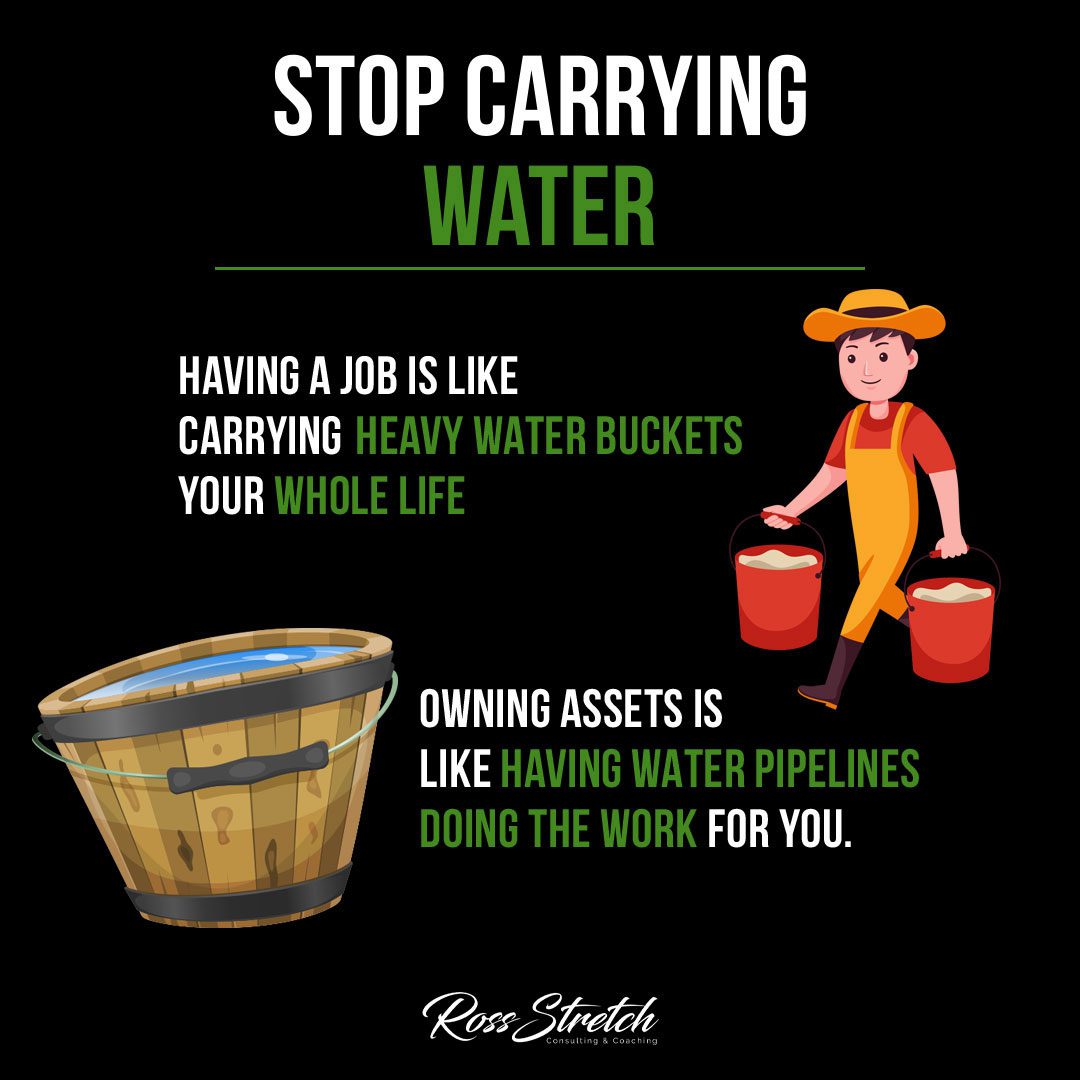
The Bucket Carrier’s Reality: Trading Time for Money
The majority of working people are, in financial terms, bucket carriers. They go to work, perform tasks, and receive compensation tied directly to the hours they spend. This model offers real benefits — predictability, structure, employer-provided benefits, and a clear relationship between effort and reward. For many people, employment is the right foundation, especially early in a career when skills, networks, and savings are still being built.
The limitation of trading time for money is that it is inherently finite. There are only so many hours in a week, only so many years in a career, and wages tend to grow incrementally rather than exponentially. No matter how skilled or productive you become, you are constrained by the number of hours you can work. When life intervenes — illness, family demands, burnout — the income stops with it.
This is not a critique of employment. Jobs are not the enemy. But relying exclusively on active income — money that only comes in when you are actively working — creates a fragile financial structure. Building assets alongside your employment is how you turn a single-leg stool into something stable enough to sit on comfortably for decades.
What Makes an Asset an Asset
In the most useful sense of the word, an asset is anything that puts money in your pocket without requiring your direct, ongoing labor to do so. This definition is narrower than the accounting sense of the word — it is not just anything you own, but specifically things that generate returns. A car you drive to work is not an asset in this sense. A dividend-paying stock, a rental property, a business with systems that run without you — these are.
Assets have two particularly valuable characteristics: they generate passive income, and they tend to grow in value over time. A well-chosen investment portfolio appreciates while also paying dividends or interest. A rental property generates monthly cash flow while building equity. A business that has been systematized can serve customers and generate revenue even when the founder is not actively involved. These are the pipelines — the infrastructure that carries water to you rather than requiring you to haul it yourself.
It is worth distinguishing between assets that require occasional attention and those that are truly hands-off. Most so-called passive income streams require meaningful upfront effort to establish and periodic maintenance to sustain. That is acceptable — the goal is not to eliminate work entirely, but to decouple income from time at a level that increases your options and your freedom.
The Most Accessible Pipelines Worth Building
For most people, the most accessible entry point into asset-building is the stock market. Index funds and ETFs allow ordinary investors to own diversified stakes in the economy without requiring active management or deep financial expertise. With consistent contributions over time, even modest amounts grow substantially through the power of compounding. This is the most straightforward pipeline available to any person with discretionary income to invest.
Real estate is another proven vehicle, though it requires more capital and more active management than index investing. Rental properties generate monthly income and appreciate over time, and they offer tax advantages that few other asset classes match. The barrier to entry is higher, but so is the degree of control — you can directly influence the performance of the asset through improvements, tenant selection, and strategic financing.
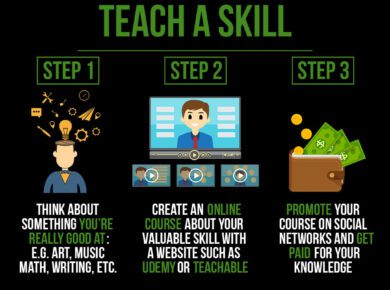
Digital assets — including content businesses, online courses, software tools, and intellectual property — have created entirely new pipeline-building opportunities. A well-researched online course, a subscription newsletter, or a software product can generate revenue indefinitely after the initial creative work is complete. The upfront investment is often low, and the ceiling for scale is high. These vehicles are particularly well-suited to people with specialized knowledge or creative skills to monetize.
How to Begin the Transition
The shift from bucket carrier to pipeline builder does not happen by quitting your job. It happens incrementally, often while the job continues. The first step is building a financial foundation strong enough to support investment: clearing high-interest debt, establishing an emergency fund, and creating a monthly surplus that can be directed toward assets rather than expenses.
Once that foundation is in place, education is the next priority. You do not need an MBA to invest intelligently, but you do need enough knowledge to make decisions that align with your timeline, risk tolerance, and goals. Books, reputable financial publications, and working with a fee-only financial advisor are all legitimate starting points. The key is to learn before you invest at meaningful scale, not after.
Diversification is critical. No single asset class performs well in all market conditions, and over-concentration in one area creates unnecessary risk. A well-constructed asset base typically combines multiple streams — equity market exposure, real estate, perhaps a business interest or digital asset — in a way that provides stability across different economic environments.
The Compounding Effect Over Time
The single most important factor in building meaningful asset wealth is time. Compound growth — where returns generate their own returns — is one of the most powerful forces in personal finance, and it rewards patience more than almost any other variable. An investment that grows at 8% annually doubles roughly every nine years. Starting a decade earlier than a peer, all else being equal, can mean the difference between modest comfort and genuine financial independence at retirement.
This means the best time to start building pipelines is now, regardless of how modest your starting point is. Consistency and time matter more than the size of any single contribution. Reinvesting the returns from your assets accelerates the process: instead of spending dividends or rental income, redirecting those funds back into additional asset purchases increases the rate at which your pipeline expands and the income it produces grows.
Conclusion
The journey from carrying buckets to building pipelines is one of the most important transitions a person can make in their financial life. It does not require exceptional intelligence, unusual luck, or inherited wealth — it requires a shift in thinking, a commitment to building rather than just earning, and the discipline to let time do its work. Every asset you build is a pipeline that carries water to you. Build enough of them, and you have the freedom to choose how you spend your most irreplaceable resource: your time.
Resources


 Ross Stretch