Every year, millions of people lose billions of dollars to scams, fraudulent schemes, and deceptive opportunities. The pitch is almost always the same: minimal effort, maximum reward, and a timeline that seems impossibly short. Whether it shows up in your inbox, on social media, or through someone you trust, a scam is engineered to bypass your critical thinking and exploit your desire for a better life. Knowing how to spot these traps — and build a real foundation for success instead — is a skill worth developing now.
Why This Matters
The financial damage from scams is staggering. According to the Federal Trade Commission, Americans reported losing more than $10 billion to fraud in 2023 alone — the highest figure ever recorded. But the cost goes beyond money. Victims often experience shame, damaged relationships, and a lasting mistrust of legitimate opportunities. Some lose retirement savings or take on debt trying to recover losses from schemes that promised the opposite.
What makes this especially important today is how sophisticated scams have become. Fraudsters now use AI-generated voices, deepfake videos, and professionally designed websites to appear credible. Many scams look indistinguishable from genuine investment platforms or business opportunities. Developing a sharp, skeptical eye is no longer optional — it is an essential life skill for anyone who earns, saves, or invests money.
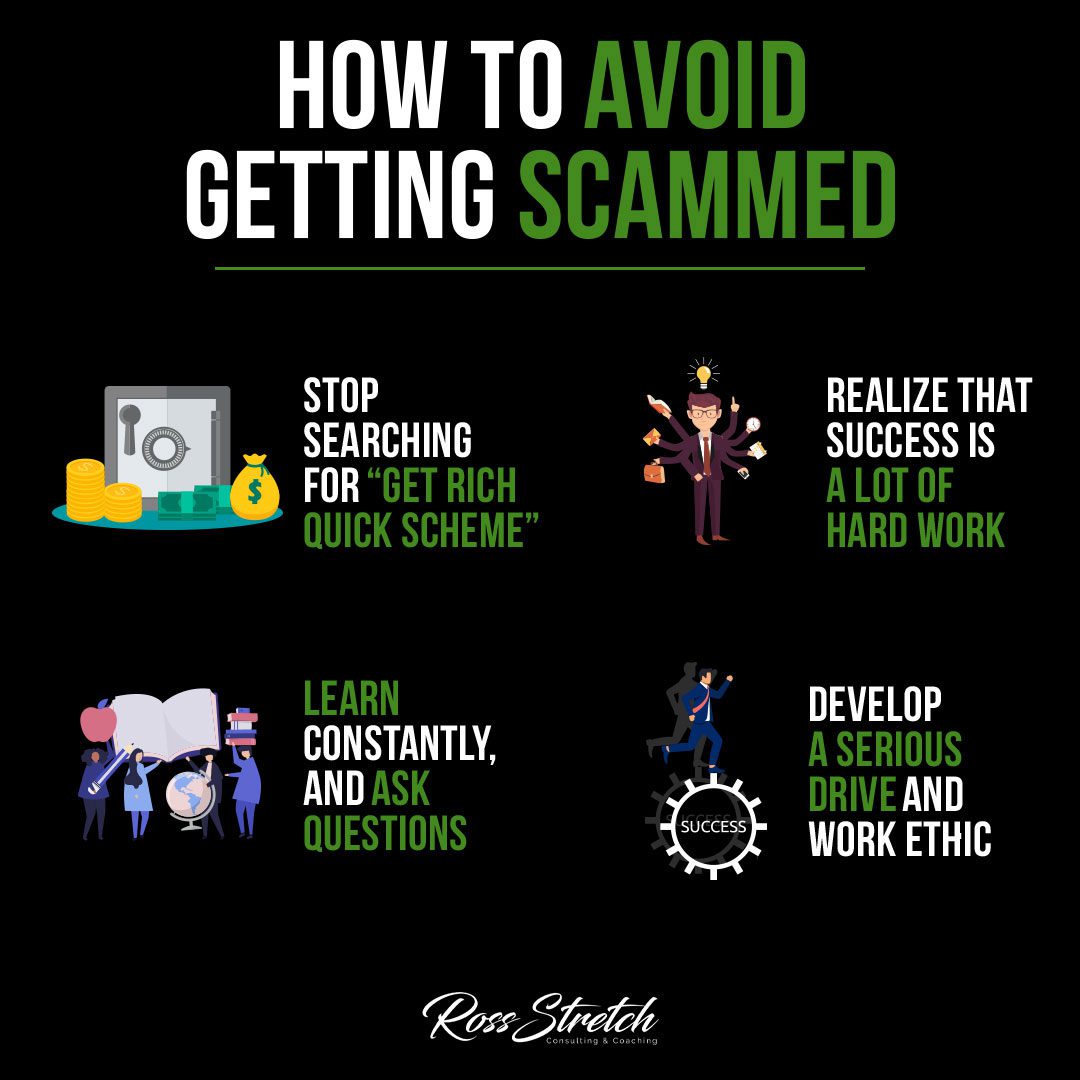
How to Avoid Getting Scammed
Step 1: Recognize the Classic Red Flags
Most scams share a predictable set of characteristics. Learning to identify them quickly is your first line of defense. The urgency tactic — “Act now or miss out forever” — is one of the most reliable signals that something is wrong. Legitimate opportunities do not disappear if you take a day to think them over.
- Be suspicious of any offer that promises high returns with little or no risk.
- Watch for pressure to decide immediately or keep the opportunity secret from others.
- Question any opportunity that requires you to recruit others to earn your money back.
- Avoid anything where the fee structure is vague, upfront, or hidden in fine print.
Step 2: Research Every Opportunity Thoroughly
Before committing time, money, or personal information, do your homework. Search the company or person’s name alongside words like “scam,” “complaint,” or “review.” Check the Better Business Bureau, Trustpilot, and the FTC’s consumer complaint database. For investment opportunities, verify registration with the SEC or your country’s financial regulator.
- Look up the business address — many scams use fake or unverifiable locations.
- Check domain registration dates; a website created last month is a warning sign.
- Search for the exact wording in their pitch — scammers often reuse scripts across victims.
- Ask for a written contract or prospectus and have it reviewed by a professional if needed.
Step 3: Verify Legitimacy Through Official Channels
Do not use contact information provided by the person approaching you. If someone claims to be from your bank, the IRS, or a well-known company, hang up and call the organization directly using the number listed on their official website. This simple step exposes a huge proportion of impersonation scams immediately.
- Never click links in unsolicited emails or texts — navigate directly to the site instead.
- Verify the email sender’s domain carefully; scammers use addresses like “support@paypa1.com.”
- For investment offers, check the SEC’s EDGAR database or FINRA’s BrokerCheck tool.
- When in doubt, ask a trusted friend, family member, or financial advisor before proceeding.
Step 4: Guard Your Personal Information
Your Social Security number, bank account details, passwords, and even your date of birth are valuable to fraudsters. Once that information is shared, recovering control can take years. Treat any request for sensitive personal data as a serious transaction requiring verification — not just a form to fill out quickly.
- Use unique, strong passwords for every account and enable two-factor authentication wherever possible.
- Never send payment via wire transfer, gift cards, or cryptocurrency to someone you have not verified in person.
- Shred physical documents containing personal information before discarding them.
- Monitor your credit report regularly through AnnualCreditReport.com to catch unauthorized activity early.
Step 5: Build Real Success Through Proven Principles
The best long-term protection against scams is a clear understanding of how genuine wealth and success are actually built. Real growth — in a career, a business, or an investment portfolio — is incremental and requires sustained effort. When you internalize this, “get rich quick” pitches lose their pull entirely.
- Set specific, measurable goals and track your progress over months and years, not days.
- Invest in skills and knowledge that have documented market value in your field.
- Build relationships with mentors and peers who have achieved what you are working toward legitimately.
- Let compound interest and consistent effort do the heavy lifting — both require patience, not shortcuts.
Common Mistakes to Avoid
- Acting on emotion instead of evidence. Scammers manufacture urgency and excitement deliberately. If you feel a rush to act, slow down instead of speeding up.
- Assuming someone you know has fully vetted an opportunity. Many scams spread through trusted social networks. A referral from a friend does not make something legitimate.
- Believing you are too smart to be fooled. Research consistently shows that overconfidence increases vulnerability. Every demographic falls for scams, including educated professionals.
- Failing to report scams out of embarrassment. Reporting losses to the FTC or your local law enforcement helps authorities track patterns and protect others.
- Chasing losses. If you have been defrauded, be especially wary of “recovery scams” that promise to retrieve your money for an upfront fee — they are almost always a second scam targeting the same victim.
Conclusion
Avoiding scams is ultimately about cultivating a mindset that values evidence over excitement, patience over shortcuts, and verified facts over persuasive promises. The skills that protect you from fraud — critical thinking, thorough research, and a realistic understanding of how success works — are the same skills that drive genuine achievement. Every time you pause, verify, and choose the harder but honest path, you are not just protecting your money. You are building the judgment that scammers cannot touch.
If you suspect you have encountered a scam or have already been defrauded, report it immediately to the FTC at ReportFraud.ftc.gov and contact your bank or card issuer to halt any transactions. Quick action significantly improves recovery outcomes.
Resources
- FTC Report Fraud — ReportFraud.ftc.gov: The official U.S. government portal to report scams and get guidance on next steps after fraud.
- Better Business Bureau Scam Tracker: Search and report scams by type and location to see what schemes are active in your area.
- FBI Internet Crime Complaint Center (IC3): Report internet-based fraud and access the FBI’s annual internet crime reports.
- SEC Investor Education — Fraud: Learn to recognize investment fraud and verify the credentials of financial professionals through official databases.


 Ross Stretch