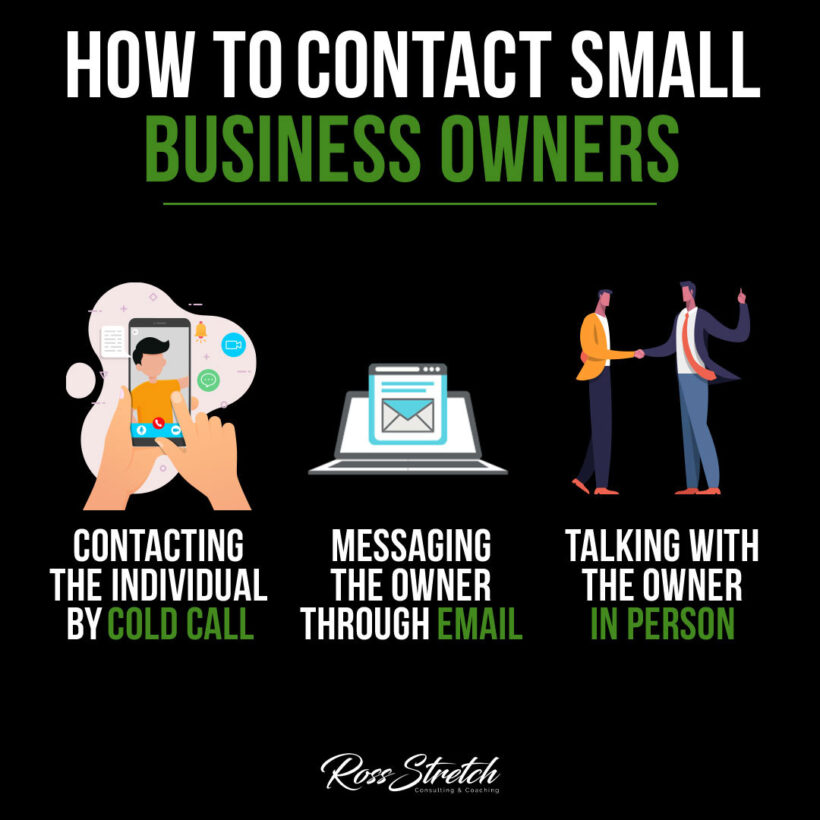

Reaching small business owners effectively requires more than a generic pitch and a list of contact numbers. These are busy, protective individuals who receive dozens of outreach attempts every week — and who have little patience for approaches that waste their time or feel purely transactional. Whether your goal is a sales conversation, a partnership proposal, or a supplier relationship, knowing how to contact small business owners through the right combination of cold outreach, email, and in-person networking will dramatically improve your response rate and the quality of the relationships you build.
Why This Matters
Small business owners are among the most valuable professional contacts you can cultivate. Unlike corporate buyers, they make decisions quickly, often without layers of approval, and they are capable of forming loyal, long-term relationships with people who prove their value. A single well-handled conversation with the right owner can open doors that months of corporate email chains never would. That access, however, is not given freely — it is earned through preparation and genuine respect for their time.
A careless outreach attempt — a mass email with zero personalization, a cold call with no clear purpose, or an unannounced visit that disrupts a busy workday — can permanently close a door that was otherwise open. Conversely, a thoughtful, well-timed approach that demonstrates you understand their specific business and have something genuinely relevant to offer can spark a relationship that lasts for years. The methods below work, but only when executed with care, clarity, and authentic intent.
How to Contact Small Business Owners
Step 1: Research the Business Before You Make Any Contact
No outreach method works without preparation. Before you pick up the phone, write an email, or walk into a storefront, spend 15 to 20 minutes learning about the business. Understand what they sell, who their customers are, what problems they likely face, and where gaps might exist in what they currently have. This research transforms your outreach from a generic pitch into a relevant conversation — and it immediately signals that you are worth talking to.
- Review their website, Google Business Profile, and social media accounts thoroughly before reaching out.
- Read their customer reviews to understand what buyers value and what frustrations they experience.
- Identify the owner’s name and use it — “I’m looking for the owner” is far weaker than addressing someone directly by name.
- Avoid referencing generic facts about their industry; reference specific, observable details about their actual business.
Step 2: Make Your Cold Call Count
Cold calling remains one of the most effective outreach methods when executed correctly, because it creates an immediate, real-time conversation. The problem is that most cold calls are under-prepared and lead immediately with a pitch rather than a question. A strong cold call is concise, respectful of the owner’s time, and focused entirely on whether there is a potential fit — not on closing a sale in the first 90 seconds.
- Prepare a 30-second opening that identifies who you are, why you are calling, and one specific reason it is relevant to their business.
- Ask early whether they have two minutes — if they do not, offer to schedule a more convenient time rather than pushing through.
- Listen more than you talk; let their responses guide where the conversation goes.
- Practice your opener until it sounds natural and conversational, not scripted or rehearsed.
- Follow up with a brief email within 24 hours after any call that ends with expressed interest.
Step 3: Write Emails That Actually Get Read
Email allows the business owner to review your message on their own schedule, making it less intrusive than a phone call and easier to share or revisit. The challenge is that most outreach emails look identical — vague subject lines, long paragraphs, and a value proposition that could apply to any business in the country. A great outreach email is short, specific, and built around the reader’s situation rather than the sender’s offering.
- Write a subject line that references something specific about their business — not a generic opener like “Quick question” or “Partnership opportunity.”
- Keep the body under 150 words; if you cannot make your case in that space, your pitch needs sharpening.
- Personalize the first sentence to demonstrate that you have done actual research on their business.
- End with a single, clear call to action — a simple yes/no question or a request for a short, specific meeting.
- Avoid attachments in first-contact emails — they trigger spam filters and add unnecessary friction to the response.
Step 4: Build Real Connections Through In-Person Networking
Meeting a small business owner in person — at a local networking event, trade show, chamber of commerce meeting, or industry conference — creates a level of trust that no digital channel can replicate. In-person interactions allow you to demonstrate your personality, show genuine interest, and make a memorable impression that lasts. The key is shifting your mindset from selling to connecting: you are there to start a relationship, not close a deal in a single conversation.
- Attend events where your target business owners are likely to gather — local BNI chapters, chamber of commerce meetings, and industry associations are strong starting points.
- Ask thoughtful questions about their business and listen actively before discussing yourself or your offering.
- Exchange contact information or connect on LinkedIn before leaving any conversation worth continuing.
- Follow up within 48 hours and reference something specific from your conversation to reinforce the connection.
- Avoid making unannounced visits to their place of business during busy hours — respect their operational reality.
Step 5: Use LinkedIn and Social Media as Warm-Up Tools
LinkedIn has become a highly effective channel for reaching small business owners in a low-pressure environment. Engaging thoughtfully with their content — leaving substantive comments, sharing their posts, or sending a personalized connection request — establishes familiarity before you ever pitch anything. By the time you reach out directly, you are no longer a stranger, and that difference in context significantly changes how your message is received.
- Send connection requests with a personalized note that explains why you want to connect specifically.
- Engage genuinely with their content for two to four weeks before initiating any direct sales conversation.
- Use direct messages to start conversations only after some meaningful engagement has already occurred.
- Avoid automated connection requests or copy-paste LinkedIn pitches — they are immediately recognizable and routinely ignored or reported as spam.
Common Mistakes to Avoid
- Leading with a sales pitch before building any rapport — this is the fastest way to end a conversation before it has a chance to become productive.
- Sending generic, unpersonalized messages — if your outreach could be sent to any business with a simple find-and-replace, it will be treated as spam and deleted without a response.
- Calling without a clear value proposition — know exactly what problem you solve and why it matters to this specific business before you dial the number.
- Following up too aggressively — multiple contacts within the span of a few days signals desperation rather than professionalism, and it will get you blocked.
- Failing to follow up at all — most outreach requires two to four touchpoints before receiving a response; one unanswered email is not a definitive no.
Conclusion
Contacting small business owners effectively comes down to a single guiding principle: make every interaction about them, not about you. Research before you reach out. Personalize every message. Lead with value, not a pitch. Give them a clear reason to respond rather than a reason to delete. Whether your preferred channel is cold calls, email, in-person networking, or social media, these principles apply equally across all of them.
Start with the method that aligns best with your target audience and your own communication strengths, then build out your approach from there. A well-executed outreach strategy — consistent, respectful, and genuinely useful — builds a pipeline of small business relationships that can define your professional opportunities for years to come.
Resources
- HubSpot — Cold Calling Tips and Scripts — Proven strategies, real-world examples, and templates for making effective cold calls that convert.
- Mailchimp — Email Marketing Benchmarks and Best Practices — Data-driven guidance on writing outreach emails that get opened, read, and acted on.
- LinkedIn Sales Blog — Practical guidance on using LinkedIn effectively for B2B prospecting and professional outreach.
- Eventbrite — Networking Events — Find local and industry-specific in-person networking events where small business owners gather regularly.

 Ross Stretch