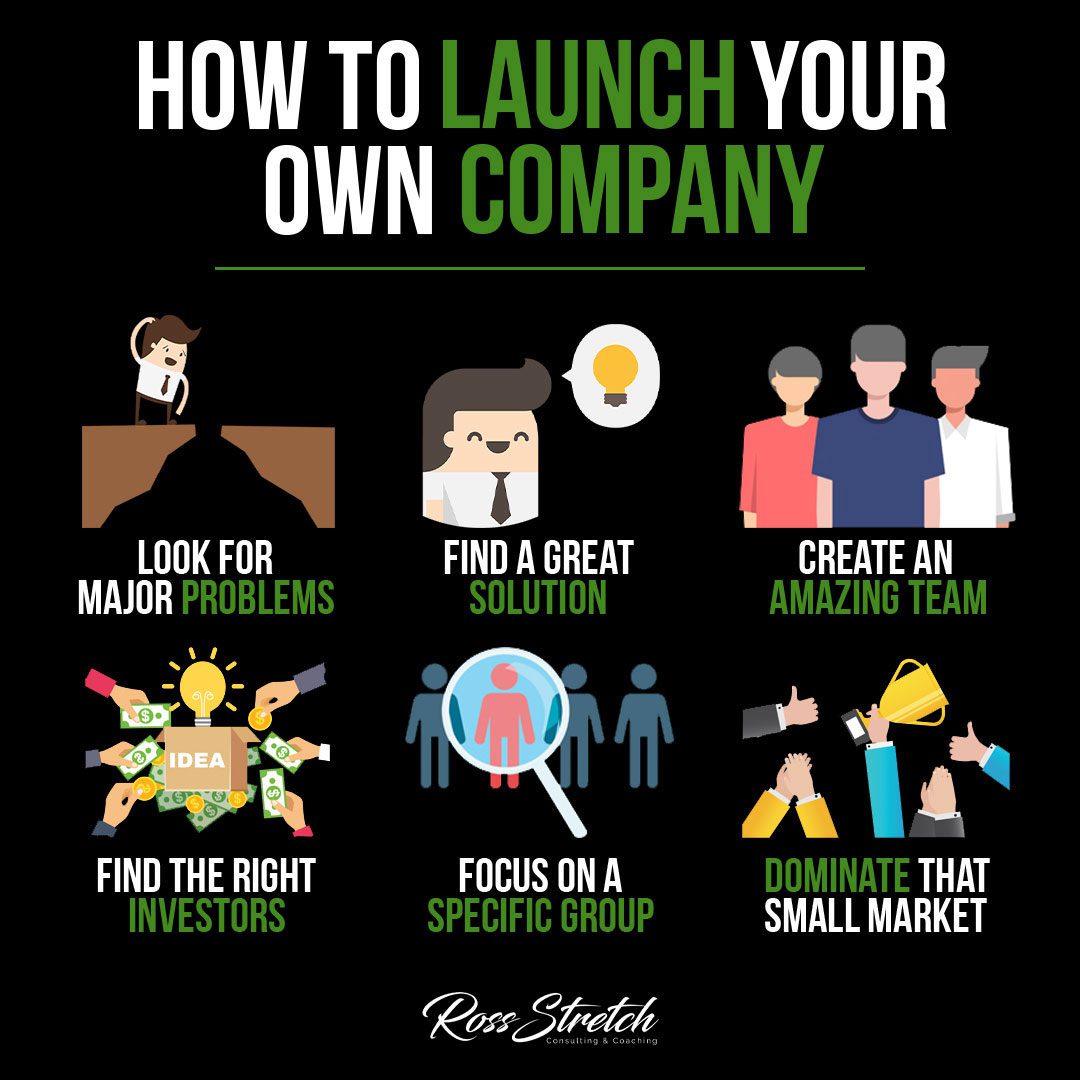
Launching your own company is one of the most demanding and rewarding things you can do — but ambition alone isn’t enough. The difference between companies that gain traction and those that fold within the first year often comes down to a few critical early decisions: how well you understand the market, how clearly you define your value proposition, how effectively you build your founding team, and how strategically you approach funding and niche positioning. This guide gives you the framework to get those decisions right from the start.
Why This Matters
The failure rate for new companies is genuinely high — the majority of startups don’t survive past the five-year mark, and most that fail do so within the first three years. But the reasons they fail are well-documented and largely preventable. Analysis of startup post-mortems consistently identifies the top causes of failure as: no real market need, running out of cash, and not having the right team. These are not random outcomes — they are predictable failures that happen when founders skip critical early groundwork.
Getting the foundational elements right before you scale is the single highest-leverage action you can take as a founder. Companies that clearly understand their market, have validated demand for their product, and have assembled a capable team dramatically outperform those that don’t — regardless of how much funding they raise. The steps below are the practical actions that separate companies with staying power from those that burn bright and disappear.
How to Launch Your Own Company
Step 1: Identify a Real Market Problem
The best companies are built around genuine, painful problems that enough people face and are willing to pay to solve. Many founders start with a solution they’re excited about and then try to find a problem it solves — that’s backwards. Start with the problem. Talk to people in your target market. What frustrates them? What are they spending time or money on that feels inefficient? What do they complain about repeatedly? Document the patterns across multiple conversations. A problem that appears consistently across diverse customer interviews is a strong signal of genuine market need.
- Do: Conduct 15–20 discovery interviews with people in your target market before forming any product conclusions
- Do: Look for problems that are frequent, painful, and currently solved inadequately by existing options
- Avoid: Falling in love with your solution before confirming the problem is real and significant enough to build a business around
- Avoid: Relying on online surveys alone — in-person or video conversations reveal depth that surveys miss entirely
Step 2: Develop and Validate Your Solution
Once you’ve confirmed a genuine market problem, develop the simplest possible version of a solution — what lean startup methodology calls a minimum viable product, or MVP. The goal is not to launch something perfect; it’s to launch something real enough that people can give you meaningful feedback. An MVP might be a landing page, a manual process, a prototype, or a limited version of your product. What matters is getting it in front of actual customers as quickly as possible and measuring their behavior, not just collecting their opinions.
- Do: Build the smallest version of your product that delivers genuine value to an early adopter
- Do: Measure behavior — whether people actually use, pay for, or return to your product — rather than just asking if they would
- Avoid: Spending months building a full product before talking to a single potential customer
- Avoid: Treating positive feedback in early conversations as confirmed demand — paying customers are the real validation
Step 3: Build Your Core Team
No company is built by one person. The founding team determines the ceiling of what’s possible — and a weak team is often the reason promising ideas never reach their potential. The strongest founding teams combine complementary skills: typically someone who builds (technical or product), someone who sells (business development or marketing), and someone who operates (finance and execution). Assess your own skill set honestly and recruit people who fill your most critical gaps — not people who think exactly like you do.
- Do: Map your own strengths honestly and prioritize hiring for your most critical skill gaps
- Do: Establish clear equity agreements, roles, and decision-making authority with co-founders early and in writing
- Avoid: Hiring people who look great on paper but are misaligned with your company’s values and working style
- Avoid: Delaying difficult team conversations — co-founder conflicts are one of the top reasons early-stage companies fail
Step 4: Secure the Right Funding
Funding strategy depends heavily on your business model and growth ambitions. Not every company needs venture capital — and for many, taking VC money before achieving product-market fit creates more pressure than it solves problems. Bootstrap as far as you can, then consider angel investors or small business loans when you have clear validation and a specific plan for deploying capital. When you do pursue investors, approach those with direct experience in your industry — the mentorship and network access they offer often matters as much as the money itself.
- Do: Know your runway and capital requirements precisely before approaching any investor
- Do: Prepare a clear pitch that communicates the problem, your solution, the market size, your traction, and your team
- Avoid: Raising money from anyone who will write a check — misaligned investors create governance problems later in the company’s life
- Avoid: Overvaluing your company at the seed stage — an inflated early valuation makes subsequent funding rounds significantly harder
Step 5: Focus on a Niche Market First
The fastest path to sustainable growth is usually a narrow one. Trying to serve everyone dilutes your messaging, stretches your resources, and makes it nearly impossible to stand out against established players. Identify the specific customer segment where you can win most decisively — the group with the most acute pain, the easiest to reach, and the most likely to pay. Dominate that niche first. Build a reputation, refine your product through their feedback, and generate case studies and testimonials before expanding to adjacent markets.
- Do: Define your ideal customer with specificity — industry, company size, role, core pain point, and buying behavior
- Do: Develop marketing messaging that speaks directly to your niche’s specific language and concerns
- Avoid: Building generic messaging designed to offend no one — it also persuades no one
- Avoid: Expanding to new markets before you have genuine traction and repeatable revenue in your initial niche
Common Mistakes to Avoid
- Building without validating: Spending months developing something the market doesn’t want is the most expensive and most preventable mistake in entrepreneurship.
- Ignoring legal structure: Choosing the wrong business entity — or none at all — creates tax problems and liability exposure. Get proper legal advice before your first dollar of revenue.
- Neglecting sales in the early stage: Founders who focus exclusively on product and avoid selling discover too late that they have a hobby, not a business.
- Underestimating time to revenue: Most businesses take 12–24 months to reach consistent profitability. Plan your runway accordingly and don’t be surprised when it takes longer than projected.
- Scaling before product-market fit: Adding sales reps, marketing spend, and headcount before nailing the core product is how companies burn through capital without ever finding what they’re building toward.
Conclusion
Launching a company is not about having the perfect idea — it’s about executing well on a validated problem with the right people and the right resources. The steps in this guide are designed to reduce the guesswork that kills most startups before they ever find their footing. Identify a real problem. Build the simplest solution that tests your assumptions. Assemble a team that covers your gaps. Fund intelligently. And go deep in a niche before you go broad.
The best time to start is when you’re clear on the problem you’re solving — not when you feel completely ready, because that moment rarely comes. Use this guide as your operating framework, revisit it as you progress through each stage, and give yourself permission to adjust as you learn. Every thriving company today started exactly where you are now.
Resources
- Y Combinator Startup School: Free online curriculum from the world’s most successful startup accelerator, covering ideation, product development, and fundraising.
- U.S. SBA — Write Your Business Plan: Authoritative federal guidance on writing a business plan with templates and examples across different business types.
- Harvard Business Review — Why the Lean Start-Up Changes Everything: The foundational article on building companies through validated learning and rapid iteration rather than extensive upfront planning.
- SCORE Business Plan Template Gallery: Free, professionally designed templates for business plans, financial projections, and pitch decks.


 Ross Stretch