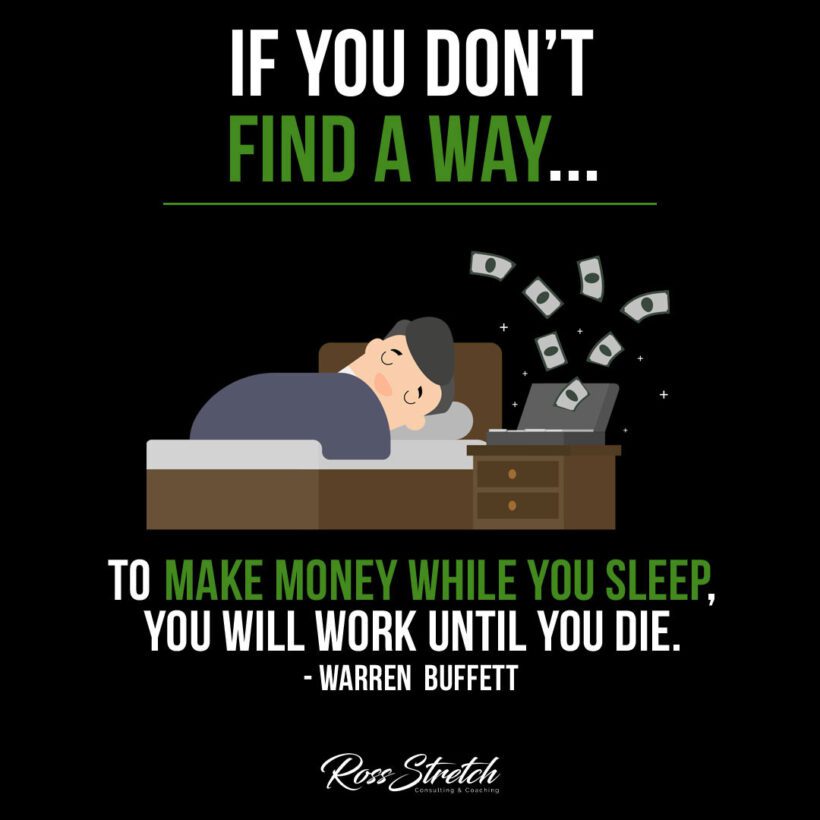

Warren Buffett’s observation is blunt and accurate: if you don’t find a way to make money while you sleep, you will work until you die. For most professionals, income is entirely active — stop working and the money stops flowing. Passive income breaks that dependency, and building it is one of the most consequential financial decisions you can make in your 20s, 30s, or 40s.
This is not about get-rich-quick schemes or overnight windfalls. Passive income requires real upfront work, real capital, or both. What it gives you in return is a stream of earnings that continues whether you are at your desk or not. Over time, multiple passive income streams compound into genuine financial independence — and the difference between those who build them and those who don’t usually comes down to whether they started.
What Passive Income Actually Means
Passive income is not the same as no-work income. Every meaningful passive income stream demands a significant investment upfront — whether that is capital (dividend stocks, rental property), time (building a course or blog), or both (launching a business that eventually runs without you). The passive part refers to the ongoing earnings phase, where income continues without proportional ongoing time input.
The critical distinction is the decoupling of time and money. Active income — a salary, hourly consulting, freelance work — ties your earnings directly to your hours. The moment you stop working, the income stops. Passive income creates recurring returns from a one-time or limited investment of effort or capital. The goal is to own assets that generate cash flow, not to trade time indefinitely for a paycheck that stops the moment you do.
Common passive income streams include dividend-paying stocks, rental real estate, REITs, interest from bonds or high-yield savings, royalties from creative work, revenue from online courses or digital products, and affiliate marketing income from an established content platform. Each carries a different risk profile, capital requirement, and maintenance burden — and understanding those differences is where any serious passive income strategy begins.
Why Passive Income Changes the Wealth Equation
The most important thing passive income does is buy you options. When your monthly expenses are covered by investment income, you are no longer working because you have to — you are working because you choose to. That shift in psychological position changes everything: the projects you pursue, the risks you take, the negotiating power you have with employers or clients. Financial optionality is what real wealth feels like in practice.
There is also a compounding effect that takes time to appreciate. A portfolio generating $500 per month at age 35 can, with consistent reinvestment, generate multiples of that amount by retirement — without any additional capital contributions. The longer you wait to start building passive income streams, the more time-sensitive compounding you sacrifice. Starting early, even at a small scale, matters enormously because compounding rewards duration above almost every other variable.
Beyond retirement planning, passive income serves as a financial buffer. Job loss, health crises, economic downturns — all of these hit differently when you have income flowing regardless of your employment status. Financial resilience is not just about a savings account; it is about recurring income that does not depend on your labor each month.
Dividend Stocks: The Most Accessible Entry Point
Dividend-paying stocks are one of the most accessible entry points for building passive income. Companies that have paid and grown their dividends for decades provide a stream of quarterly payments that arrives without any ongoing action on your part. By building a diversified portfolio of dividend stocks or investing in a dividend-focused ETF like VYM or SCHD, you create an income stream that scales directly with the size of your holdings.
The yields are modest — typically 2% to 5% annually — but the compounding effect over time is significant. A $100,000 dividend portfolio yielding 4% generates $4,000 per year, or roughly $333 per month. At $500,000, that becomes over $1,600 per month. These figures are not fantasy projections; they are the arithmetic of patient, consistent investing applied over time.
The key is consistency and reinvestment. Many brokerage platforms allow automatic dividend reinvestment (DRIP), which means every quarterly payment immediately purchases more shares, which generate more dividends — a self-reinforcing cycle that builds wealth on autopilot. The investor who reinvests dividends for 20 years will accumulate dramatically more than one who spends them, even if both started with the same initial capital.
Real Estate: The Classic Wealth Builder
Real estate remains one of the most reliable passive income vehicles available to individual investors. Rental properties generate monthly cash flow, benefit from appreciation over time, and offer tax advantages through depreciation deductions. For investors with sufficient capital or access to financing, residential rental properties can dramatically accelerate wealth building in ways that stock portfolios alone cannot replicate.
The practical reality of direct property ownership is that it requires more active management than stocks — tenant screening, maintenance coordination, lease renewals. Many investors reduce this burden by hiring property management companies, which typically charge 8% to 12% of monthly rent. That cost reduces net yield but preserves the passive nature of the income. Real estate investment trusts (REITs) offer an alternative: exposure to rental income from diversified real estate portfolios, all through a standard brokerage account, without a single property management call.
Platforms like Fundrise have also opened real estate investing to a broader audience at lower minimums, making it possible to add real estate income exposure without the capital requirements of direct property ownership. The entry point has never been more accessible, which means the primary barrier for most people is decision rather than eligibility.
Digital and Content-Based Income Streams
The internet has created entirely new categories of passive income that did not exist two decades ago. An online course built once can be sold indefinitely. A blog post optimized for search traffic can generate affiliate commissions for years. A YouTube channel earns advertising revenue on videos created long ago. These streams take substantial upfront effort to build — months or years in most cases — but the payoff is income that continues without proportional ongoing work.
Affiliate marketing is a particularly efficient entry point for those who already create content. By recommending products or services through tracked links on a blog, newsletter, or social media presence, you earn a commission on each resulting sale — without creating, storing, or shipping anything. Platforms like Amazon Associates and ShareASale connect publishers with thousands of brands across every industry and niche.
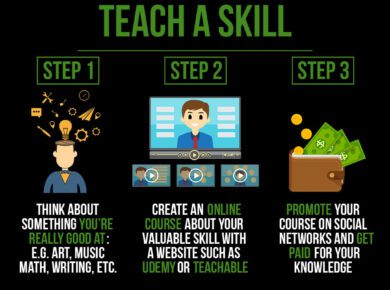
Online courses built on platforms like Teachable or Kajabi can generate recurring revenue once launched, especially when paired with an email list and search-optimized content. The initial investment is time: researching, scripting, recording, and editing. The return, for a course with genuine value in a real market, is sales that continue for years with minimal additional effort. The upfront work is the price of admission; the ongoing income is the return on that investment.
Building a Diversified Passive Income Strategy
The most financially resilient approach combines multiple passive income streams across different asset classes and mechanisms. A professional might hold dividend stocks and REITs in their brokerage account, earn affiliate income from a niche blog, and receive rental income from a single investment property. Each stream has a different risk profile and growth trajectory — and together, they provide redundancy that no single stream can offer.
Diversification also allows you to start where you are. You do not need hundreds of thousands of dollars to begin. You can start with a modest position in a dividend ETF, write your first 20 blog posts, or spend a month learning the fundamentals of real estate investing. The key is to start, stay consistent, and reinvest returns during the growth phase. Over five to ten years, those early small steps compound into meaningful income streams.
The goal is not perfection — it is progress. Every passive income dollar you generate is a dollar your future self does not have to earn through active labor. The professionals who start building these systems early are the ones who eventually reach the point where work becomes a genuine choice rather than a financial obligation. That is the real meaning of financial freedom.
Conclusion
Buffett’s advice is not just a memorable quote — it is a structural observation about how wealth actually accumulates. Passive income streams, built steadily over time, are what separate those who achieve genuine financial independence from those who remain dependent on their next paycheck indefinitely. The strategies are real, the tools are accessible, and the math works. The only variable is whether you start building now or continue waiting for circumstances that will never be perfectly aligned.
Resources


 Ross Stretch