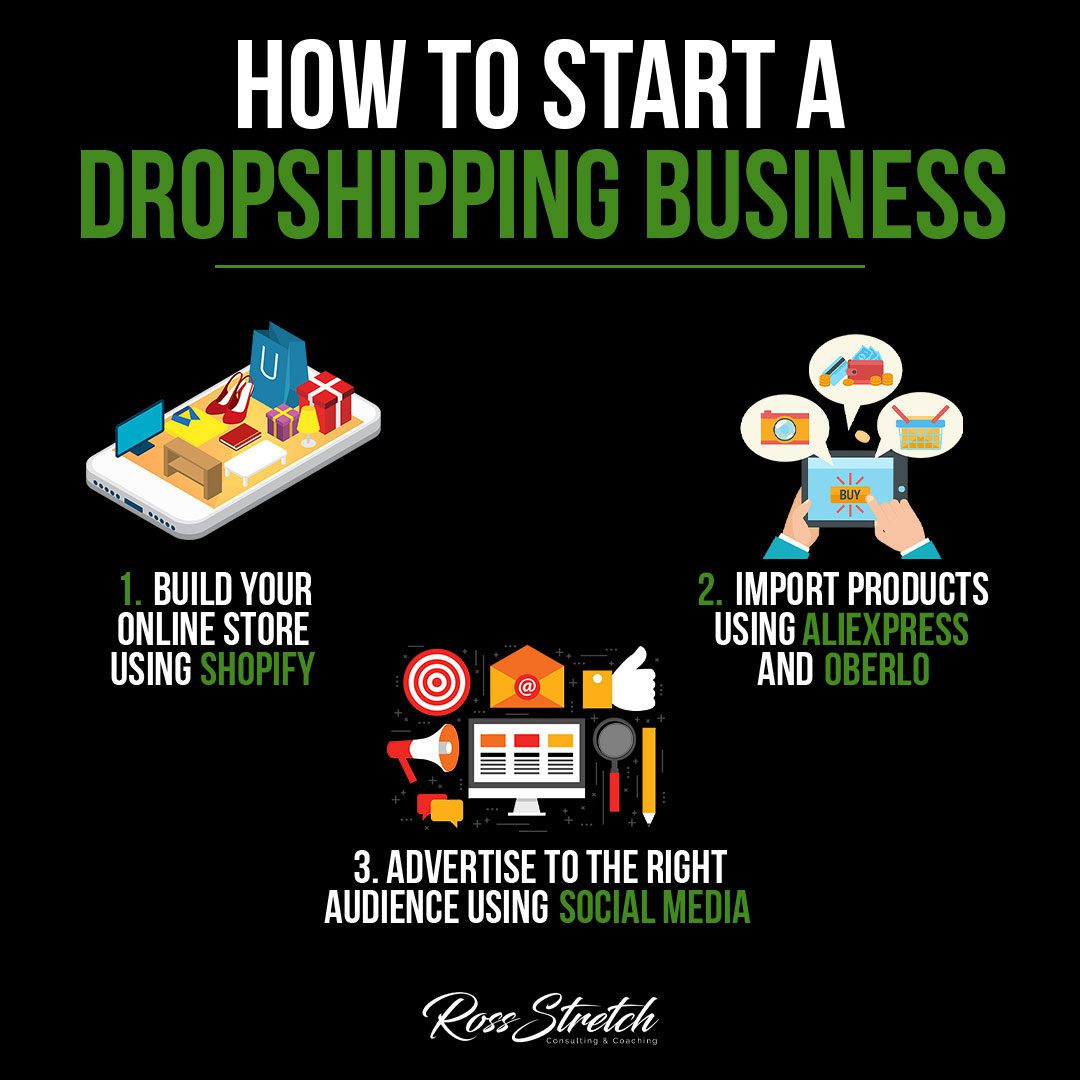
The e-commerce landscape has produced few business models as accessible to first-time entrepreneurs as dropshipping. The appeal is straightforward: you build and manage an online store, take orders from customers, and have suppliers ship products directly to buyers — without ever holding inventory yourself. The capital requirements are minimal, the operational risk is low, and platforms like Shopify have made the technical side manageable for anyone willing to learn the basics. But building a genuinely profitable dropshipping business requires more than setting up a store and listing products. The entrepreneurs who generate sustainable income from this model master three interconnected disciplines: building a compelling online storefront, sourcing reliable products at competitive margins, and using social media advertising to acquire customers at a cost that makes the economics work. This guide covers all three, giving you the framework to launch and scale a dropshipping operation without the costly trial and error that derails most beginners.
1. Building a Robust Online Store with Shopify
Your Digital Storefront Is Your Brand — Build It to Convert
Shopify has become the default infrastructure for dropshipping businesses worldwide, and for good reason. Its combination of flexibility, built-in payment processing, and an extensive app ecosystem makes it the most complete out-of-the-box solution for e-commerce entrepreneurs at any stage. But choosing Shopify is just the starting point. The store you build on top of it will determine whether browsers become buyers. High-converting Shopify stores share common characteristics: they load quickly on mobile, present products with clear high-quality images and persuasive copy, make the checkout process frictionless, and use social proof — reviews, ratings, and customer photos — to reduce purchase hesitation. A generic store built on a default template with stock supplier descriptions will consistently underperform a store designed thoughtfully around the customer experience.
- Actionable Tip: Choose one focused product niche rather than building a general store that sells everything. A store dedicated to home gym equipment will convert better than one that mixes gym gear with phone cases and kitchen gadgets. Niche stores build trust faster and make your advertising dramatically more targeted and efficient.
- Why It Works: Shoppers are more likely to trust and buy from a store that looks like it specializes in exactly what they are looking for. A focused niche also means you know precisely who your customer is and what they care about — which translates directly into better ad targeting, lower customer acquisition costs, and higher average order values.
Pro Tip: Write Original Product Copy — Never Copy the Supplier
Do not use supplier-provided product descriptions verbatim. They are almost always generic, poorly written, and identical to dozens of competing stores selling the same products. Write original descriptions that speak to your customer’s specific motivations and address their most likely objections. Your copy and imagery are often the deciding factor between a browser and a buyer at the exact moment of purchase decision — and it costs nothing to get them right.
2. Stocking Your Store: AliExpress and DSers
Finding Reliable Suppliers and Managing Orders Without Holding Inventory
AliExpress remains one of the primary sourcing platforms for dropshipping businesses, offering millions of products from manufacturers at competitive wholesale prices with no minimum order quantities. The platform connects sellers with suppliers primarily based in China, making it well-suited for dropshippers who need a broad product catalog with low barriers to entry. The key to AliExpress sourcing is supplier selection — not every vendor on the platform operates at the same standard of reliability, shipping speed, or product quality. DSers, which is now the recommended AliExpress integration for Shopify, automates the process of importing product listings, managing orders, and updating inventory — significantly reducing the manual work involved in running a store at any meaningful volume and replacing the workflow that Oberlo previously handled before its discontinuation.
- Actionable Tip: Before adding any supplier’s product to your store, order a sample yourself. This is the single most important quality control step available to dropshippers and costs very little relative to the risk of selling products you have never seen. Pay close attention to packaging, actual product quality, and how long delivery genuinely takes from that supplier.
- Why It Works: Your store’s reputation is determined by the products customers actually receive. Supplier problems become your problems in the form of refund requests, negative reviews, and payment disputes. Ordering samples gives you firsthand knowledge of the customer experience — which directly informs your product selection and customer service policies.
Pro Tip: Look Beyond AliExpress for Higher-Margin Products
While AliExpress is the most accessible starting point, it is not the only option and often not the most profitable one. Platforms like Faire connect dropshippers with domestic wholesale suppliers who offer faster shipping times and higher product quality — significant advantages when customer expectations around delivery speed are high. Once your store has consistent volume, consider approaching suppliers directly to negotiate better margins and potentially exclusive product arrangements that competitors using the same AliExpress listings cannot match.
3. Harnessing Social Media: Finding and Engaging Your Audience
Paid Advertising, Organic Content, and Strategic Partnerships
A well-built store stocked with quality products generates zero revenue without traffic. Social media advertising — particularly through Meta (Facebook and Instagram) and TikTok — has become the primary customer acquisition engine for most successful dropshipping businesses. These platforms’ targeting capabilities allow you to reach buyers based on interests, demographics, purchase behavior, and lookalike audiences built from existing customers, letting you put products in front of the right people without the waste of broad-reach traditional advertising. Meta advertising remains the most powerful tool for precise e-commerce targeting, while TikTok’s algorithm offers the additional potential of organic virality — well-crafted product videos can generate significant reach and sales without any ad spend through the platform’s discovery feed, giving resourceful dropshippers a real advantage in the early stages of building a store.
- Actionable Tip: Start with a small daily ad budget — as low as ten to twenty dollars per day — across two or three different creative variations targeting the same audience. Measure cost per link click and cost per add-to-cart in the first week to identify which creative and messaging performs best before scaling your spend.
- Why It Works: Testing multiple creative variations at a small budget before scaling protects you from spending heavily on underperforming ads. The data from small tests tells you what resonates with your specific audience, so when you do scale, you are amplifying proven creative rather than gambling on untested assumptions.
Pro Tip: Use TikTok’s Organic Reach Before Committing to Paid Ads
Before committing significant ad spend, create a TikTok account for your store and post ten to twenty short-form videos showcasing your products in real use. TikTok’s algorithm surfaces content to new audiences based on engagement signals rather than follower count, meaning a new account with a compelling video can reach hundreds of thousands of potential customers at zero cost. This organic testing also reveals which products and messaging angles connect with viewers — making your paid campaigns considerably more effective when you do launch them.
Conclusion
Dropshipping remains one of the most accessible entry points into e-commerce entrepreneurship, but the low barrier to entry means the market rewards execution quality above all else. Building a focused, well-designed Shopify store, sourcing products through reliable suppliers you have personally vetted, and investing strategically in social media advertising and organic content creation are the three disciplines that separate stores generating consistent revenue from those that launch, stall, and quietly disappear. The infrastructure to build a profitable online business with modest starting capital exists — the variable is how seriously you approach each component of the model.
Resources


 Ross Stretch