Learning retention is the measure of how much information you can actually recall and apply after exposure to new material. Most people assume that reading a book or watching a lecture is enough to absorb knowledge — but research into the learning pyramid tells a very different story. The method you use to learn matters just as much as the content itself, and understanding the hierarchy of retention can transform how you study, train, and grow in both your personal and professional life.
What Is the Learning Pyramid?
The learning pyramid maps out estimated retention rates for different learning methods. While the exact percentages have been debated in academic circles, the core insight holds up: passive learning produces significantly lower retention than active learning. Simply put, the more engaged you are with material, the more of it you will remember and be able to use weeks and months later.
Understanding this framework is not just for students. Professionals, entrepreneurs, and anyone committed to personal development can use it to make smarter choices about how they invest their learning time. Choosing the right method can be the difference between knowing something conceptually and actually being able to apply it under pressure — and in business or finance, that distinction matters enormously.
The Foundation: Reading and Passive Learning
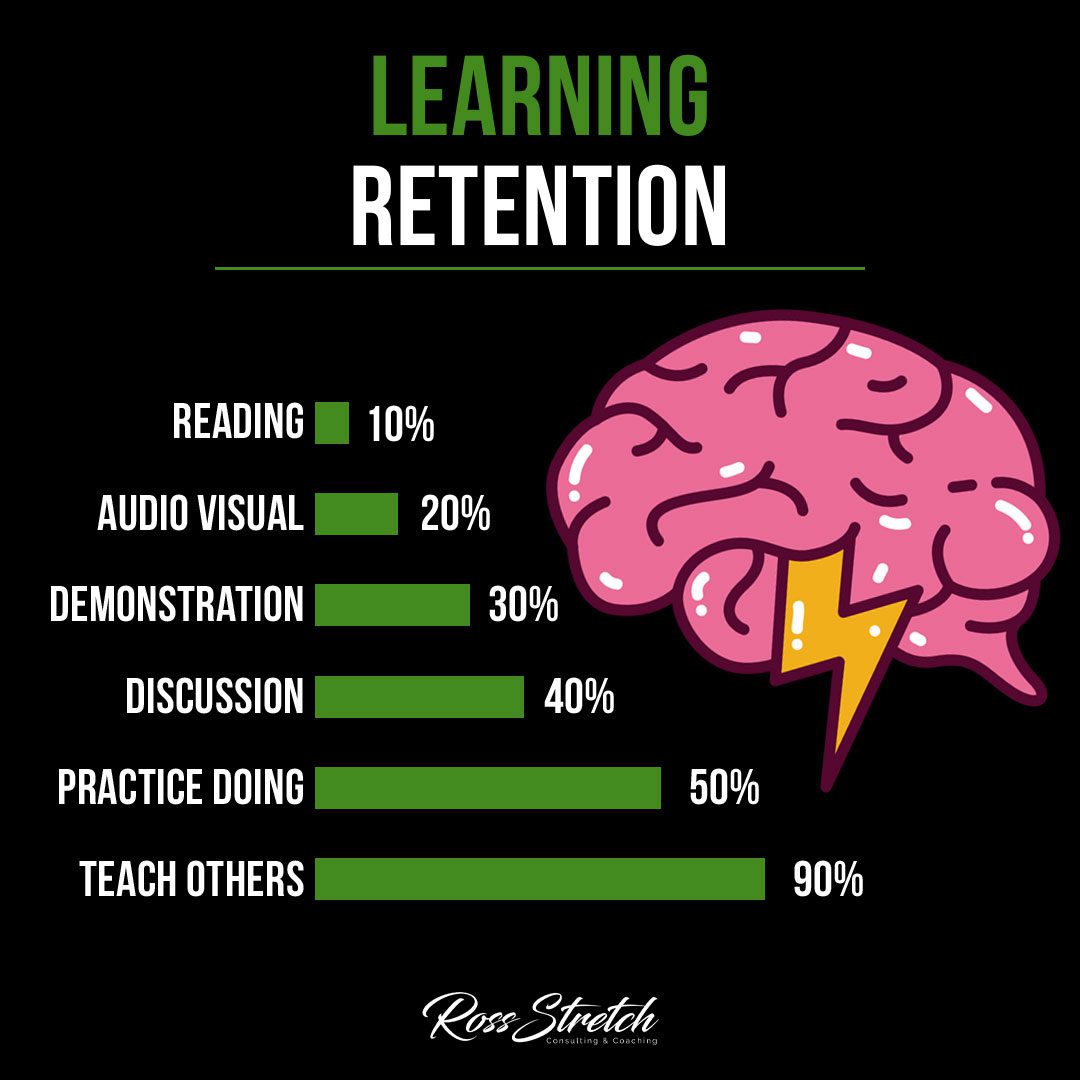
Reading is the most common learning method, yet it sits near the bottom of the retention pyramid with an estimated 10% retention rate. That means after reading a chapter in a business book, you may only hold onto a fraction of what you encountered. This is not a reason to stop reading — books remain one of the most efficient ways to encounter new ideas — but it is a reason to read more strategically.
Active reading techniques significantly improve what sticks. Instead of passively moving your eyes across a page, engage with the text by taking notes in your own words, highlighting selectively, and pausing to summarize what you just read before moving on. The Feynman Technique — where you stop and explain a concept as simply as possible — is a powerful tool you can apply while reading. If you cannot explain it simply, you have not understood it deeply enough yet.
Audio-visual learning, such as lectures and educational videos, bumps retention up to around 20%. The combination of auditory and visual cues engages more cognitive pathways, making information easier to encode. Watching a video about investing after reading a book on the same topic reinforces the material from a second angle, compounding your understanding and dramatically improving recall.
Demonstration and Discussion: Moving into Active Territory
Seeing a task demonstrated — whether in person, in a tutorial video, or through a mentor walking you through a process — raises retention to approximately 30%. Observation is more powerful than reading because it shows context, sequence, and nuance that text struggles to convey. This is why apprenticeship models have been so effective throughout history: watching a skilled practitioner in action is worth far more than a manual.
Discussion takes things further, with an estimated 40-50% retention rate. When you talk through ideas with peers, defend a position, or debate the merits of different approaches, you are forced to process information at a deeper level. Study groups, mastermind sessions, and even casual conversations with a colleague about what you are learning all count. The act of articulating your understanding — and responding to pushback — solidifies knowledge in ways that solo study cannot replicate.
For professionals and entrepreneurs, this means that investing time in communities, peer groups, and mentorship relationships is not just networking — it is a high-yield learning strategy. Discussing what you read with someone else within 24 hours of reading it can dramatically increase how much you retain from any material.
Practice and Application: Where Real Learning Happens
Hands-on practice — actually doing the thing you are trying to learn — produces roughly 75% retention. This is the turning point where theoretical knowledge becomes real skill. The gap between knowing something and being able to do it is bridged only through deliberate practice. You can read every book ever written about sales, but you will learn more from making 50 cold calls than from any amount of reading combined.
Consistent practice matters more than intensity. Shorter, regularly scheduled sessions produce better long-term retention than marathon cramming sessions. This is the principle behind spaced repetition — returning to material at increasing intervals keeps it accessible in long-term memory. Apps like Anki use this approach to help people retain foreign languages, medical terminology, and complex technical knowledge over time.
Real-world application compounds this effect even further. When you use a skill in a genuine context — under real constraints, with real stakes — your brain encodes the experience at a deeper level. Every time you apply what you have learned, you are reinforcing neural pathways that make that knowledge more accessible and automatic in the future.
Teaching Others: The Pinnacle of Retention
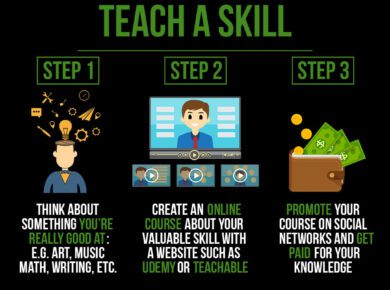
Teaching others is the most effective learning method, with retention rates approaching 90%. When you teach something, you are forced to organize your knowledge clearly, anticipate questions, and fill in the gaps in your own understanding. You cannot fake it when someone is sitting across from you waiting for an explanation. Teaching exposes every weak spot in your knowledge base and compels you to address them honestly.
You do not need to be an expert to teach. Peer teaching — explaining a concept to a friend or colleague at a similar level — is highly effective. Writing a blog post, recording a short video, or explaining what you learned over dinner are all forms of teaching. The simple act of organizing your thoughts well enough to transfer them to someone else dramatically deepens your own understanding of the material.
Researchers call this the protégé effect. Studies have found that students who are told they will need to teach material to someone else learn it more thoroughly than those who are simply preparing for a test. Setting the intention to teach — even if you never actually do — changes how you engage with information from the start. It is one of the most powerful mindset shifts available to any serious learner.
Building a Multi-Method Learning Strategy
The most effective learners do not rely on a single method. They stack approaches, moving from reading to discussion to practice to teaching in a deliberate sequence. When you pick up a book on a topic, follow it up by watching related videos, discussing the ideas with someone, applying what you learned in a real project, and eventually writing or teaching about it. Each step up the retention ladder compounds the one before it.
For busy professionals and entrepreneurs, this means being intentional about learning time. Passive consumption — scrolling through articles or half-listening to podcasts while multitasking — will not stick. The same 30 minutes spent in active practice or focused discussion will produce dramatically better results. Quality of engagement matters far more than quantity of exposure, and the learning pyramid gives you a clear guide for where to direct your attention.
Conclusion
Learning retention is not a fixed trait — it is a product of the methods you choose. By moving from passive consumption toward active application and teaching, you can dramatically increase the return on every hour you invest in learning. The pyramid is a roadmap: start where you are, but always push toward higher ground. The knowledge you actually retain and can use is the only knowledge that matters.
Resources


 Ross Stretch