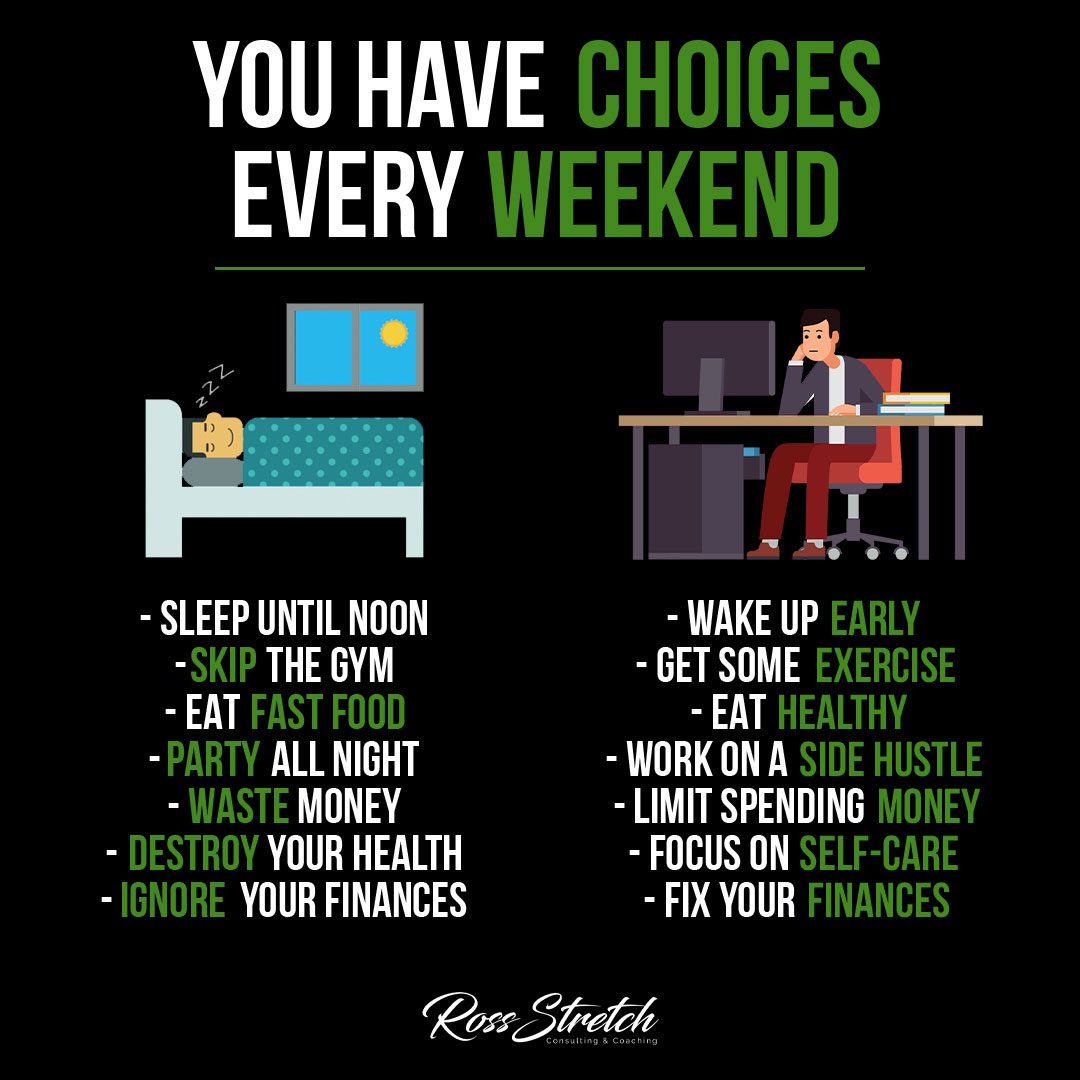
Your weekend choices define your weekday results. Most people treat the weekend as a full escape from their goals rather than a chance to quietly advance them. But the most successful people — from elite athletes to top entrepreneurs — understand that weekend habits, intentional rest, and productive routines are what separate those who make consistent progress from those who always wonder why they feel stuck.
Why This Matters More Than You Think
The weekend represents roughly 29% of your available time each week. Over the course of a year, that adds up to more than 100 days. How you use that time compounds powerfully — in either direction. Two years of productive weekends can mean a finished side project, a stronger financial position, a measurably healthier body, and a sharper, less anxious mind. Two years of unproductive weekends means 100 days closer to goals you never actually started.
This is not about working yourself to exhaustion seven days a week. Research from Stanford University found that productivity per hour drops sharply beyond 50 hours of work per week. Rest is not optional — it is part of performing at your best. But there is a significant difference between rest that genuinely recharges you and passive consumption that leaves you feeling empty and behind by Sunday night.
The distinction is between intentional and unintentional choices. You can be deeply rested and productive within the same weekend. You can also waste 48 hours doing things that feel pleasant in the moment but generate anxiety and regret come Monday morning. The difference comes down to the small decisions you make before those two days begin.
What the Research Actually Shows
Psychologists use the term “structural leisure” to describe the practice of loosely planning how you spend your free time. Studies published in the journal Personality and Social Psychology Bulletin found that people who put even minimal structure on their leisure time report higher life satisfaction and lower anxiety than those who leave it entirely open-ended. Contrary to what most people assume, a little structure does not kill enjoyment — it enhances it by creating a sense of purpose and forward momentum.
Cognitive research also supports the idea that habits developed during lower-stress periods are more likely to stick than those formed under deadline pressure. This is why the weekend is actually the ideal time to work on a side project, review your finances, or establish a new exercise routine. Your brain is more open to learning and pattern formation when it is not in reactive mode.
How to Apply This in Your Life
Protect Your Sleep Schedule
Sleeping in until noon on weekends feels restorative, but research shows it can do more harm than good. Chronically shifting your sleep schedule — a phenomenon sleep scientists call “social jet lag” — disrupts your circadian rhythm and can leave you feeling worse on Monday than if you had kept a consistent schedule. Aim to wake within one hour of your weekday time and invest in a consistent wind-down routine that improves sleep quality rather than just quantity.
Move Your Body With Purpose
Exercise is one of the highest-leverage activities you can invest a weekend hour in. A 45-minute workout does not just improve physical health — it boosts dopamine and serotonin, reduces cortisol, and sharpens cognitive focus for the hours that follow. Whether it is a gym session, a long run, a yoga class, or a hike, make movement non-negotiable on weekends. Skipping it might feel like saving energy, but it almost always costs more than it saves in focus and mood.
Work on Your Side Hustle or Skill Development
If you have a side project, creative goal, or professional skill you want to develop, the weekend is your runway. Even two focused hours on Saturday morning adds up to over 100 hours of deliberate work per year — enough to build real expertise or bring a meaningful project to life. Block that time in advance, treat it like an appointment you cannot cancel, and protect it from social drift and last-minute plans.
Review and Reset Your Finances
Most people never set aside time to look at their money with fresh eyes, which means they are constantly reacting instead of planning. Using 30 minutes on a Sunday to review your spending from the past week, check your savings targets, and plan for the week ahead can prevent hundreds of dollars of unconscious spending each month. Financial awareness compounds just like interest does — the earlier you build the habit, the more powerful the results.
Invest in Self-Care That Actually Recharges You
Not all rest is equal. Scrolling social media for hours produces what researchers call passive consumption fatigue — it feels like relaxing but leaves most people more drained and anxious than before. True self-care looks like spending time in nature, cooking a nourishing meal, having real face-to-face conversations with people you genuinely care about, reading for pleasure, or practicing mindfulness. Identify what actually recharges you and make it a deliberate priority rather than an afterthought.
Common Mistakes People Make
- Treating every weekend as pure recovery without blocking any time to advance long-term personal goals
- Letting social obligations consume every available hour, leaving no protected time for personal priorities
- Spending impulsively on weekends out of boredom or emotional fatigue rather than saving and investing with intention
- Skipping exercise, healthy eating, and consistent sleep under the reasoning that the weekend is for breaking the rules
The Bottom Line
Your weekends are not a break from your life — they are a critical part of it. The choices you make between Friday evening and Sunday night either close the gap between where you are and where you want to be, or they widen it further. The encouraging reality is that even small changes — waking up an hour earlier, completing one workout, spending 30 minutes on your finances, or dedicating two focused hours to a side project — compound into significant results over months and years.
Start with one change this coming weekend. Not ten changes, not a complete overhaul — just one. Build that habit, notice the difference it makes, then add another. That is how productive weekends become your quiet competitive advantage over the people who are still waiting for the perfect time to start.
Resources
- Psychology Today: Managing Your Weekend Mind
- Harvard Business Review: How to Spend Your Weekends Wisely
- Harvard Health: Why Sleep Matters
- American Psychological Association: Exercise and Stress

 Ross Stretch