Social media marketing has transformed from a novelty into a core business function. The brands and creators who win on social platforms are not the ones who post the most — they are the ones who understand the underlying mechanics of attention, trust, and conversion. Done well, a focused strategy can build an audience of loyal buyers with a relatively modest budget, outperforming traditional advertising at a fraction of the cost. This article breaks down the framework that separates effective social media marketers from those who spend hours creating content with nothing to show for it.
Lead With Value, Not Promotion
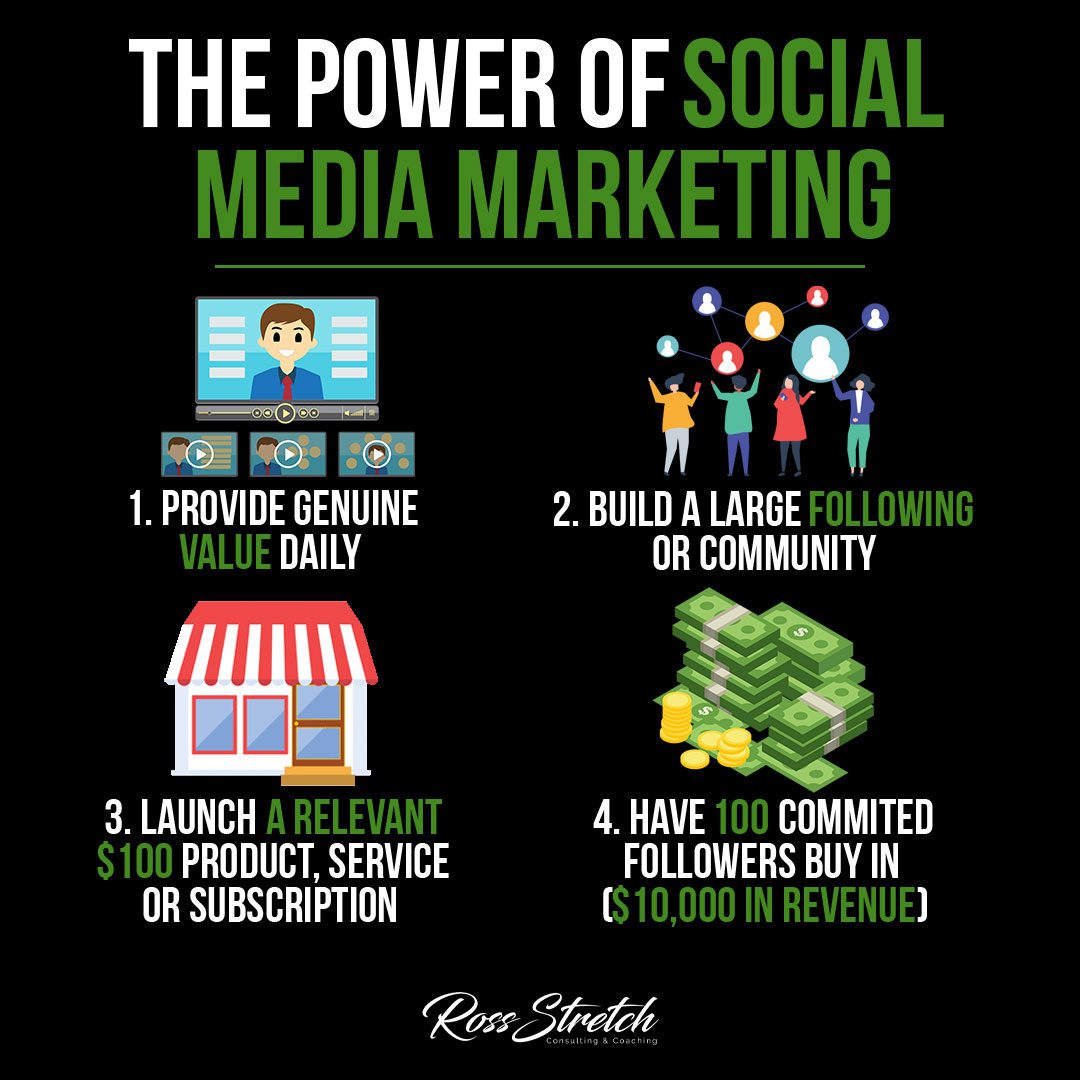
The fastest way to kill social media growth is to lead with sales pitches. Audiences follow accounts that consistently improve their lives — through useful information, entertainment, inspiration, or practical guidance. Before your audience buys from you, they need to trust you. Before they trust you, they need to know you. And before they know you, they need to find genuine value in what you share.
A content strategy built on value means choosing a niche you understand deeply and committing to consistent output in that space. This might look like financial tips for first-generation professionals, marketing breakdowns for small business owners, or investing strategies for people in their thirties. Specificity matters — broad appeal is a trap. The more precisely you speak to a defined audience, the stronger the connection you build and the easier monetization becomes over time.
Quality matters more than volume, but consistency matters most. One genuinely useful piece of content every day outperforms seven mediocre posts. The platforms reward creators who hold audiences’ attention, not just those who fill feeds with filler.
Build Community Before You Build an Audience
There is a meaningful difference between having followers and having a community. Followers are passive; community members are engaged. A smaller, highly engaged community outperforms a large, passive following in almost every meaningful metric — conversion rates, referrals, product feedback, and long-term retention.
Building community requires reciprocity. Reply to comments. Ask questions in your posts. Highlight your audience members’ wins publicly. Create spaces — a newsletter, a private group, a Discord server — where your audience interacts not just with you, but with each other. The more your audience feels seen and heard, the more loyal they become.
Engagement rate is a more valuable signal than follower count. An account with 5,000 highly engaged followers who open every email and share every post will outperform a 50,000-follower account with half a percent engagement. Track what actually matters: click-through rates, replies, shares, and conversions — not vanity metrics that feel good but do not translate to revenue.
Offer Products That Match Your Audience
Monetization works when the product or service is a natural extension of the value you have already been delivering. If your content helps people manage money, a course on budgeting or an investing workshop is a logical next step. If your content helps business owners grow, a consulting package or group coaching program fits the established relationship naturally.
Price point matters for early-stage monetization. Lower-ticket offers — templates, ebooks, workshops ranging from $27 to $97 — reduce friction to a first purchase and allow you to build a customer base quickly. Existing customers are far easier to sell higher-ticket offers to later. The goal of your first product is not to maximize revenue; it is to turn followers into buyers and gather real market feedback you can use to improve everything that follows.
Use Data to Refine Your Strategy
Every social platform provides analytics, and most creators ignore them. Platform data tells you exactly which content formats, topics, and posting times drive the most engagement, reach, and conversions. Reviewing this data weekly and adjusting your content mix accordingly compounds results over time in ways that guessing cannot replicate.
Look beyond platform analytics to your full sales funnel. Where do followers drop off? Which posts drive the most link clicks? Which email subject lines convert best? The answers to these questions let you allocate creative energy where it generates the highest return. Social media marketing improves fastest when treated as a series of experiments — each post a data point, each campaign a test with a hypothesis worth proving or disproving.
Leverage Social Proof to Accelerate Trust
Social proof accelerates every stage of the marketing funnel. Customer testimonials, before-and-after results, case studies, and user-generated content reduce skepticism and make purchasing decisions easier for prospects who are on the fence. One credible testimonial from a real customer often does more persuasive work than ten polished promotional posts.
Actively collect social proof as you deliver results. Ask satisfied customers for a short video testimonial or a written quote you can share. Feature real results publicly. Trust is built slowly and lost quickly on social media — every piece of social proof you accumulate is an asset that keeps paying dividends long after it is first published.
Conclusion: The Long Game Always Wins
Social media marketing rewards patience and consistency above all else. The creators and brands that dominate their niches did not get there through viral moments — they got there through years of showing up, delivering value, and iterating based on feedback. Start with a clear niche, commit to consistent output, engage authentically with your community, and let the data guide your evolution. The compounding effect of a principled social media strategy is one of the most powerful growth levers available to entrepreneurs today.
Resources

 Ross Stretch