
The most common mistake salespeople make is treating every sale as a logical problem to be solved. They load their presentations with data, specifications, and feature comparisons — and then wonder why prospects still hesitate. The reality is that human beings are not primarily rational actors. Emotional intelligence and the ability to connect with what a buyer truly feels and fears matter far more than feature lists. Mastering persuasion means understanding the hidden motivations that actually drive purchasing decisions and learning how to speak to them with precision and genuine empathy.
\
\
\
\
Why Logic Alone Doesn’t Close Deals
\
\
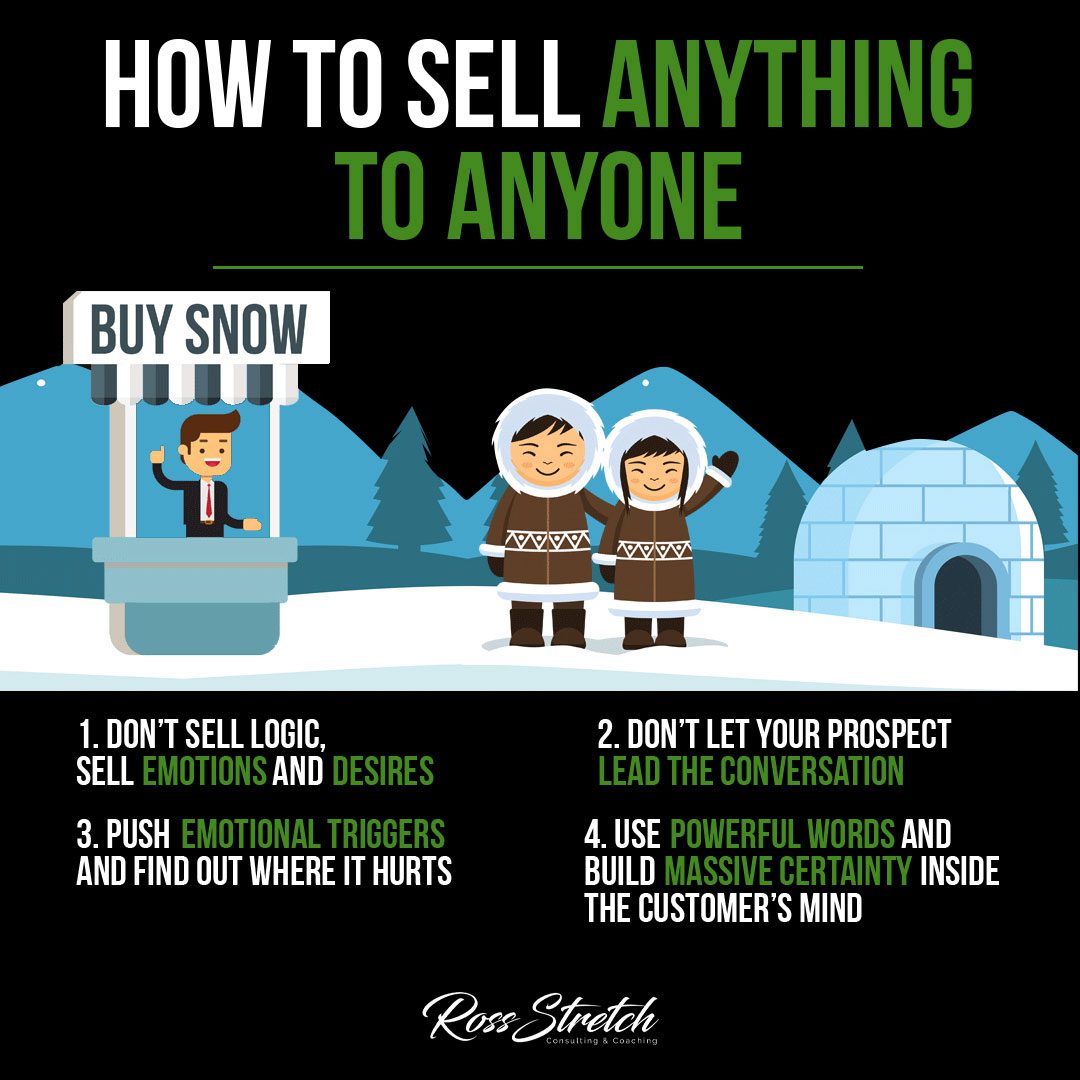
Neuroscience has confirmed what great salespeople have always known intuitively: decisions are made emotionally, then justified logically. Research by neuroscientist Antonio Damasio found that patients with damage to the emotional centers of their brains — while retaining full rational capacity — became almost incapable of making decisions. Without emotion to signal what matters, the brain has no way to prioritize between options.
\
\
This means that when you present a purely rational case to a buyer, you’re bypassing the very mechanism that actually creates commitment. You might win the argument in their head, but you won’t win the decision. Logic is the confirmation buyers reach for after they’ve already decided emotionally. The sale is made — or lost — in the emotional register, often before the formal presentation even begins.
\
\
Understanding this is liberating. It shifts the focus from having the best product to building the strongest emotional case. And the strongest emotional case is always built on genuine understanding of the buyer’s real situation, real fears, and real aspirations.
\
\
\
\
Emotional Triggers That Drive Buying Decisions
\
\
Every purchase is ultimately motivated by one of a small number of emotional drivers: the desire for gain, the fear of loss, the need for belonging, the pursuit of status, the craving for security, or the drive to avoid pain. Your job as a persuader is to identify which of these is dominant for your specific buyer and frame your offering as the direct answer to that emotional need.
\
\
For example, a business owner considering a software platform might be primarily motivated by the fear of falling behind competitors rather than excitement about new features. A parent buying a vehicle might be driven by safety and family identity more than performance or fuel economy. Presenting identical features to both buyers in identical terms is a wasted opportunity. Tailoring the emotional frame to what each buyer actually cares about is what separates average salespeople from genuinely elite closers.
\
\
Ask open-ended questions that reveal emotional priorities: “What would it mean for your business if this problem were solved?” or “What’s at stake if things stay the way they are?” Listen carefully for the language buyers use to describe their situation — it will tell you exactly which emotional driver to address.
\
\
\
\
Leading the Conversation Without Dominating It
\
\
Skilled persuaders understand that control in a sales conversation doesn’t mean talking more or overwhelming the prospect with information. It means setting the frame — establishing the context, the criteria, and the direction of the dialogue — while making the buyer feel genuinely heard and respected throughout.
\
\
One practical technique is agenda-setting at the start of a conversation: “Today I’d like to understand your situation, share how we’ve helped others in similar positions, and see if there’s a genuine fit worth exploring. Does that work for you?” This creates a structure the buyer agrees to upfront, making it natural to redirect if the conversation drifts. It also signals professionalism and respect for the buyer’s time.
\
\
Strategic questioning is equally powerful — asking questions that guide the prospect toward recognizing their own need and your solution’s relevance. The best questions make the buyer feel like they discovered the value themselves, which creates far stronger commitment than being told what the value is. When people arrive at a conclusion on their own, they own it.
\
\
\
\
Identifying and Addressing Pain Points
\
\
Pain points are where persuasion becomes most powerful. Every buyer is experiencing some form of friction, dissatisfaction, or unmet need. Finding the specific pain — and demonstrating that you understand it more deeply than they expected — is one of the fastest ways to build trust and create genuine urgency around your solution.
\
\
The key is not to exploit pain cynically but to illuminate it helpfully. Buyers often know something isn’t working but haven’t fully articulated the scope of the problem or its downstream consequences. A skilled persuader helps them see the full picture: “You mentioned the current process takes your team two extra hours per week. Across a year, that’s over 100 hours of lost productivity.” Making the invisible visible creates a natural opening for your solution.
\
\
Equally important is connecting your solution directly and specifically to the pain you’ve identified. Generic pitches don’t move buyers who are feeling specific problems. Tailor the language of your proposal to echo the exact words the buyer used to describe their situation. This signals deep understanding and makes your offering feel custom-built rather than off-the-shelf.
\
\
\
\
The Power of Language and Building Certainty
\
\
The words you choose in a sales conversation carry enormous weight. Uncertain language — “I think this might work,” “hopefully,” “kind of” — erodes confidence and signals doubt. Buyers take their emotional cue from the person selling to them. If you’re uncertain, they become uncertain. If you’re grounded and clear, they feel more confident in their decision.
\
\
This doesn’t mean manufacturing false enthusiasm or making promises you can’t keep. It means speaking with the confidence of someone who genuinely believes in their offering and has seen it produce results. Share specific case studies and concrete outcomes rather than vague claims. “Our clients typically see a 25% reduction in processing time within 60 days” is far more persuasive than “this really helps with efficiency.”
\
\
Creating certainty also means reducing perceived risk. Buyers hesitate when they’re unsure of the outcome. Guarantees, free trials, social proof, and clear implementation plans all reduce the psychological cost of committing. Make it as easy as possible to say yes by systematically addressing every potential question and objection before they’re voiced.
\
\
\
\
Conclusion
\
\
Mastering persuasion is not about manipulation — it’s about empathy applied with precision. The best salespeople are the ones who understand their buyers most deeply, connect with what actually matters to them, and communicate with confidence and clarity. When you stop trying to win logical arguments and start speaking to the emotional realities that drive decisions, selling becomes less about pressure and more about genuine alignment between your offering and your buyer’s most pressing needs.
\
\
\
\
Resources
\
\
- \
- Influence: The Psychology of Persuasion by Robert Cialdini — The foundational text on how and why people say yes
- Harvard Business Review: The Science of Persuasion — A research-backed look at what makes people change their minds
- SPIN Selling by Neil Rackham — A proven questioning framework for consultative selling
- Way of the Wolf by Jordan Belfort — A detailed breakdown of the Straight Line Persuasion system
\
\
\
\

 Ross Stretch