A great product with a poor pitch loses to a mediocre product with a compelling one. This is a reality that every entrepreneur, salesperson, and business owner eventually encounters. The pitch is not a formality you get through on the way to showing the product — in the buyer’s mind, it often is the product. Whether you are in a one-on-one sales meeting, presenting to investors, or standing in front of a room of potential clients, mastering these five principles will help you walk away with more commitments and fewer “we’ll think about it” responses.
\
\
\
\
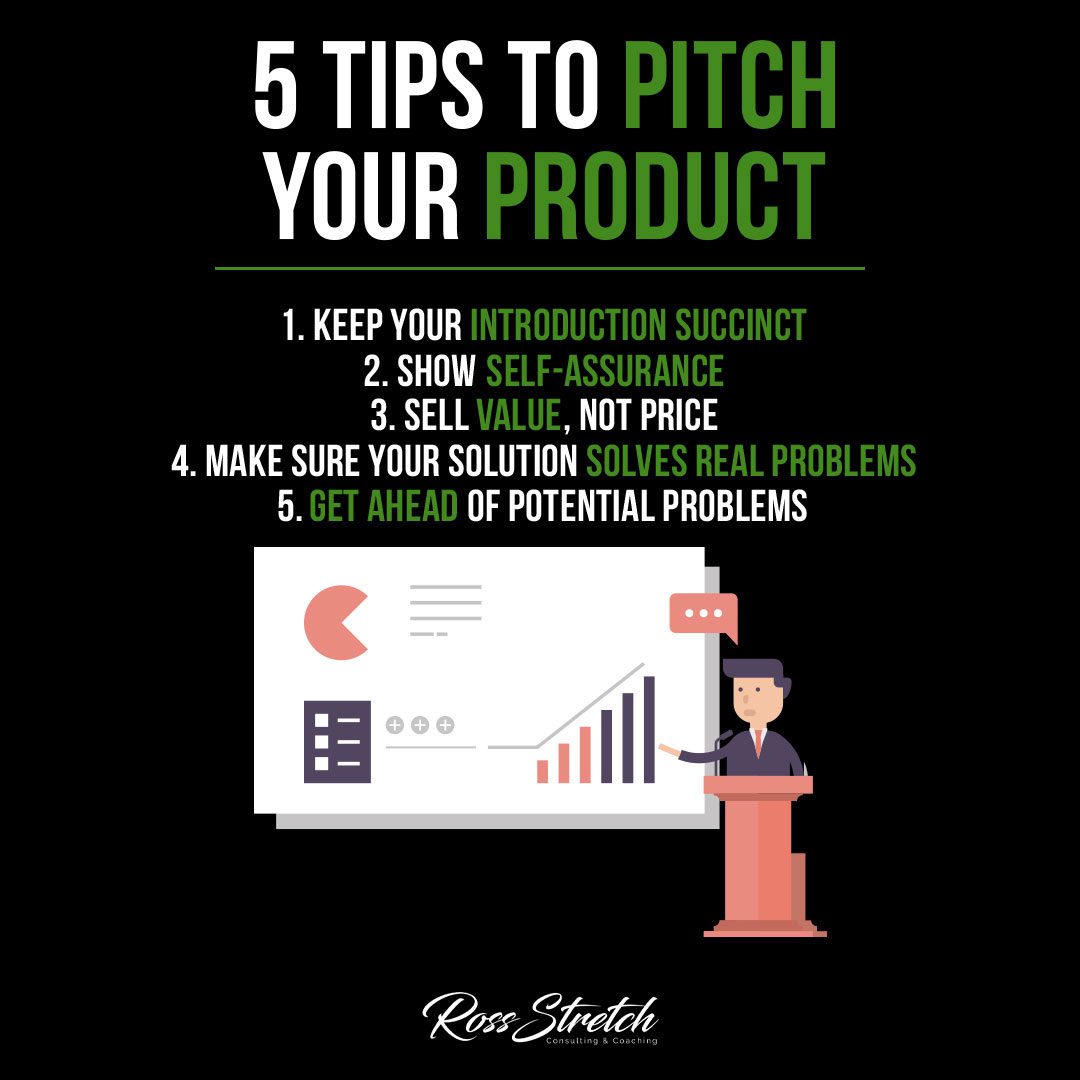
1. Keep Your Introduction Succinct
\
\
The First 30 Seconds Set the Entire Tone
\
\
In any high-stakes pitch, the opening moments determine whether you have your audience’s attention or are fighting to regain it for the rest of the conversation. Decision-makers — investors, buyers, executives — are evaluating you the moment you start speaking. A long, wandering introduction signals poor preparation and a lack of respect for their time. A concise, clear opening signals confidence and competence before you have made a single argument.
\
\
- \
- Actionable Tip: Write and rehearse a 30-second product summary that answers three questions — what the product does, who it is for, and what specific problem it solves. Deliver this at the start of every pitch without variation until it becomes second nature.
- Why It Works: Brevity forces clarity. If you cannot explain your product in 30 seconds, you do not understand it well enough yet — and neither will your audience. The discipline of the short opening sharpens every other part of the pitch.
\
\
\
\
Pro Tip:
\
\
Test your opening on someone unfamiliar with your business. If they cannot accurately describe your product back to you after 30 seconds, revise it until they can. External feedback reveals gaps that familiarity blinds you to. Most founders think their opening is clearer than it actually is.
\
\
\
\
2. Show Self-Assurance
\
\
Confidence Is Transferred, Not Declared
\
\
Confidence in a pitch is not about using the word “confident” or projecting false certainty. It is communicated through the physical and verbal signals you send: steady eye contact, an unhurried pace, posture that takes up space without aggression, and the willingness to pause rather than fill silence with filler words. Buyers make emotional decisions and rationalize them afterward — and the emotional signal they are responding to is whether they trust you.
\
\
- \
- Actionable Tip: Record yourself delivering your pitch on video. Watch it without sound first, paying attention only to body language and physical presence. Then watch it again with sound. Most people are surprised by how much their physical signals undermine their words.
- Why It Works: Research in sales psychology consistently shows that buyers weigh the credibility of the presenter heavily in their purchasing decisions, often more than the specific product features being discussed. How you deliver the message shapes how the message is received.
\
\
\
\
Pro Tip:
\
\
Uncertainty about specific details is not a confidence problem — it is an opportunity to demonstrate integrity. Saying “I don’t have that exact figure in front of me, but I’ll get it to you by end of day” is more credible than guessing wrong. Self-assurance and honesty are complementary, not competing qualities in a pitch.
\
\
\
\
3. Sell Value, Not Price
\
\
Price Is What They Pay, Value Is What They Remember
\
\
Competing on price is a race to the bottom. Buyers who make decisions based primarily on price are the hardest to retain and the most likely to leave when a cheaper alternative appears. The goal of a great pitch is to shift the conversation from cost to return. What does the buyer gain — in time saved, revenue generated, problems eliminated, or risks reduced — by acquiring your product? When that calculation is clear and compelling, price becomes a secondary consideration.
\
\
- \
- Actionable Tip: Quantify your value proposition wherever possible. Instead of saying “our software saves time,” say “our clients typically reduce their invoicing process from four hours per week to under 45 minutes.” Specific numbers are credible; vague claims are not.
- Why It Works: Buyers evaluate purchases by comparing the cost of the solution to the cost of the problem. If the problem costs them more than the solution, the decision becomes straightforward. Your job in the pitch is to make that math explicit and impossible to ignore.
\
\
\
\
Pro Tip:
\
\
Ask your existing customers what they would do if your product disappeared tomorrow. Their answers will give you the most authentic, compelling value statements you can use in future pitches. Customer language is almost always more persuasive than language crafted in a marketing meeting, because it is grounded in lived experience.
\
\
\
\
4. Make Sure Your Solution Solves Real Problems
\
\
Market Research Is Not Optional — It Is the Foundation
\
\
The most common reason pitches fail is not delivery — it is relevance. A beautifully executed pitch for a solution your audience does not need is still a failed pitch. Before you walk into any presentation, you should have a clear picture of the specific challenges your prospect is facing, the language they use to describe those challenges, and how those challenges rank in their current priorities. This requires research: LinkedIn profiles, company news, industry reports, and a discovery call before the pitch all provide the context that makes your solution feel targeted rather than generic.
\
\
- \
- Actionable Tip: Open your pitch with a brief summary of what you understand about the prospect’s situation and the problem you are there to address. Invite them to correct you if anything is off. This builds trust, confirms your preparation, and opens a dialogue that a one-way presentation never achieves.
- Why It Works: People do not buy products — they buy solutions to problems they feel urgently. Demonstrating that you understand their specific situation makes you the obvious source of that solution, rather than one of many vendors presenting a catalog of features.
\
\
\
\
Pro Tip:
\
\
If you find yourself pitching to a prospect whose problems your product does not genuinely address, say so. Referring them to a better-fit solution builds a level of trust that often generates referrals and future opportunities worth far more than a forced sale. Long-term reputation in a market is built on these moments of integrity.
\
\
\
\
5. Get Ahead of Potential Problems
\
\
Anticipate Objections Before They Become Blockers
\
\
No product is perfect, and no market is without its complexities. Every prospect will have concerns — about implementation, about budget, about how your product compares to alternatives they are considering. The question is not whether they will surface these objections, but whether you will address them proactively or reactively. Reactive handling puts you on the defensive and signals that you have not thought through your own product carefully. Proactive handling demonstrates strategic thinking and transforms potential weaknesses into opportunities to show transparency and thoroughness.
\
\
- \
- Actionable Tip: List the five most common objections you encounter and build a direct response to each into your standard pitch. For implementation concerns, address your onboarding process and support structure. For budget concerns, address ROI timelines. For comparison concerns, acknowledge competitors directly and articulate your differentiation clearly.
- Why It Works: Buyers who feel their concerns have been anticipated and addressed are significantly more likely to move forward. Unaddressed objections become silent deal-killers that you never get the chance to respond to because the prospect simply stops returning calls.
\
\
\
\
Pro Tip:
\
\
After every pitch that does not close, ask a simple follow-up question: “Is there anything specific that prevented you from moving forward today?” The answers — collected across dozens of pitches — will give you a precise map of the objections your product and positioning need to address. Most salespeople skip this step and encounter the same blockers repeatedly without ever understanding why.
\
\
\
\
Conclusion
\
\
Great pitching is a skill, not a talent. It is developed through deliberate preparation, honest self-assessment, and continuous iteration based on real feedback from real conversations. Apply these five principles — clarity in your opening, confidence in your delivery, focus on value over price, relevance to real problems, and proactive handling of objections — and your close rate will improve. More importantly, the quality of the clients and partners you attract will improve, because a sharp, honest pitch draws in the buyers who genuinely need what you offer.
\
\
\
\
Resources
\
\
- \
- Pitch Anything by Oren Klaff — Neuroscience-based framework for high-stakes pitching
- SPIN Selling by Neil Rackham — Research-backed methodology for complex sales conversations
- HubSpot: How to Give a Sales Pitch That Actually Works
- TED Talks: How to Make a Great Presentation — Lessons from the world’s best communicators
\
\
\
\


 Ross Stretch