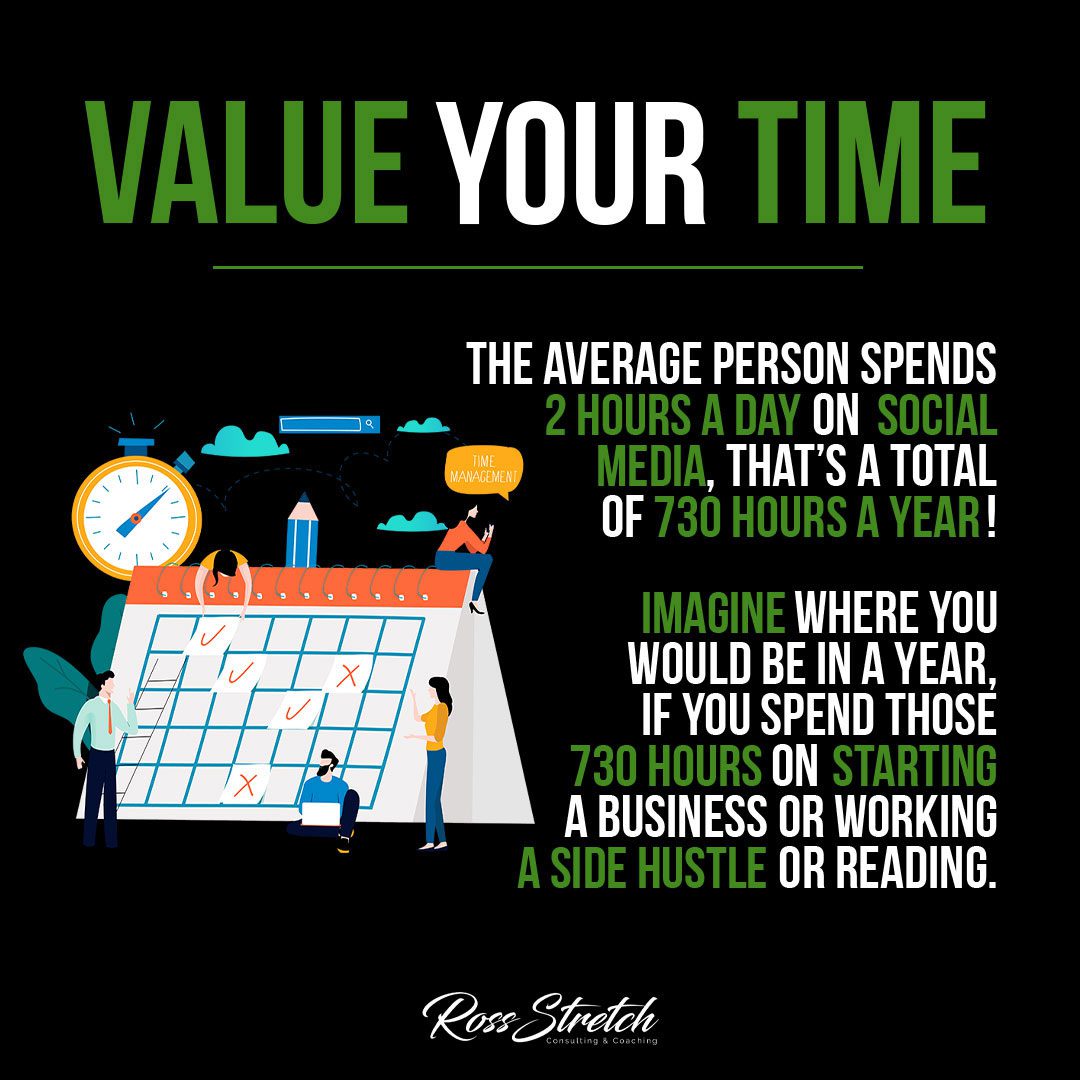
Time is the one resource that cannot be earned, borrowed, or recovered. Yet most people surrender vast quantities of it daily without recognizing the true cost. The average person spends 2 hours per day on social media — 730 hours per year — on passive consumption that generates nothing: no income, no skills, no measurable progress toward meaningful goals. The question isn’t whether social media is harmful. The question is what you could build with those 730 hours if you chose to invest them deliberately instead.
Why This Matters More Than You Think
730 hours is not a small number. It is equivalent to more than 18 full-time workweeks — nearly five months of 40-hour work weeks, surrendered annually to scrolling. Over a decade, that’s 7,300 hours. Malcolm Gladwell’s popularization of Anders Ericsson’s research on deliberate practice suggests that approximately 10,000 hours of focused, intentional practice in a skill domain produces expert-level performance. At 730 hours per year, you could reach world-class competency in virtually any skill within 14 years — using only the time currently lost to social media. That is not a trivial realization.
The opportunity cost of those hours is staggering when made concrete. A freelance writer billing $75 per hour could generate $54,750 annually from those 730 hours. A developer at $100 per hour could earn $73,000. Even at $20 per hour — the equivalent of a modest side hustle — those hours represent $14,600 in additional annual income. Most people don’t need a higher salary; they need to deploy the time they already have more intentionally. The math is not complicated. Confronting it requires honesty about how you’re actually allocating your most finite resource.
This is not an invitation to guilt. Most people don’t consciously choose to spend two hours per day on social media — the platforms are designed by teams of behavioral scientists to maximize engagement at the expense of intentionality. Infinite scroll, variable reward mechanisms, and social comparison cues are engineered to keep you consuming. Reclaiming that time starts with recognizing that it was systematically taken from you by design, and deciding consciously to take it back.
The Science Behind It
Neuroscience confirms what high performers have always practiced: focused, deliberate effort on meaningful tasks produces dramatically better outcomes than fragmented, distracted engagement. Cal Newport’s research on “deep work” — cognitively demanding work performed without distraction — demonstrates that the world’s most valuable professional skills are built through sustained concentration, not multitasking or passive consumption. Social media, by design, trains the brain toward the opposite: short attention spans, rapid context-switching, and dopamine-seeking behavior that makes sustained focus progressively more difficult to achieve and maintain.
Studies published in the Journal of Social and Clinical Psychology have linked heavy social media use to increased rates of depression, anxiety, and chronic dissatisfaction — none of which are conducive to building the focus, confidence, and resilience required for ambitious goal pursuit. The time cost of social media is real, but the cognitive cost — the gradual erosion of your capacity for deep, productive thinking — may be even greater and harder to quantify. Investing those hours in building skills, businesses, or knowledge doesn’t just pay financial dividends; it rebuilds the cognitive foundation for sustained achievement.
How to Apply This in Your Life
Step 1: Audit Your Time Honestly
Before you can reclaim your time, you need to see clearly where it’s going. Check your phone’s screen time settings for an accurate picture of daily app usage — most people are shocked by what they find. Once you have the data, calculate the annual equivalent: daily hours multiplied by 365. Then attach a dollar value to that time using your current or target hourly rate. When you see a concrete number representing annual lost income or learning opportunity, the decision to redirect those hours becomes visceral rather than vague.
Step 2: Define What You’d Build Instead
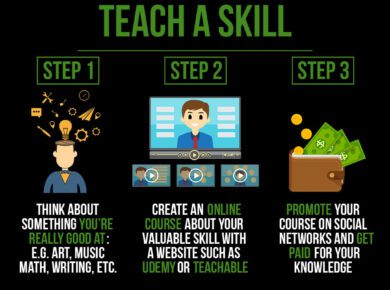
Time without intention flows back toward the default. Before reducing screen time, get specific about what you’re redirecting it toward. Are you building a side business? Learning a new skill? Reading to expand your knowledge base? Pursuing a passion project — painting, writing, coding, or playing an instrument — that’s been collecting dust due to lack of time? Write it down with specificity. The difference between a resolution that lasts one week and a habit that transforms a year is almost always the clarity of the intention behind it.
Step 3: Start a Business or Side Hustle
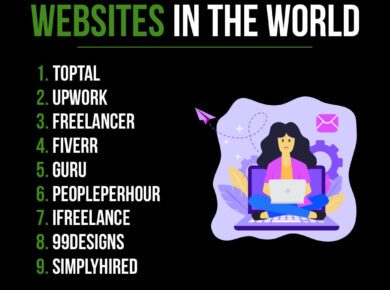
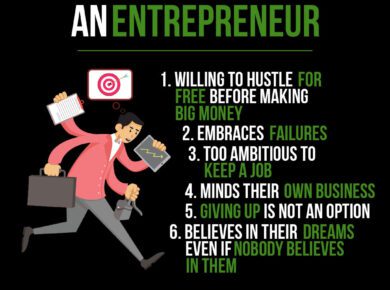
730 hours per year is a serious runway for building something meaningful. A focused, consistent side hustle — even 10 hours per week — can generate significant income within six to twelve months. Freelancing in your professional skill set, building a content platform, starting an e-commerce operation, or consulting in your area of expertise are all accessible starting points that require more time and effort than capital. Launching a business or working a side hustle is an excellent way to leverage reclaimed time into concrete financial returns. The key is choosing something with genuine income potential and market demand, then executing consistently.
Step 4: Invest in Reading and Continuous Learning
Books remain one of the highest-ROI investments available — and one of the most underused. The average nonfiction book takes 6–8 hours to read. At two reclaimed hours per day, you could read 90–120 books per year — deep dives into business strategy, personal finance, psychology, leadership, and whatever domain drives your ambitions. CEOs like Warren Buffett report reading 500 pages per day. Bill Gates reads approximately 50 books per year and credits reading as a primary engine of his ongoing development. The knowledge gap between those who read consistently and those who don’t compounds just as powerfully as the wealth gap.
Step 5: Invest in Deliberate Self-Improvement
Online courses, professional certifications, workshops, and coaching programs are available at a fraction of their historical cost. Dedicating a portion of your reclaimed 730 hours to structured skill development in a high-value domain — data analysis, copywriting, digital marketing, coding, sales, financial modeling — can translate directly into income increases, career advancement, or the capability to build something of your own. Continuous, deliberate self-investment is not optional for ambitious people in a rapidly changing economy. It is the baseline requirement for staying competitive and relevant.
Common Mistakes People Make
- Going cold turkey and burning out. Eliminating all social media overnight rarely produces lasting change. Start by reclaiming one focused hour per day and deploying it intentionally. Sustainable, incremental change outperforms dramatic but short-lived gestures every time.
- Replacing one passive activity with another. Swapping social media for Netflix doesn’t reclaim your time — it relocates it to a different passive channel. The goal is active investment: creating, learning, building, or practicing a skill that develops over time.
- Trying to pursue too many things at once. With 730 hours suddenly available, the temptation is to launch multiple projects simultaneously. Focus beats breadth: choose one primary investment for the reclaimed time and develop it fully before expanding into additional pursuits.
- Underestimating the cumulative effect of consistency. One hour per day of intentional effort on a meaningful project feels insignificant in the moment. Over a year, it becomes 365 hours — a transformative investment in any domain. Trust the compound effect of showing up consistently, even when individual sessions feel small.
The Bottom Line
The 730 hours spent on social media each year are not gone forever — they are a choice that renews itself every single day. Every day is an opportunity to redirect that time toward something that compounds in your favor: a business, a skill, a creative project, a body of knowledge that changes how you see and engage with the world. The value of your time extends far beyond the confines of a smartphone screen, and recognizing that is the first step toward reclaiming it.
You don’t need more time. You need to make different choices about the time you already have. The people building businesses, writing books, mastering languages, and compounding their net worth are working with the same 24 hours you have — they’ve simply made different decisions about which hours are non-negotiable and what those hours are used for. Seize the power of your time. The key is to take action, break free from the cycle of mindless scrolling, and unlock the doors to personal growth, fulfillment, and success. The choice is yours. The time is now.
Resources

 Ross Stretch