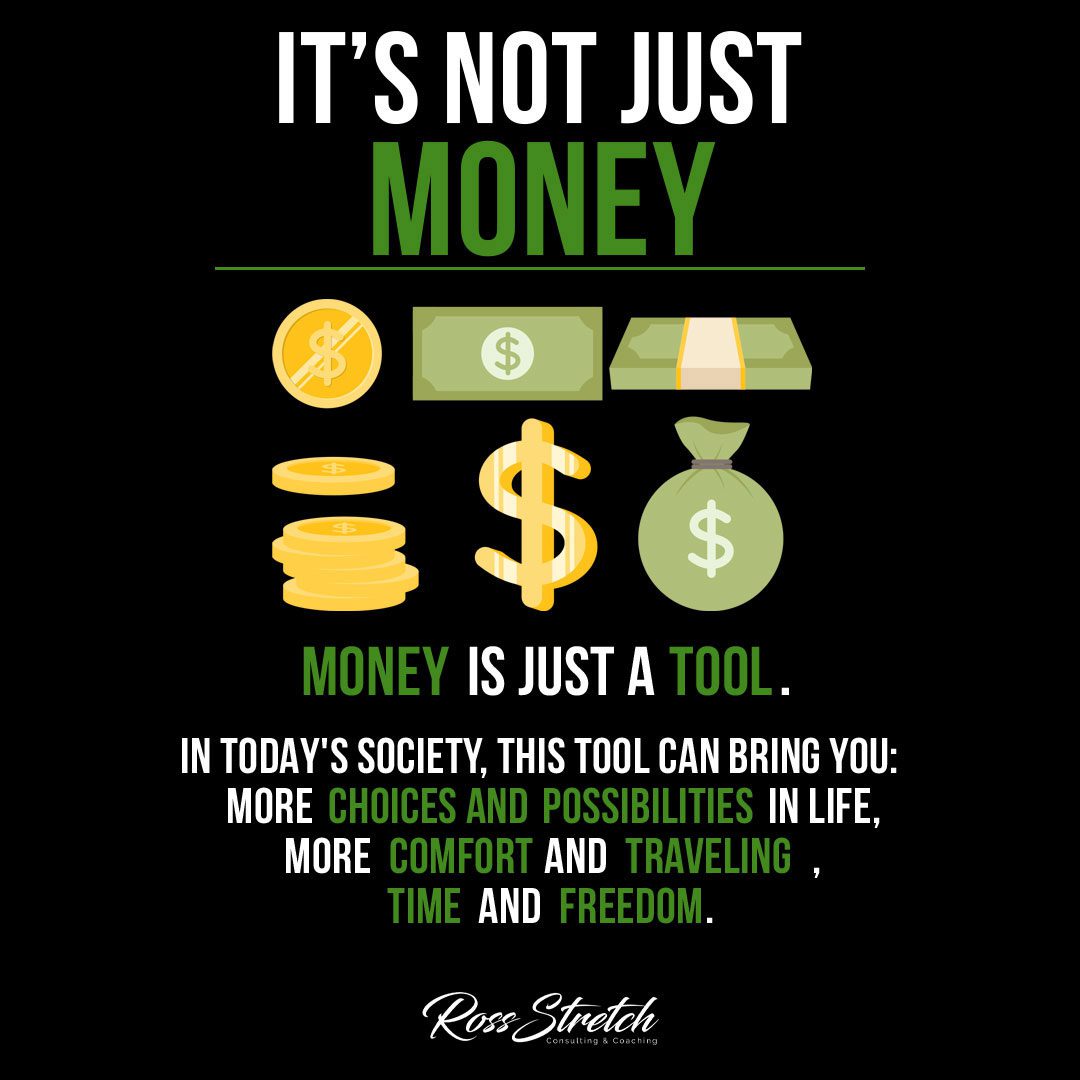

Money is one of the most misunderstood forces in modern life. Most people treat it as an end goal — the destination at the end of a long career — rather than recognizing it for what it truly is: a catalyst for choices. When you shift your relationship with money from something to accumulate to something that opens doors, your entire financial strategy changes. Instead of chasing numbers, you start building a life rich in freedom and optionality. The people who master their financial lives are not necessarily the ones who earn the most — they are the ones who understand what money is actually for.
Money as a Tool, Not a Trophy
Many people are conditioned from a young age to treat money as the measure of success. The bigger the paycheck, the bigger the house, the more successful the person — or so the cultural narrative goes. But this framework traps people on a hedonic treadmill: always chasing more without ever arriving at enough. When money becomes the goal itself, it tends to remain elusive no matter how much you accumulate.
The shift that changes everything is learning to view financial resources as a means to an end rather than the end itself. Ask yourself: what do I actually want money to do for me? The answer is different for everyone. For some, it is the security of knowing their family is protected. For others, it is the freedom to pursue creative work, retire early, or spend more time with people they love. Once you define what money unlocks for you, you can manage it intentionally rather than reactively.
This mindset shift also changes how you make everyday spending decisions. Instead of buying things to signal status, you invest in experiences, assets, and systems that return more value over time. Every dollar becomes a deliberate vote for the kind of life you want to live — and that awareness alone is one of the most powerful financial tools available to anyone.
The Choices That Financial Stability Unlocks
One of the most underappreciated benefits of money is optionality — the ability to choose. People with a degree of financial stability have access to a wider set of paths in virtually every domain of life. This is not about being wealthy in the traditional sense; even a solid emergency fund and manageable debt load dramatically expand the options available to you at any given moment.
In education, financial resources remove the barriers that block talented people from reaching their potential. Access to quality programs, professional development, and skill-building opportunities all require investment. While student loans and scholarships help, financial stability means you can pursue learning without the anxiety of debt defining every decision you make afterward.
For entrepreneurs and aspiring business owners, capital is the fuel that turns ideas into reality. Many brilliant concepts never see the light of day because their creators could not afford to test, build, or launch them. Financial resources — or strategic access to them — dramatically increase the probability that a good idea becomes a real business, with downstream effects on job creation, local economies, and broader innovation.
Comfort, Exploration, and Quality of Daily Life
When your basic financial needs are met, you gain access to a different quality of daily life — not just in the grand gestures, but in the small, recurring details. This is not about luxury for its own sake. It is about being able to design your environment in a way that supports your health, productivity, and wellbeing. That might mean a home that genuinely feels like a sanctuary, a neighborhood that matches your values, or simply the freedom to make healthful choices without constant budget anxiety.
Travel is one of the most cited benefits of financial freedom, and the research backs it up. Spending money on experiences rather than things consistently produces higher levels of long-term life satisfaction, according to decades of behavioral economics research. Experiencing different cultures, landscapes, and ways of life expands your perspective in ways that are genuinely difficult to replicate through other means. Money directed toward meaningful travel is not frivolous spending — it is an investment in how you understand the world and your place in it.
Even smaller quality-of-life improvements — choosing better food, affording reliable transportation, or delegating time-consuming tasks — compound into a significantly better lived experience over the years. These are not trivial. They represent the texture of your actual everyday life, and they matter far more than most conventional financial advice acknowledges.
Time Is the Real Currency
Perhaps the most underrated thing that money can buy is time. When financial resources are sufficient, work becomes a choice rather than a compulsion — and that distinction is enormous. People who choose their work tend to perform better, feel more engaged, and experience far less burnout than people who tolerate their work because they have no other option. Financial security does not just change what you do; it changes how you show up for everything you do.
Outside of work, money also protects your time for the things that actually make life rich: relationships, rest, creative projects, physical health, and personal growth. A person spending 55 hours a week in a job they resent, with no financial cushion, has very little left over for any of that. The compounding cost is not just financial — it shows up in mental health, relationships, and long-term wellbeing in ways that take years to fully recognize.
Building income-generating assets — investments, businesses, real estate, royalties — is how people reclaim those hours. The goal is not to stop working; meaningful work is one of the most reliable sources of purpose and fulfillment. The goal is to work because you want to, not because you have to. That single shift changes the entire equation.
Using Financial Resources to Create Broader Impact
Money’s influence extends well beyond the individual who holds it. When directed with intention, financial resources can generate meaningful change in communities, causes, and systems that matter to you. Philanthropy is not reserved for the ultra-wealthy — even consistent, modest giving to well-aligned organizations creates real, measurable impact over time.
Financial stability also frees you to contribute in non-monetary ways: volunteering your time, mentoring emerging entrepreneurs, joining local boards, or funding grassroots initiatives that larger institutions overlook. The cumulative effect of a community of financially stable people directing resources toward shared goals is significant, and it is one of the most compelling reasons to pursue financial independence beyond personal comfort.
Research in positive psychology consistently shows that prosocial spending — money used to benefit others — produces higher levels of subjective wellbeing than equivalent spending on oneself. This is not a call to deprioritize your own financial goals; it is a reminder that once those goals are on track, giving becomes one of the highest-return investments available. When you frame wealth as a vehicle for generosity, it changes your relationship with both money and meaning.
Conclusion
Money is not the point — what money enables is the point. When you stop treating it as a finish line and start treating it as a tool, you can use it to design a life with more freedom, more choice, and more impact. The work of building financial stability is not about accumulating wealth for its own sake; it is about creating the conditions for a life lived with intention. Define what you want. Build toward it. And let money do what it does best: give you the power to choose.
Resources


 Ross Stretch