The parent who is also an entrepreneur operates in two of the most demanding roles a person can hold simultaneously. Both require full attention, emotional presence, and sound judgment — often at exactly the same time. The tension between these roles is real, persistent, and unlikely to disappear entirely. But the possibility of excelling at both is equally real, and the strategies that make it possible are more practical and learnable than most people assume when they are in the thick of it.
\
\
This article is not about achieving some mythical perfect balance between work and family. That standard sets an impossible target and generates constant guilt. It is about building a deliberate, sustainable approach to the dual role that protects your relationships, your health, and your business without sacrificing any of them permanently to the demands of the others. The parent-entrepreneurs who navigate this well share a set of common practices that can be studied and applied at any stage.
\
\
\
\
1. Time Management: The Cornerstone of the Dual Role
\
\
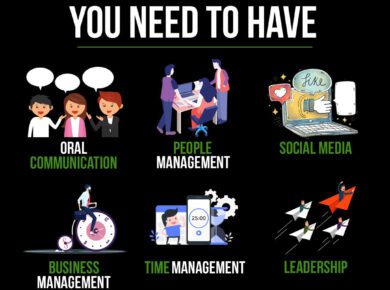
For the parent-entrepreneur, time is the scarce resource that every other strategy must account for. Unlike a single professional without dependents, you cannot treat your schedule as infinitely flexible. Your children have needs that are non-negotiable and often unpredictable. Your business has deadlines that are equally demanding. Managing both requires a level of scheduling discipline that most people never develop until it is forced on them — which is why the parent-entrepreneur who gets this right typically outperforms peers in both domains.
\
\
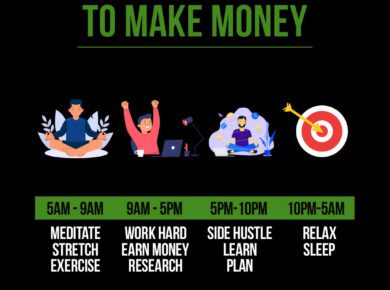
The most effective parent-entrepreneurs plan in dedicated blocks rather than hoping to fit everything in as it arises. Business time is protected. Family time is protected. The overlap between the two is minimized by design rather than managed reactively after the fact. Digital calendar tools make this structurally straightforward — the discipline required is treating those blocks with the seriousness of legal commitments rather than suggestions you override whenever something feels urgent.
\
\
Time auditing is a valuable starting practice. Before redesigning your schedule, track how your current time is actually being spent for one full week. Most people are surprised by how much time disappears into low-value activities — unfocused browsing, excessive meetings, reactive email, and low-priority tasks that feel necessary but aren’t. Recovering even two focused hours per day from those activities transforms what is achievable in both family and business domains without adding a single hour to your day.
\
\
\
\
2. Delegation and Support Systems: Strength, Not Weakness
\
\
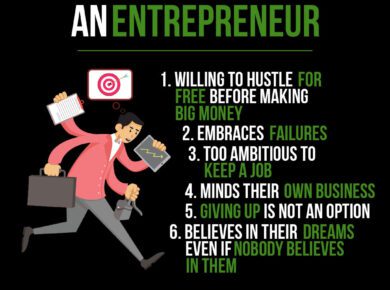
The entrepreneurs who struggle most with parenthood are often those who believe they must personally handle every aspect of their business. That instinct is understandable — in the earliest stages, when resources are limited and the business is fragile, wearing every hat is necessary. But as the business grows, the failure to delegate becomes a bottleneck that limits both professional output and personal availability. Delegation is not a compromise; it is one of the most important leadership skills a parent-entrepreneur can develop.
\
\
Start by identifying the tasks in your business that do not require your specific expertise or decision-making authority. Administrative work, routine customer service, bookkeeping, social media scheduling, research tasks — these are areas where capable team members or contractors can operate effectively without your direct involvement. Every hour recovered through effective delegation is an hour you can redirect toward high-leverage business work or meaningful family time, both of which compound in value far more than administrative tasks ever could.
\
\
Support systems extend beyond the business. The home environment benefits enormously from deliberate support structures — reliable childcare, help with household management, and routines that reduce daily decision fatigue. Many parent-entrepreneurs invest readily in business infrastructure while resisting investment in home infrastructure. Both investments serve the same underlying goal: protecting your capacity to function at your best in your most important roles. Treat home support as an operational expense, not a personal luxury.
\
\
\
\
3. Teaching Entrepreneurship Through Parenting
\
\
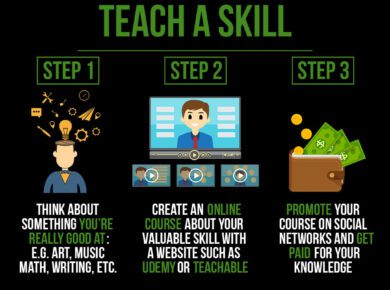
One of the underappreciated advantages of being a parent-entrepreneur is the opportunity to model entrepreneurial thinking for your children in real time. Traditional education does a limited job of developing financial literacy, creative problem-solving under pressure, and resilience through failure. Your daily work as an entrepreneur provides constant, live demonstrations of exactly those skills. The key is making that modeling intentional rather than incidental.
\
\
Involve your children in age-appropriate aspects of your business. Let them see you work through problems, navigate difficult conversations, make decisions under uncertainty, and recover constructively from setbacks. Speak openly about what entrepreneurship actually looks like — the sustained effort required, the risks involved, and the genuine satisfaction of building something meaningful from nothing. These conversations do not need to be formal lessons. They happen naturally when you are willing to share your work life with your family rather than keeping the two domains entirely sealed off from each other.
\
\
Financial literacy is particularly worth cultivating early. Children who understand the basics of income, expenses, saving, and value creation enter adulthood with enormous practical advantages over their peers. Parent-entrepreneurs are uniquely positioned to provide this education through lived experience rather than abstract instruction. A child who watches a parent build, price, and sell a product or service develops an intuitive understanding of economics that most adults never acquire through formal education.
\
\
\
\
4. Presence, Self-Care, and Long-Term Sustainability
\
\
The quality of your time with family matters more than the raw quantity, but this principle is sometimes used to rationalize a quantity that is genuinely insufficient. The goal is not to optimize for the minimum possible family time while maximizing business output — it is to be fully present and engaged during family time while also protecting business time from constant interruption. Both commitments deserve your undivided attention in their designated space.
\
\
When it is family time, be present without the distraction of your phone, email notifications, or the persistent background noise of unresolved business concerns. This is harder than it sounds, particularly during high-stakes periods in the business. The discipline of genuine presence — actually leaving work problems at the door, not just physically but mentally — is what makes your family time valuable rather than merely time spent in close physical proximity while mentally elsewhere.
\
\
Self-care is the foundation that makes everything else sustainable over the long term. The parent-entrepreneur who neglects their health, relationships, and personal renewal will see the consequences in diminished business judgment, reduced patience with their children, and declining capacity across all domains simultaneously. Regular exercise, adequate sleep, time spent with people outside your immediate professional and family circles, and activities pursued purely for enjoyment are not rewards to be earned after sufficient productivity — they are the fuel that keeps the engine running. Schedule them with the same intentionality you bring to your most important business commitments.
\
\
\
\
Conclusion
\
\
There is no version of the parent-entrepreneur life that eliminates all tension between its two primary demands. But with deliberate strategies for time management, delegation, presence, and self-care, it is entirely possible to build a thriving business while raising children who feel genuinely prioritized and supported. The skills required — intentionality, discipline, adaptability, and the willingness to ask for and accept help — are the same skills that make someone effective in both roles independently. Invest in developing them, and both spheres of your life will benefit in ways that compound over time.
\
\
\
\
Resources
\
\
- \
- Balancing Parenting and Entrepreneurship — Entrepreneur.com — Practical perspectives from parent-entrepreneurs on managing both roles without sacrificing either.
- Essentialism: The Disciplined Pursuit of Less by Greg McKeown — A rigorous framework for eliminating non-essential commitments and focusing effort on what matters most.
- Make Time for the Work That Matters — Harvard Business Review — Research-based strategies for protecting high-value time in demanding dual-role environments.
- Boundaries by Dr. Henry Cloud and Dr. John Townsend — A practical guide to setting limits that protect your most important relationships and responsibilities.
\
\
\
\


 Ross Stretch