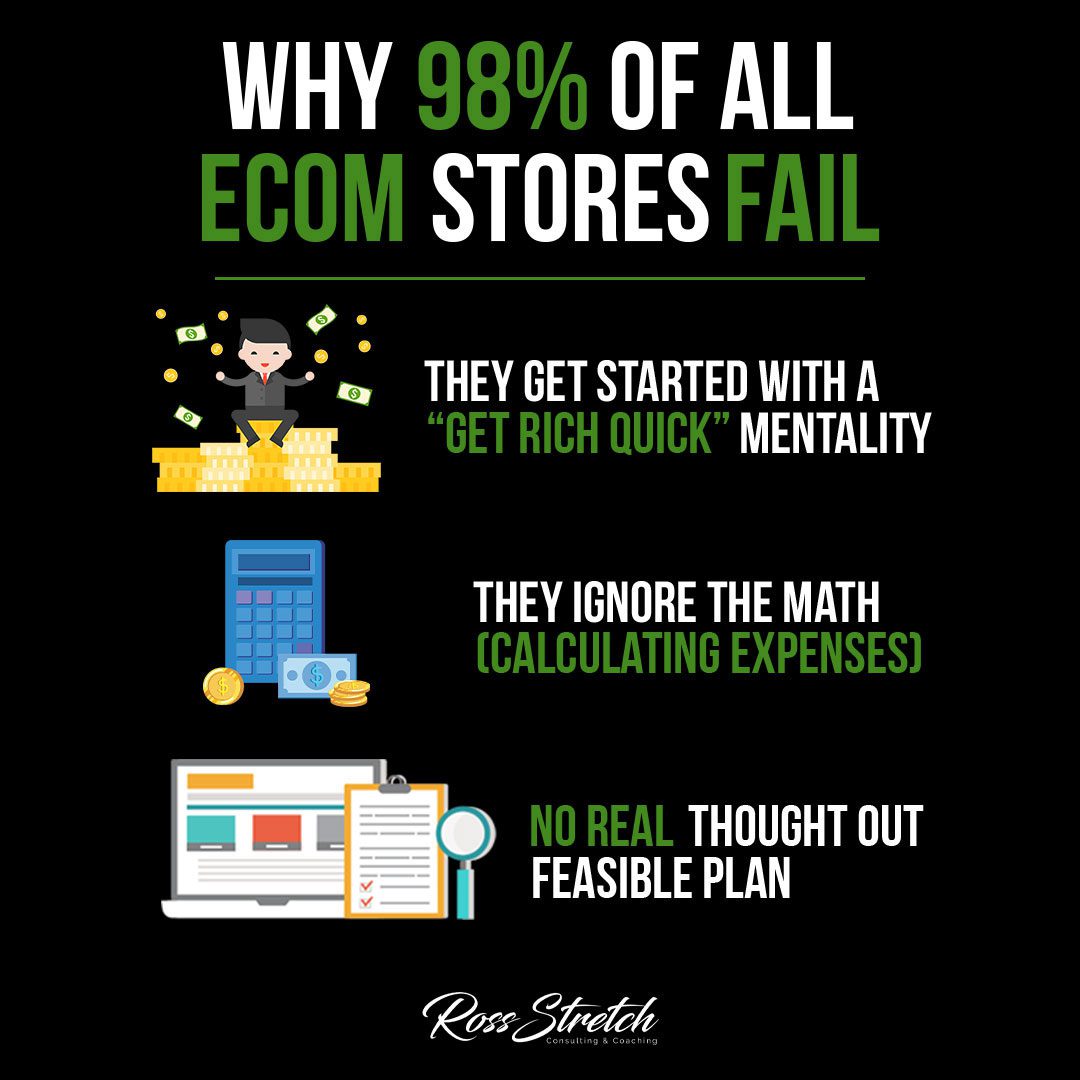
E-commerce has never been more accessible — and it has never been more competitive. With platforms like Shopify, WooCommerce, and Amazon FBA removing the technical barriers to entry, millions of new stores launch every year. Yet industry data consistently shows that the vast majority fail within the first two years. Understanding why is the first step to becoming part of the minority that succeeds.
1. Selling Products Nobody Actually Wants
The number one reason e-commerce stores fail is simple: they sell products that don’t solve a real problem for a specific group of people. Entrepreneurs fall in love with products they personally like, source them cheaply, and assume customers will follow. They almost never do.
What Successful Stores Do:
They start with the customer, not the product. They identify a specific niche, research the problems that niche faces, and find or create products that genuinely solve those problems better than alternatives.
The Fix:
Before sourcing a single product, validate demand. Search volume on Google and Amazon, competitor sales data through tools like Jungle Scout, and Reddit communities in your niche all reveal whether real demand exists.
2. Ignoring Unit Economics
Many e-commerce entrepreneurs get excited about revenue without understanding profit. A store doing $100,000 in annual sales might be losing money when you factor in cost of goods, platform fees, shipping, returns, and advertising costs. This is a silent business killer.
What Successful Stores Do:
They calculate their margin before launching a product and build their pricing around it. They know their customer acquisition cost (CAC), average order value (AOV), and lifetime value (LTV) — and they don’t launch advertising campaigns until those numbers make sense.
The Fix:
Build a simple spreadsheet before launch: product cost + shipping + platform fee + ad spend per sale = total cost. Price your product so that your margin is at least 50-60% before advertising.
3. Driving Traffic to a Broken Store
Many store owners pour money into Facebook ads or influencer partnerships without first ensuring their store actually converts. If your product photography is low quality, your copy is weak, your checkout process is clunky, or your trust signals are missing — no amount of traffic will save you.
What Successful Stores Do:
They obsess over conversion rate optimization (CRO) before scaling traffic. They test their checkout flow, add social proof (reviews, UGC), improve their copy, and use heat mapping tools to see where visitors drop off.
The Fix:
Before running paid ads, get 10-20 people in your target market to walk through your store and buy (or try to buy). Watch where they get confused or hesitate. Fix those issues first.
4. Giving Up Too Early
E-commerce has a steep learning curve. Most stores don’t become profitable on the first product, the first ad campaign, or the first month. The entrepreneurs who succeed are those who treat early failures as data rather than verdicts — who iterate rapidly instead of quitting.
What Successful Stores Do:
They commit to a testing mindset. Every failed ad is a lesson. Every abandoned cart is a clue. Every low conversion rate is a question: ‘What does the customer need to see that I’m not showing them?’
The Fix:
Give yourself at least 6-12 months of genuine effort before drawing conclusions. Keep meticulous records of what you test and what results it produces. Build on what works; kill what doesn’t.
Joining the 2%: What It Actually Takes
Succeeding in e-commerce is not about having the best product or the biggest budget — it’s about having the right knowledge, the discipline to execute, and the resilience to learn through failure. The 2% who succeed treat their store as a real business: they study their numbers, serve their customers obsessively, test relentlessly, and never stop improving. That mindset, more than anything, is what separates the winners from the 98%.

 Ross Stretch