
The people you spend the most time with shape who you become — your ambitions, your beliefs, your standards, and your sense of what is possible. This is not a motivational cliché. It is a well-documented psychological reality. We calibrate our behavior, our expectations, and our self-image against the norms of our closest social group. Which means that the quality of your inner circle is not just a social question — it is a strategic one. If the people around you are not pushing you to grow, questioning your assumptions, or holding you to a higher standard, the question worth asking is this: do you have a circle, or do you have a cage?
1. The Essence of a Genuine Circle
What a Real Support Network Actually Looks Like
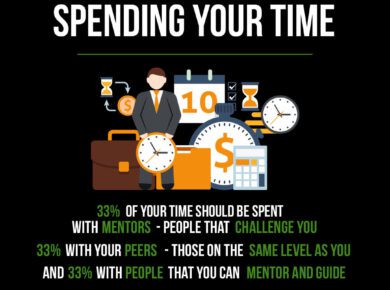
A genuine circle is not defined by longevity or proximity — it is defined by mutual growth. These are the people who challenge you when you settle for less than you’re capable of, who celebrate your wins without jealousy, who bring perspectives you wouldn’t arrive at alone, and who hold you accountable when your actions fall short of your stated values. They are not yes-people. They are trusted critics and enthusiastic collaborators, often simultaneously. This kind of relationship is not common, which is exactly why it is worth pursuing deliberately rather than leaving to chance.
- Actionable Tip: Inventory your five closest relationships. For each one, ask honestly: does this person push me to be better, or do they reinforce the version of me that’s comfortable but stagnant? This audit is not about cutting people off — it is about understanding your social ecosystem clearly so you can make intentional decisions about it.
- Why It Works: Awareness is the prerequisite for change. Most people drift into their social circles through circumstance — shared workplaces, neighborhoods, or history — rather than intentional cultivation. Examining these relationships consciously creates space for meaningful choices about where to invest your social energy.
Pro Tip:
Pay attention to how you feel after spending time with different people. Do you leave energized and motivated, or drained and diminished? Your emotional response to social interactions is often more honest than your conscious assessment of those relationships — and it is worth listening to.
2. Recognizing the Cage
Comfort and Stagnation Can Look Identical from the Inside
Social cages are rarely obvious. They don’t announce themselves. They are built gradually, from shared comfort, mutual validation, and the subtle social pressure to remain consistent with the group’s identity and norms. A cage can look like a long-standing friend group where ambition is quietly mocked. It can look like a professional network where mediocre results are normalized. It can even look like a close family circle where success is seen as threatening rather than inspiring. The defining characteristic of a cage is not hostility — it is the systematic dampening of growth, aspiration, and accountability.
- Actionable Tip: Notice which relationships in your life involve mutual encouragement of growth versus mutual justification of inaction. Conversations that consistently end in “we’re doing fine” or “that’s not realistic for people like us” are worth examining closely.
- Why It Works: Identifying a cage does not require dramatic confrontation. It requires honest observation. Once you can see a relationship for what it is — rather than what it was or what you wish it were — you can make intentional decisions about its role in your life going forward.
Pro Tip:
Bring your goals and ambitions into conversation with the people closest to you. The reactions you receive are revealing. Genuine encouragement, constructive questions, and curious engagement signal a circle. Consistent skepticism, deflection, or subtle ridicule signal something else entirely — and the pattern is usually clear once you are looking for it.
3. Breaking Free from the Cage
Liberation Begins with Clarity About What You Actually Want
Breaking free from limiting social dynamics does not always mean ending relationships. It means expanding beyond them. The first step is developing a clear, specific sense of your own goals and values — independent of the group’s consensus. When you know where you want to go, it becomes easier to identify which relationships accelerate that journey and which ones create friction. From this clarity, you can begin to deliberately seek out new connections with people who are already doing what you aspire to do, thinking in ways that challenge your current assumptions, and building lives that inspire rather than discourage.
- Actionable Tip: Identify one professional or personal community — a mastermind group, an industry association, an online forum, or a local entrepreneurship meetup — whose members are operating at the level you aspire to reach. Show up consistently and contribute value before expecting anything in return.
- Why It Works: Proximity to people who have achieved what you’re working toward normalizes the possibility of that achievement. When your baseline reference point for what’s “normal” shifts upward, your standards, habits, and expectations shift with it — often without conscious effort.
Pro Tip:
You do not need to distance yourself from existing relationships to build new ones. Simply make expanding your circle a deliberate priority. One meaningful new professional connection per month, compounded over a year, can fundamentally change the environment of ideas, opportunities, and possibilities you operate within.
4. Cultivating an Inspiring Circle: Intentional Relationship Building
Build It on Purpose, Not by Default
The most successful, fulfilled people rarely stumble into great networks — they build them with the same intentionality they apply to their careers and finances. Intentional relationship building means actively seeking people whose strengths complement your weaknesses, whose experience illuminates your blind spots, and whose ambition matches or exceeds your own. It means being genuinely useful to others before asking for anything, showing up consistently, and investing in relationships during the good times so that they are robust when you need support. It also means diversifying your social environment beyond your immediate professional context — different industries, backgrounds, and life experiences produce richer perspectives and more creative collaboration.
- Actionable Tip: Seek diversity deliberately. Attend events outside your professional niche. Pursue friendships with people at different life stages, from different industries, and with different cultural backgrounds. Homogeneous networks reinforce existing thinking; diverse networks expand it.
- Why It Works: Research on network science consistently shows that people with broad, diverse networks — what sociologist Mark Granovetter called “weak ties” — have access to more novel information, more career opportunities, and more creative problem-solving resources than those with tight, homogeneous social clusters.
Pro Tip:
Become a connector. Introduce people in your network to each other when you see a genuine reason for them to meet. This habit positions you as someone of value in your community, deepens your own relationships simultaneously, and creates goodwill that returns to you in ways that are impossible to predict but remarkably consistent to experience over time.
Conclusion
Your social environment is not a passive backdrop to your life — it is an active force shaping your trajectory. The people around you influence your standards, your possibilities, and ultimately your outcomes. Building a genuine circle requires honest self-assessment, the willingness to expand beyond comfort, and the discipline to invest in relationships that stretch you rather than merely reassure you. The effort is worth it. Few forces in human life are as powerful as belonging to a group of people who believe in your potential, hold you to your word, and celebrate your growth as enthusiastically as their own.
Resources

 Ross Stretch