Starting an online business has never been more accessible — or more competitive. The digital economy now accounts for a growing share of global GDP, and entrepreneurs who understand the foundational mechanics of building online come out ahead of the vast majority who wing it. Whether you’re selling physical products, digital downloads, or professional services, the same core principles apply: choose the right thing to sell, build an effective platform to sell it, and drive qualified traffic to your offer. Getting these fundamentals right is the difference between a business that grows and one that quietly fades.
Choosing What to Sell: The Foundation of Your Online Business
The most common mistake new online entrepreneurs make is starting with a product idea before validating demand. Before investing in inventory, branding, or a website, you need confirmation that real people are actively searching for — and willing to pay for — what you plan to sell. Market research is not optional; it is the first work of building a real business.
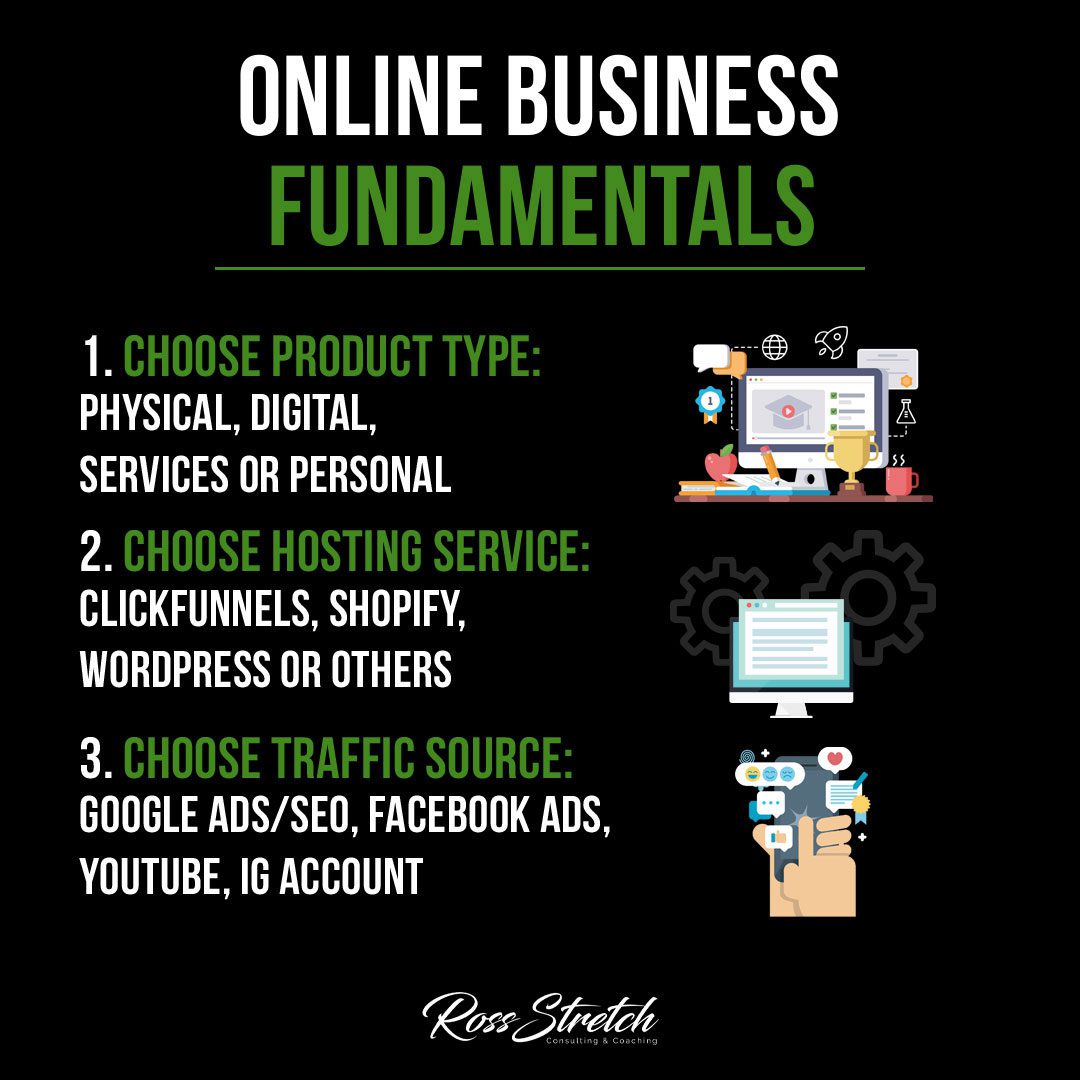
The four main categories of online products each carry distinct advantages. Physical products offer tangibility and strong conversion rates but require inventory management and fulfillment infrastructure. Digital products — e-books, courses, templates, software — have near-zero cost of goods and unlimited scalability, making them the highest-margin category for solo entrepreneurs. Services let you monetize skills you already have with minimal startup cost, though income is often tied to hours. Personal brands, where your expertise, story, or perspective is the product itself, are the most powerful long-term model, enabling diverse revenue streams from courses and coaching to sponsorships and speaking.
Validating your niche before you build is non-negotiable. Use Google Trends to assess demand trajectory. Tools like Ubersuggest or Ahrefs can estimate monthly search volume. Browse Reddit, Facebook Groups, and Quora to understand what questions your target audience is asking in their own language. The right product lives at the intersection of strong demand, manageable competition, and your genuine knowledge or interest in the subject matter.
Building Your Digital Storefront
Once you’ve validated your product, you need a platform to sell it. The platform you choose will affect your daily workflow, your long-term flexibility, and your customer’s experience. There is no universally correct answer — the right platform depends on your product type, technical comfort level, and growth trajectory.
Shopify is the dominant choice for physical product businesses. It handles payments, inventory, fulfillment integrations, and storefront design within a cohesive, relatively simple system. For entrepreneurs who want to sell products without managing backend complexity, Shopify is the fastest path to a professional, conversion-optimized store. WordPress combined with WooCommerce is the most flexible option for anyone who wants full control over design, content strategy, and SEO. The learning curve is steeper, but the long-term advantages in customization and organic search are substantial — especially for content-driven businesses and service providers.
Sales funnel platforms like ClickFunnels are optimized for single-product offers and lead generation sequences. If your business model centers on a digital course, a coaching program, or a lead magnet funnel, these tools are engineered specifically for high conversion rates on focused offers. For most beginners, the right advice is simple: pick one platform, launch with what you have, and optimize as you learn. Analysis paralysis kills more online businesses than platform choices ever will.
Driving Traffic: The Ongoing Work of an Online Business
A well-built store with no visitors is just an expensive website. Traffic — the consistent flow of qualified potential customers — is the operational lifeblood of any online business, and generating it requires a deliberate strategy from day one. The three primary traffic channels each have distinct economics, timelines, and trade-offs.
Search engine optimization is the highest-ROI long-term traffic strategy. By creating content that answers questions your audience is actively searching for, you build an asset that drives compounding organic traffic over time. Unlike paid ads, SEO traffic doesn’t stop when you cut spending. The trade-off is time — meaningful SEO results typically require six to twelve months of consistent output before they materialize. Google Ads provides immediate visibility for high-intent searches. If someone is searching “buy handmade leather wallets” and you sell handmade leather wallets, a well-structured Google Shopping or search campaign can convert that intent into revenue from day one. The downside is cost — paid traffic requires continuous investment and careful margin management to remain profitable.
Social media platforms — particularly Facebook, Instagram, and YouTube — excel at building brand awareness and reaching audiences who don’t yet know they need your product. Facebook’s targeting capabilities allow you to reach extremely specific demographics based on interests, behaviors, and life events. YouTube content marketing is among the most underused strategies for online entrepreneurs: a single well-optimized video can generate steady traffic for years without additional spend. By targeting the right audience with well-crafted messages across these channels, you build a compounding pipeline of new visitors to your offer.
Email Marketing: Your Most Valuable Business Asset
Most new online entrepreneurs underinvest in email marketing while over-indexing on social media. This is a strategic error. Your email list is the only audience you truly own. Social media algorithms shift without notice; ad costs fluctuate with market conditions. Email remains the highest-converting digital marketing channel, with research from Litmus estimating an average return of $36 for every $1 spent.
Start building your list from day one. Offer a compelling lead magnet — a free guide, checklist, template, or discount — in exchange for a subscriber’s email address. Use platforms like ConvertKit, Mailchimp, or Klaviyo to manage your list and automate follow-up sequences. A well-built welcome sequence that delivers genuine value over the first five to seven emails can convert a cold subscriber into a paying customer without a single additional ad dollar spent. The relationship you build through email is the most durable asset in your business.
Measuring What Matters
The gap between successful and unsuccessful online businesses often comes down to measurement discipline. What you don’t measure, you can’t improve. Set up Google Analytics from the start and establish clear key performance indicators: conversion rate, average order value, customer acquisition cost, and customer lifetime value. Review these metrics weekly, not monthly.
If traffic is high but conversions are low, the issue is your offer or your sales page. If conversions are solid but traffic is low, the issue is your marketing reach and distribution. Data tells you where to focus your energy so you’re solving the right problem rather than optimizing the wrong one. Entrepreneurs who measure consistently make better decisions faster — and that compounding advantage shows up in the revenue over time.
Conclusion
Building a profitable online business requires clarity on three fronts: what you’re selling, where you’re selling it, and how you’re driving people to it. These fundamentals have not changed — but the tools available to execute them have never been more powerful or accessible. Start simple, track everything, and iterate based on what the data tells you. The entrepreneurs who succeed online are not the ones with the most sophisticated systems — they are the ones who start, measure, and improve without stopping.
Resources


 Ross Stretch