Quitting your job to start a business is one of the most consequential decisions you’ll make. Done right, it can accelerate your path to financial independence and give you control over your time, income, and future. Done prematurely, it leaves you financially exposed and scrambling to recover lost ground. The difference between those two outcomes almost always comes down to preparation. Knowing when you’re truly ready to leave your full-time job isn’t about confidence or appetite for risk — it’s about meeting a clear set of financial and strategic criteria before you hand in your resignation.
Build Your Financial Safety Net First
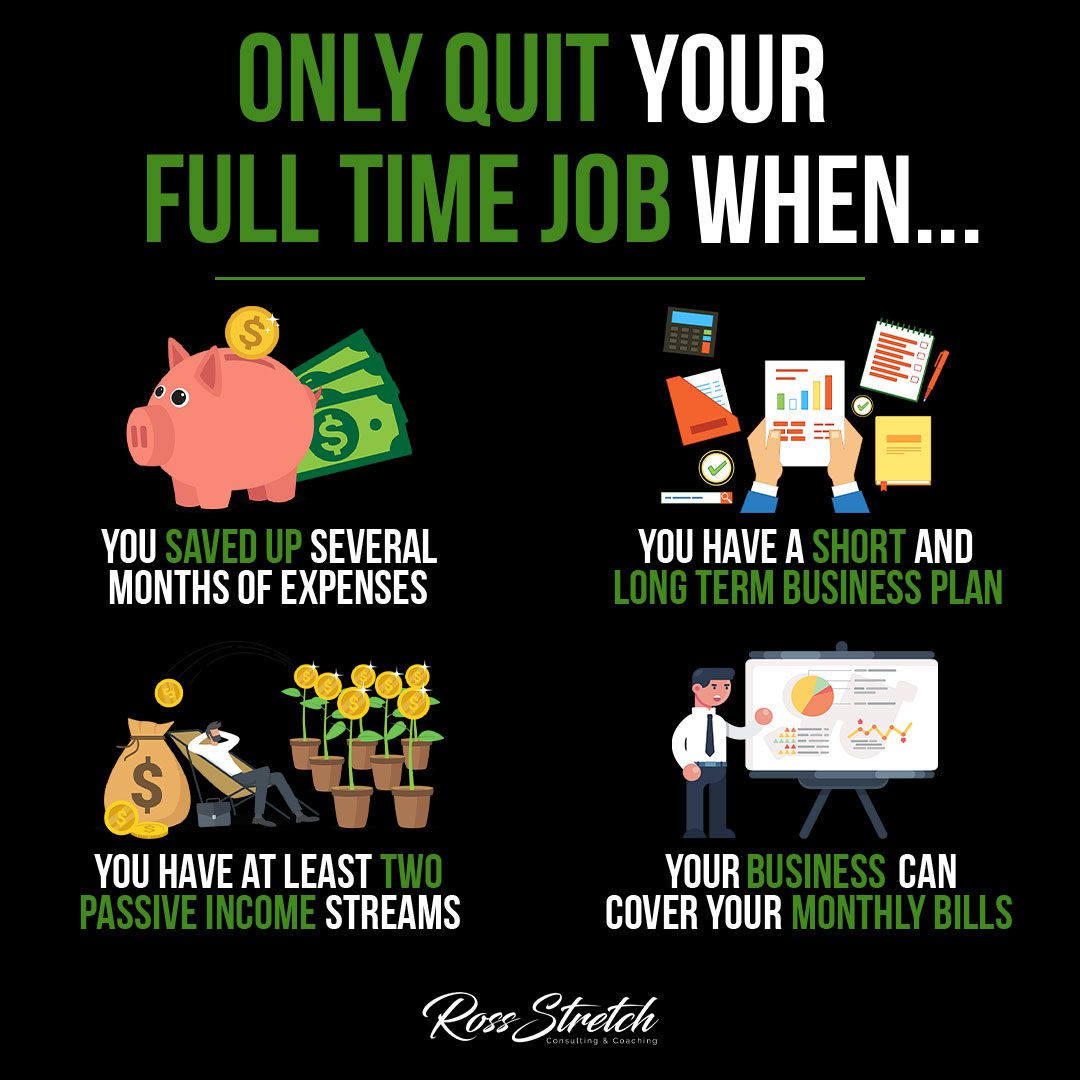
The first checkpoint is straightforward but non-negotiable: you need savings. Specifically, you need enough liquid savings to cover several months of personal living expenses without touching your business revenue. Most financial advisors recommend a minimum of six months, and in the context of starting a business, twelve months is a more conservative and sensible target.
The reason this matters isn’t just about survival — it’s about decision quality. An entrepreneur under acute financial pressure makes different decisions than one who has runway. The person running out of money may take on the wrong clients, underprice their services, or exit a position before the business has had time to prove itself. A solid financial cushion buys you the time and mental clarity to make better decisions when it counts most.
Calculate your true monthly burn rate before you leave — including expenses your employer currently subsidizes, like health insurance, retirement contributions, or professional tools. Build your savings target around that real number, not an optimistic estimate. The goal is to eliminate financial panic from your early months as an entrepreneur so you can focus on building rather than surviving.
Write a Real Business Plan Before You Resign
A business plan isn’t a formality — it’s a forcing function for clear thinking. Before you quit your job, you should have a documented plan that covers your target customer, how you’ll reach them, what you’ll charge, and what your revenue needs to look like in order to sustain the business at each stage of growth.
The plan should include both a short-term view — what does the first twelve months look like, month by month — and a longer-term strategic vision for where you’re taking the business over three to five years. These don’t need to be precise predictions, but they should reflect enough real research that you understand your market, your competition, and your unit economics before you bet your income on them.
The process of writing the plan often reveals problems before you quit. You may discover that your pricing model doesn’t work at scale, that customer acquisition will cost more than you assumed, or that your target market is smaller than you thought. Better to find those gaps while you still have a paycheck coming in than after you’ve already resigned and the clock is ticking on your savings.
Establish Multiple Income Streams Before You Leave
Relying entirely on a new, unproven business for your income is a high-variance bet. A smarter approach is to have at least two passive income streams generating money before you quit — income that flows regardless of how many hours you put into your primary business that month.
Passive income sources that work well alongside an early-stage business include dividend-paying investments, rental income from property, royalties from creative or intellectual work, or revenue from an established online asset like a content site or digital course. These income streams serve two purposes: they reduce financial pressure on your business in the early months, and they give you a broader economic base that doesn’t collapse if the business hits a rough patch.
The goal isn’t to replace your salary with passive income before you quit — that would take years for most people. The goal is to have enough diversified income that your financial survival isn’t entirely dependent on the performance of a single new venture. Even a modest amount in recurring passive income meaningfully changes your risk profile and the quality of your decision-making under pressure.
Ensure Your Business Can Cover Your Monthly Bills
One of the clearest signals that you’re ready to quit your job is when your business is already generating enough revenue to cover your monthly personal expenses — consistently, not just in a strong month. This doesn’t mean the business needs to match your salary dollar for dollar on day one. It means the baseline is covered and the trajectory is positive.
Track your business revenue against your personal expenses for at least three consecutive months before you resign. Look for stability, not just a single impressive result. A pattern of consistent revenue is a much stronger signal of readiness than a single outlier month that might not repeat. If your business can cover the bills three months running without drawing on your savings, that’s a meaningful milestone worth respecting.
This criterion also pushes you to build your business before you quit — which is almost always the right sequencing. Many successful entrepreneurs spent one to three years building their businesses on evenings and weekends before making the full-time transition. That’s not a failure of ambition. That’s disciplined, intelligent risk management.
The Mental Shift: From Employee to Owner
Beyond the financial criteria, there’s a psychological dimension to this transition worth understanding before you make the leap. Running a business requires a fundamentally different mindset than employment. As an employee, you’re optimizing for doing your defined job well. As an owner, you’re responsible for every function — sales, operations, finance, customer service, strategy — and there’s no manager to escalate problems to when they get difficult.
This shift can be disorienting at first. The absence of predictable structure and external accountability catches many new entrepreneurs off guard. The most effective way to prepare is to build routines and accountability systems before you quit — regular planning sessions, peer groups or mastermind connections, and clear weekly metrics that tell you whether the business is moving in the right direction. These structures help you maintain momentum when the inevitable hard weeks arrive and motivation runs low.
Conclusion
The entrepreneurial leap is worth taking — but only when you’re genuinely ready. A solid financial runway, a tested business plan, diversified income sources, proven revenue, and the right mental framework are what separate a successful transition from a stressful scramble. Be patient, do the preparation work, and make the move when the criteria are met — not when the excitement of the idea is at its peak. The goal isn’t to quit quickly. The goal is to quit wisely and set yourself up to win.
Resources
- How to Write a Business Plan — U.S. Small Business Administration — A practical guide covering all the essential elements of a solid business plan
- The Million-Dollar, One-Person Business by Elaine Pofeldt — Real stories of entrepreneurs who built thriving businesses before leaving their day jobs
- Free Business Plan Template — SCORE — A structured template from SCORE’s network of experienced mentors to help you build your plan
- How Much Should You Have in an Emergency Fund — Investopedia — A clear breakdown of the right financial cushion to have before making major career changes


 Ross Stretch