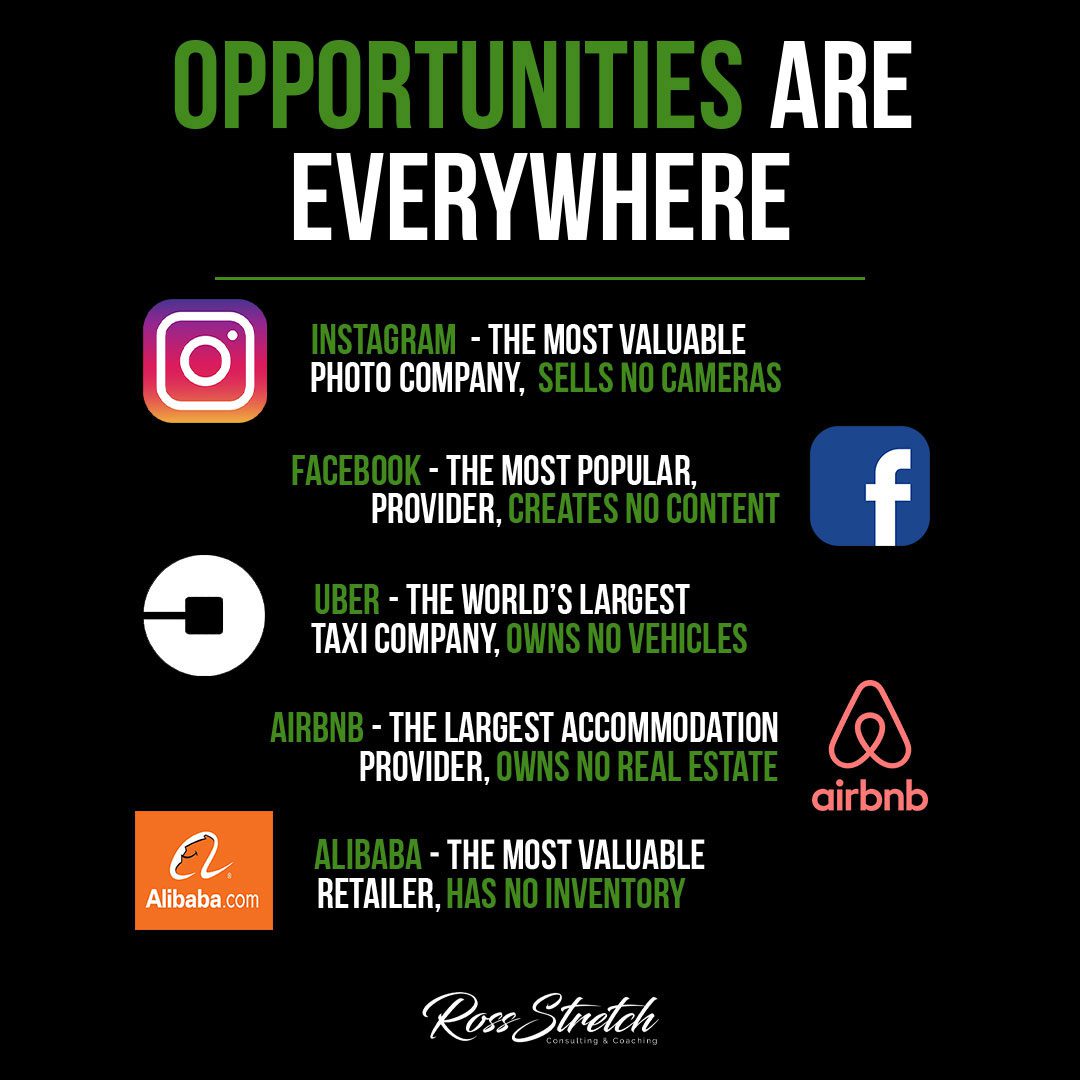
The most valuable companies of the past two decades share a counterintuitive trait: they own almost none of what they sell. Instagram became the world’s dominant photo platform without manufacturing a single camera. Uber became the world’s largest ride-hailing company without purchasing a vehicle. Airbnb became the world’s largest accommodation provider without owning a hotel room. Alibaba became one of the world’s most valuable retailers without holding a dollar of inventory.
This is not coincidence — it is a deliberate strategic model that has redefined how value is created in the digital economy. The platform business model, often described as asset-light, operates by facilitating transactions and connections between third parties rather than controlling the underlying goods or services directly. The company captures value from the network without bearing the cost of the assets within it.
Understanding why these models work — and what makes some platforms succeed where others fail — is one of the most valuable frameworks available for anyone thinking about building, investing in, or competing against modern businesses. The shift from pipeline to platform is not a trend. It is a fundamental restructuring of how economic value is created and captured.
The Asset-Light Advantage
Traditional businesses require significant capital to scale. A hotel chain needs to buy or lease properties. A taxi company needs to maintain and insure a fleet. A retailer needs warehouses, inventory systems, and supply chain infrastructure. Each unit of growth requires roughly proportional investment in physical assets, which creates a natural ceiling on how fast a company can expand.
Platform businesses invert this equation entirely. When Airbnb adds a new host, it does not buy a property — it acquires a supply-side participant who brings their own asset to the platform. When Uber adds a new driver, it does not lease a car — it gains access to a vehicle already owned and maintained by someone else. This means platforms can scale at extraordinary speed with dramatically lower capital requirements than asset-heavy equivalents operating in the same market.
The economic result of this structure is why platform companies dominate the list of the world’s most valuable businesses. Their marginal cost of adding one more user, driver, or host approaches zero — while the marginal revenue from that addition remains real and often growing due to network effects. This creates a profit dynamic that traditional asset-heavy businesses simply cannot replicate at scale.
- Evaluate how technology can replace traditional physical asset requirements in your industry
- Focus on building platforms that connect participants rather than controlling inventory or delivery
- Design for scalability that is not constrained by the capital cost of each additional unit
Instagram and Facebook: Owning the Attention, Not the Content
Instagram became one of the most valuable photo companies in history without taking a single photograph. Its value lies not in content — which it does not produce — but in the audience and the infrastructure through which content is discovered, shared, and monetized. The platform’s product is the network itself, and the network becomes more valuable as more people join it.
Facebook built a parallel empire on the same principle at vastly larger scale. Its billions of daily active users generate the content, the engagement, and the behavioral data that power Facebook’s advertising machine — one of the most profitable businesses in history. The platform’s role is to build and maintain the environment where that activity happens, and then monetize the attention it aggregates through targeted advertising.
The business lesson is significant: in the attention economy, controlling the distribution infrastructure is often more valuable than producing the content that flows through it. Platforms that facilitate creation while capturing the monetizable attention layer have consistently outperformed those attempting to produce content at scale with their own resources.
- Build platforms that empower user-generated content rather than producing content yourself
- Monetize aggregated attention and engagement rather than individual transactions
- Prioritize the quality of the network environment to sustain user participation over time
Uber and Airbnb: Marketplaces for Underutilized Assets
Every city contains an enormous reservoir of underutilized asset capacity. Cars sit parked for an average of more than 22 hours per day. Spare bedrooms remain vacant for weeks or months. Vacation homes sit empty between seasonal visits. Uber and Airbnb built their businesses by creating efficient marketplaces to connect people who have this latent capacity with people who need it — and extracting a transaction fee each time that connection is made.
What makes these platforms genuinely defensible is not the technology alone — it is the network effects that accumulate over time. Each additional driver makes Uber more useful for riders, which attracts more riders, which attracts more drivers. Each additional Airbnb listing improves options for travelers, which builds the traveler base, which incentivizes more hosts to list. The network becomes more valuable with each participant, creating a compounding structural advantage that is difficult for a new entrant to overcome.
Trust infrastructure is the other critical enabler. Neither Uber nor Airbnb could function at scale without robust rating systems, identity verification, and dispute resolution mechanisms that make strangers comfortable transacting with each other. Building that trust layer was as important as building the matching technology — and it represents a barrier to competition that pure technology rarely provides on its own.
- Identify markets with significant underutilized asset capacity waiting to be efficiently matched
- Design for network effects from the start — the platform becomes more valuable as it grows
- Invest in trust and safety infrastructure as a core competitive moat, not an afterthought
Alibaba: The Marketplace Model at Scale
Alibaba built one of the world’s largest retail operations without ever taking ownership of a product. Its model connects buyers and sellers across a sprawling ecosystem of marketplaces, payment systems, cloud services, and logistics infrastructure — extracting value from each transaction without bearing the inventory risk that defines traditional retail.
The Alibaba model illustrates a broader principle: in large, fragmented markets with many buyers and many sellers, the most scalable position is often the marketplace layer rather than any individual participant within it. Platforms that successfully aggregate both sides of a market, and that build the trust and transaction infrastructure required for commerce at scale, can grow to enormous value with relatively lean core operations.
What made Alibaba’s expansion possible was the development of supporting infrastructure — payment processing through Alipay, logistics coordination through Cainiao — that solved the trust and execution problems standing between buyers and sellers in China’s market. The ecosystem approach, where the platform builds services that enable the transactions it facilitates, is a model that has proven durable across multiple industries and geographies.
- Build marketplace infrastructure that connects buyers and sellers at scale without holding inventory
- Develop supporting services that solve friction points preventing transactions from completing
- Focus on platform reliability and seller success as the primary drivers of buyer trust
Conclusion
The rise of asset-light platform businesses has permanently altered what it means to build a valuable company. The most powerful position in many modern markets is not owning the assets — it is controlling the network through which assets are accessed, matched, and transacted. This shift rewards innovation in infrastructure and network design over capital accumulation in physical goods.
For entrepreneurs and investors, understanding this model is not just intellectually interesting — it is essential context for identifying where the next generation of value will be created. The businesses that will define the next decade will likely own very little of what makes them indispensable. What they will own is the network, the trust, and the infrastructure that everything else depends on.
Resources


 Ross Stretch