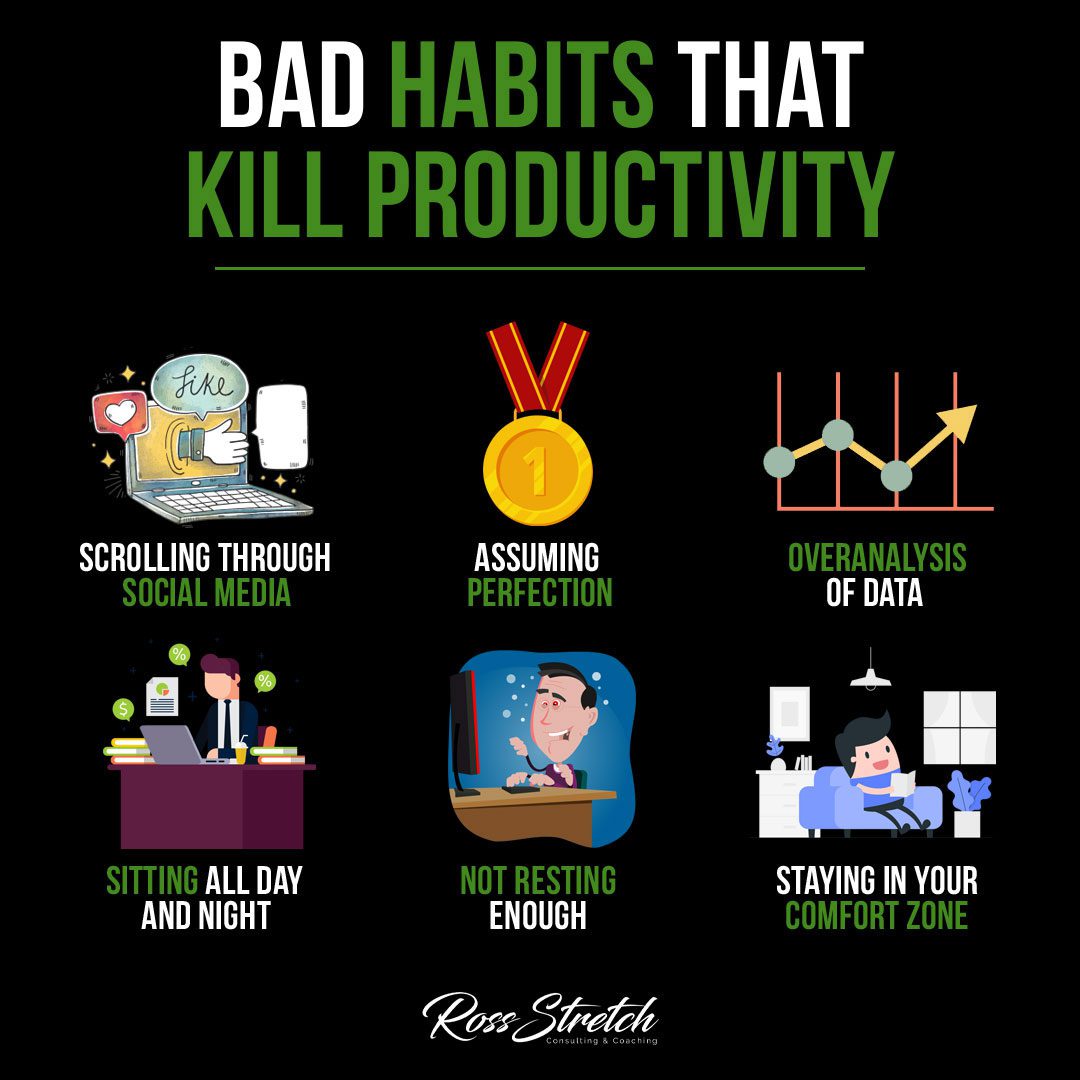
Productivity is not about working more hours — it is about protecting the hours you have from the habits that quietly drain them. Most productivity problems are not solved by adding new tools or systems. They are solved by identifying and eliminating the behaviors that create friction, fragment attention, and sustain low-output routines. This article breaks down the most common productivity-killing habits and gives you concrete strategies to overcome each one.
The Social Media Scroll Trap
Social media platforms are engineered to be addictive. Their algorithms are optimized for engagement, not for your benefit. The average person spends over two hours per day on social media — time that, for most professionals and entrepreneurs, comes directly from deep, focused work. The problem is not awareness; most people already know they scroll too much. The problem is that the habit is automatic and the reinforcement is instant.
Compulsive scrolling operates on a variable reward schedule — the same psychological mechanism that makes slot machines compelling. You keep checking because the next post might be relevant, important, or entertaining. Breaking this pattern requires removing the choice from your moment-to-moment decision-making. Delete apps from your phone’s home screen, use website blockers during work hours, and schedule specific windows for social media use rather than leaving it available on demand.
Tools like Freedom and Cold Turkey give you the ability to set hard limits across devices. Set them before willpower is tested, not after you have already fallen into an hour-long scroll session. If social media is part of your professional responsibilities, batch it into a defined block and treat it like any other scheduled task — not a background activity that runs alongside your real work.
The Perfectionism Trap
Perfectionism is procrastination wearing professional clothing. It looks like high standards from the outside, but internally it is often fear — fear of shipping work that gets criticized, fear of making a decision that turns out wrong, fear of being exposed as someone who does not have all the answers. The result is work that never ships, decisions that never get made, and projects that stall indefinitely in the revision stage.
The antidote to perfectionism is not carelessness — it is a clear definition of “done.” Before you start any significant task, define what a completed, acceptable outcome looks like. Not a perfect outcome. An acceptable one. When you hit that threshold, the work is finished. Iterate after release, not before. This approach is standard in software development for a reason: products that reach users generate real feedback. Products that never ship generate nothing.
Progress over perfection is not a compromise — it is the more effective strategy. Shipping a version, gathering real-world data, and iterating based on what you learn will consistently outperform spending three times as long trying to anticipate every possible scenario in advance. Set a completion standard, meet it, and move on.
Analysis Paralysis
Data is valuable, but more data is not always better data. Analysis paralysis occurs when the accumulation of information becomes a substitute for decision-making. In business, this often looks like running one more report before committing to a strategy, researching competitors for another week before launching, or waiting for market conditions to clarify before taking a position. The additional research rarely changes the outcome — it just delays it.
Effective decision-makers operate on the 70 percent rule: once you have about 70 percent of the information you would ideally want, make the call and adjust as you go. Waiting for 100 percent certainty is impossible in most meaningful decisions, and the attempt to achieve it burns time and cognitive energy that would be better spent executing.
Apply a time constraint to your research phases. If you are evaluating a business tool, give yourself two days. If you are analyzing market data for a pricing decision, set a deadline for the analysis and honor it. The Pareto principle — focusing on the 20 percent of data that drives 80 percent of insight — helps you identify which information actually matters and which is noise.
The Sedentary Workday and Its Hidden Costs
Extended periods of sitting impair both physical health and cognitive performance. Research published in the British Journal of Sports Medicine has linked prolonged sedentary behavior with increased risk of anxiety, depression, and cognitive decline — none of which support high output. Yet the default setup for most knowledge workers is eight or more hours per day seated at a desk, often without meaningful breaks.
The solution does not require a gym membership or an elaborate fitness routine. It requires intentional movement built into the structure of your day. Set a timer to stand every 45 to 60 minutes. Take calls while walking. Use a standing desk for specific tasks. These micro-interventions accumulate across a week into meaningful improvements in energy levels, mood, and cognitive sharpness.
The Pomodoro Technique — working in 25-minute focused blocks followed by 5-minute breaks — naturally creates movement opportunities. Use those breaks to step away from your screen rather than checking your phone. Physical reset during the workday is not a luxury; it is maintenance for the system you depend on to produce your best work.
Neglecting Rest and Recovery
High performers are not people who sleep less and work more — they are people who understand that recovery is part of the performance equation. Chronic sleep deprivation impairs decision-making, reduces creative capacity, and slows reaction time in ways that accumulate over days and weeks. A study from the University of Pennsylvania found that sleeping six hours per night for two weeks produces cognitive deficits equivalent to two full nights of total sleep deprivation — yet most people in that state do not perceive themselves as impaired.
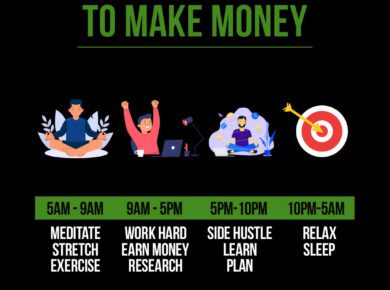
Protecting your sleep means treating it as a non-negotiable, not as the variable you cut when work runs long. Establish a consistent sleep and wake time, create a wind-down routine that signals your nervous system to shift out of work mode, and guard the hour before bed from screens and stimulating content. The productivity gains from consistently sleeping 7 to 8 hours far outweigh what you gain by burning those hours on additional work sessions.
Staying Confined to Your Comfort Zone
Comfort zones are productivity killers in disguise. They feel safe, familiar, and efficient — but they produce diminishing returns over time. The tasks you have already mastered rarely drive the most meaningful outcomes. Growth, by definition, happens at the edge of your current capabilities. Avoiding that edge keeps you busy without moving you forward.
Regularly audit your task list for the items you keep postponing — not because they are unimportant, but because they feel uncomfortable. That pitch you have been avoiding, the difficult conversation you keep rescheduling, the new skill you have been meaning to develop — these are often the highest-leverage activities on your list. Tackle the uncomfortable tasks first. Use the completion of a difficult task as motivation, not as a reward you grant yourself after the easier ones are done.
Conclusion
Productivity is rarely destroyed by major catastrophes. It erodes through small daily habits that compound into patterns of underperformance. Addressing the social media scroll, perfectionism, analysis paralysis, physical inactivity, poor sleep, and comfort zone avoidance does not require a complete lifestyle overhaul — it requires honest identification of which habits are most present in your current routine and a commitment to changing one or two of them at a time. Start there. The gains will compound.
Resources

 Ross Stretch