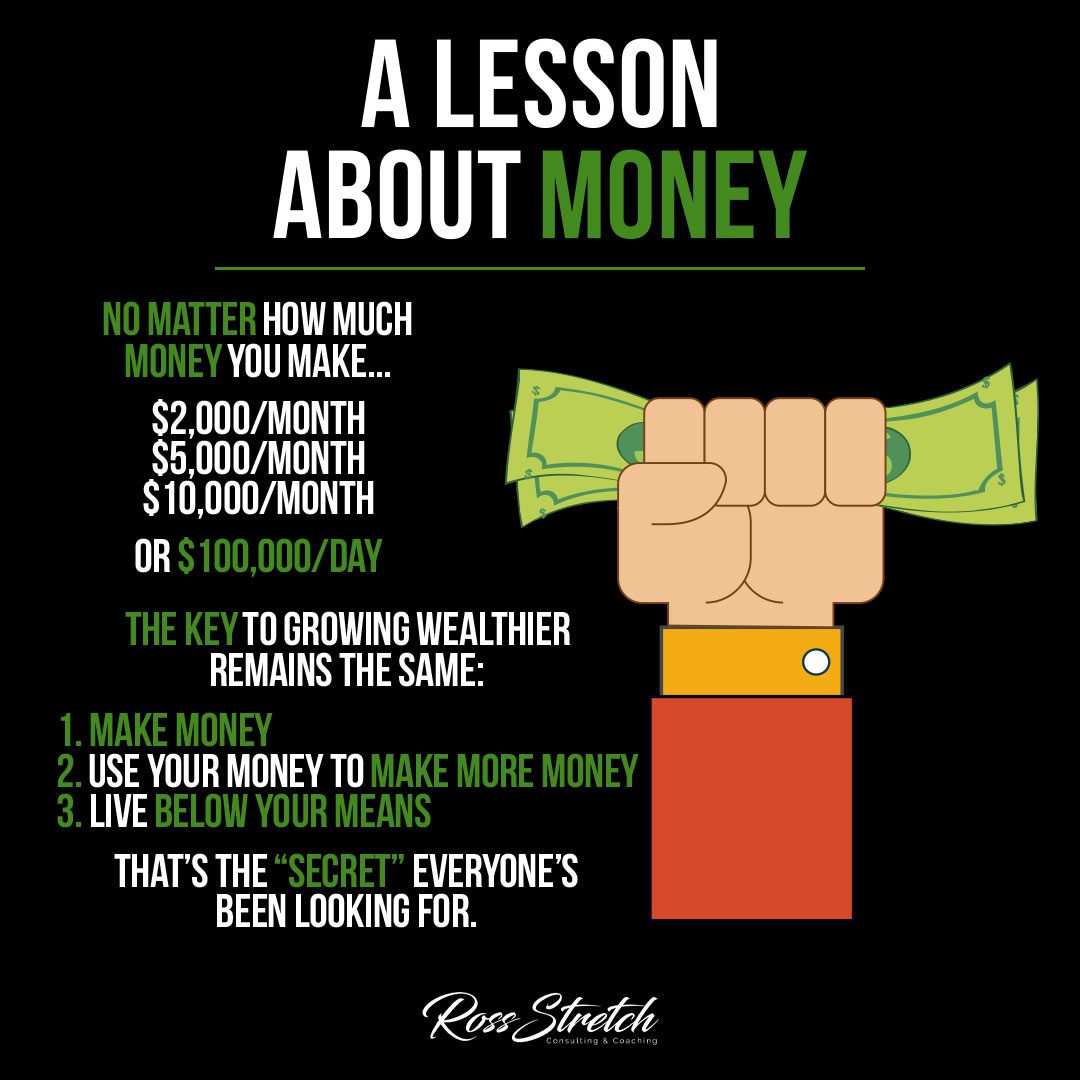
Most people never build serious wealth — not because they don’t earn enough, but because they never master the core mechanics of how money grows. The principles behind wealth accumulation have remained consistent across generations and economic conditions: earn income, invest that income productively, and spend less than you make. These ideas are simple to state and genuinely difficult to execute consistently. Understanding why they work — and how to apply them in practice — is what separates those who accumulate wealth from those who simply earn it and spend it.
The Foundation: Earning Income That Can Grow
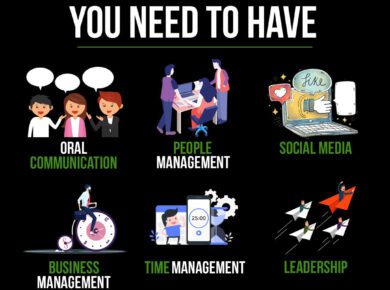
Wealth building starts with income, but not all income is equal. A salary is a starting point, not a ceiling. Income that doesn’t grow faster than inflation slowly erodes your purchasing power and your options over time. The first principle of wealth accumulation is to actively increase your earning capacity — not just your income today, but your income trajectory over the next five to ten years.
This means investing in skills that command higher market rates, positioning yourself in industries where compensation scales with performance or contribution, and developing multiple income sources rather than depending entirely on a single employer. Professionals who remain in the same role for years without adding skills or negotiating compensation are effectively accepting a real pay cut each year relative to inflation. A proactive approach — pursuing promotions, changing roles strategically, or building side income — compounds over time just as investment returns do.
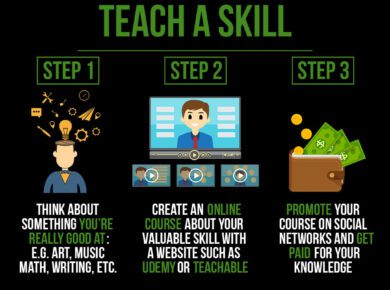
Side income doesn’t need to be dramatic to be meaningful. Freelance consulting in your primary professional field, monetizing a niche skill or knowledge base, or creating passive income through rental property or digital products can each add meaningful cash flow that you direct straight into investments rather than lifestyle spending.
Making Your Money Work: The Power of Compounding
The most powerful concept in personal finance is not leverage, tax strategy, or stock-picking. It is compound growth — the process by which returns on your investments generate their own returns over time. The math is unambiguous: a person who invests $500 per month beginning at age 25 and earns an average 8% annual return will accumulate approximately $1.7 million by age 65. Starting at 35 with identical contributions produces roughly $745,000 — less than half, despite only a 10-year delay. Time in the market matters more than the timing of any particular investment decision.
For most professionals, tax-advantaged accounts are the most efficient starting point. A 401(k) with an employer match provides an immediate return on every dollar contributed before the investment even begins. A Roth IRA allows after-tax contributions to grow and be withdrawn tax-free in retirement — a particularly valuable structure for younger earners in lower tax brackets today. Beyond these accounts, low-cost index funds provide broad market exposure without the management fees that consistently drag down the long-term performance of actively managed alternatives.
Reinvesting dividends automatically — rather than withdrawing them — accelerates compounding. Small decisions like this, repeated consistently over years, account for a disproportionate share of long-term wealth outcomes.
Living Below Your Means: The Discipline That Enables Everything Else
Earning more does not automatically create wealth. High earners who spend every dollar they make end up financially fragile regardless of their income level — a pattern researchers refer to as lifestyle inflation. As income rises, the cultural and social pressure to proportionally increase spending on housing, vehicles, dining, and travel is constant and often unconscious. The professional earning $150,000 who spends $145,000 is in a more precarious financial position than the professional earning $80,000 who saves 20% of their income consistently.
Living below your means is not about deprivation or refusing to enjoy your income. It is about conscious spending — choosing where to allocate money in alignment with your actual priorities rather than defaulting to consumption patterns that simply track your income. The goal is to maintain or grow the gap between what you earn and what you spend, because that gap is the raw material of wealth. Without it, no investment strategy matters.
Practical strategies include automating savings transfers before discretionary spending can absorb them, conducting a quarterly review of subscriptions and recurring costs, and implementing a deliberate delay — 48 to 72 hours — before committing to any significant discretionary purchase. This waiting period alone eliminates the majority of impulse spending for most people who implement it.
Balancing Income and Expenditure
Budgeting is most accurately understood as intentional allocation rather than restriction. Knowing precisely where your money goes is a prerequisite for directing where it goes next. The most straightforward effective framework is the 50/30/20 rule: 50% of after-tax income to needs, 30% to wants, and 20% to savings and investment. For those in an active wealth-building phase, pushing the savings rate to 25% or 30% accelerates the compounding process meaningfully.
Tracking tools like YNAB (You Need A Budget) or Empower (formerly Personal Capital) provide real-time visibility into spending patterns and net worth, making it easier to identify where money leaks occur and to course-correct before small leaks become significant drains. Regular net worth tracking — even quarterly — builds awareness of whether your financial trajectory is moving in the right direction and creates accountability that abstract goals don’t.
Financial Education as a Wealth Asset
The financial literacy gap is real and costly. Most people complete their formal education without a working understanding of investing, tax strategy, or debt management — and the cost of that gap compounds over decades just as surely as investment returns do, but in the wrong direction. Paying high-interest consumer debt while keeping savings in a low-yield account, failing to capture employer 401(k) matching, or investing in high-fee funds rather than index alternatives are all mistakes that stem from gaps in basic financial knowledge.
Reading foundational personal finance books provides a return on investment that’s difficult to match through any other activity. George S. Clason’s “The Richest Man in Babylon” distills wealth principles through parables that remain as applicable today as when they were written nearly a century ago. J.L. Collins’ “The Simple Path to Wealth” makes index fund investing accessible to anyone. Morgan Housel’s “The Psychology of Money” addresses the behavioral patterns and emotional biases that derail financially intelligent people from following through on what they intellectually know to be correct.
Beyond books, developing a working understanding of basic tax concepts — the difference between pre-tax and post-tax accounts, how long-term capital gains are taxed at preferential rates, how business income differs from employment income — allows you to make decisions that keep more of what you earn working for you rather than passing through to other parties.
Conclusion
Wealth accumulation is not a secret formula or a function of luck. It is a practice — one that requires earning income with intention, investing consistently over time, and maintaining discipline around spending even when it is inconvenient. None of these principles are glamorous, and none deliver visible results overnight. But applied consistently over years and decades, they represent as close to a reliable path to financial security as exists. The gap between where most people are and where they want to be financially is almost always a gap in execution, not a gap in information.
Resources


 Ross Stretch