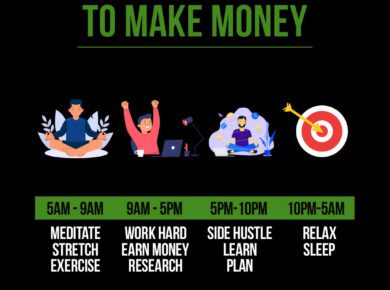
There is a strange double standard embedded in how most people think about time and money. An entrepreneur who has been building a business for three years without hitting significant financial targets is often treated as a failure — by others and sometimes by themselves. Meanwhile, someone who spends forty years in a job they do not particularly enjoy, earning wages that barely keep pace with inflation, is considered responsible and stable. Neither path is inherently superior, but the assumptions we apply to each shape the financial decisions we make — often to our own detriment.
The Entrepreneurial Timeline Problem
The mythology of overnight entrepreneurial success creates unrealistic expectations that damage real businesses. Stories of companies that scaled rapidly receive a disproportionate share of media coverage, making that trajectory feel like the norm. It is not. Most legitimate businesses take five to ten years to establish durable profitability, and many of the companies celebrated for their rapid growth had years of quiet development before anyone outside the industry noticed them.
When entrepreneurs internalize the belief that two to three years should be enough time to achieve significant wealth, they create a timeline mismatch that leads to premature pivots, demoralization, and abandonment of businesses that had genuine long-term potential. Building a sustainable business is a marathon with no predetermined finish line. The strategies that work are compounding ones — each year of operational experience, customer relationships, and market knowledge makes the business more valuable, even when monthly revenue charts do not yet reflect that growth.
Practically, this means reframing success metrics in the early years. Instead of measuring only revenue, track customer retention, operational systems developed, skills acquired, and network built. These are the precursors to financial success, and entrepreneurs who measure them stay motivated during the years when revenue alone would discourage them into quitting.
The Employment Longevity Paradox
The flip side of entrepreneurial impatience is employment complacency. The traditional career path — find a stable job, work for decades, retire — was designed around economic conditions that no longer reliably exist. Defined-benefit pensions are increasingly rare. Real wage growth has stagnated for most income brackets. The cost of housing, healthcare, and education has outpaced income gains significantly over the past three decades. Staying in a job for forty years and expecting financial security at the end is an increasingly fragile plan.
This is not an argument against employment — it is an argument against passive employment. The difference between an employee who builds wealth and one who does not is rarely income level. It is the decisions made with that income. An employee who invests consistently in low-cost index funds, contributes to registered retirement accounts, builds an emergency fund, and avoids lifestyle inflation can achieve genuine financial freedom on an ordinary salary. The vehicle matters less than the strategy applied to it.
Employees should also actively pursue income growth. Changing jobs strategically — negotiating raises, seeking promotions, or moving to higher-paying industries — is one of the fastest ways to accelerate wealth accumulation. Research consistently shows that switching jobs produces larger salary increases than annual merit reviews at most organizations. Passive employment is a choice. So is aggressive career management.
Time as a Financial Asset
Whether you own a business or hold a job, time is the denominator in every financial calculation you make. The question is not just how many hours you work — it is what those hours are producing. An entrepreneur spending ten hours per week on tasks that could be delegated for a fraction of their hourly rate is not building a business; they are creating a low-wage job for themselves. An employee spending evenings on passive entertainment rather than developing marketable skills is not resting — they are forfeiting future earning potential.
High-value use of time looks different at different income levels and career stages, but the principle is consistent: identify the activities that compound over time and bias your available hours toward them. For entrepreneurs, this typically means sales, product development, and strategic planning. For employees, it means skill development, networking, and building income-producing assets outside of the salary.
The trap is efficiency without strategy — being very productive at the wrong things. Before optimizing how you work, it is worth periodically stepping back to evaluate what you are working on and whether it is genuinely connected to your financial goals. The most productive use of an hour is rarely the most comfortable one.
The Wealth-Building Mindset
Developing a wealth-building mindset involves more than working hard. It requires making deliberate decisions about where to focus your energy for the highest long-term return. For entrepreneurs, this means resisting the urge to optimize for short-term revenue at the expense of long-term business value. For employees, it means resisting the urge to optimize for comfort at the expense of growth opportunities.
Practically, this looks like goal-setting with a multi-year horizon, consistent evaluation of whether current activities align with those goals, and the willingness to make uncomfortable short-term tradeoffs in service of meaningful long-term outcomes. Neither entrepreneurs nor employees typically struggle with wanting wealth — they struggle with subordinating today’s preferences to tomorrow’s financial goals consistently enough to matter.
Financial Education as the Great Equalizer
The single variable most predictive of financial outcomes — across both entrepreneurs and employees — is financial literacy. Understanding how compound interest works, how to evaluate an investment, how taxes interact with income and asset structure, and how to build net worth changes the decisions people make at every income level. Without this foundation, higher income often creates higher expenses without meaningfully improving financial position.
Financial literacy is not reserved for people with finance degrees. The core concepts — budgeting, debt management, tax-advantaged investing, and basic portfolio construction — can be learned through books, podcasts, and free online resources. The barrier is not access to information; it is the mistaken belief that this knowledge is either too complicated for non-experts or only relevant at higher income levels. Both beliefs are wrong, and both beliefs are expensive.
Start with the fundamentals: track your net worth monthly, understand where every dollar goes, and ensure that your savings rate is moving in the right direction. These basic practices, applied consistently over years, produce outcomes that most people believe require either luck or a high income. They do not. They require knowledge, patience, and the willingness to delay gratification — regardless of whether you are building a company or building a career.
Conclusion
The real question is not whether entrepreneurship or employment is the better path to wealth. Both can lead to financial freedom, and both can lead to decades of financial stagnation — the determining factors are the mindset, strategies, and financial habits applied along the way. Rethink the timelines you have accepted, actively manage whichever path you are on, and invest in the financial education that makes every dollar work harder. The difference between where you are and where you want to be is rarely as large as it feels — and rarely as simple as just working more hours.
Resources
- Rich Dad Poor Dad by Robert Kiyosaki — Understanding financial independence and the difference between assets and liabilities
- Mr. Money Mustache — Practical strategies for building wealth on an ordinary income
- Investopedia Personal Finance Hub — Financial literacy fundamentals for every income level
- JL Collins Stock Series — Simple, evidence-based long-term investing for beginners

 Ross Stretch