Marketing is the engine of small business growth, but it is also one of the most common areas where small business owners make costly, avoidable mistakes. Unlike large corporations with dedicated marketing departments and substantial budgets, small businesses typically operate with limited resources and high stakes — which means every mistake carries a heavier cost. Understanding where businesses go wrong is the first step toward building a digital marketing strategy that actually delivers results instead of consuming budget without measurable return.
Targeting the Wrong Audience
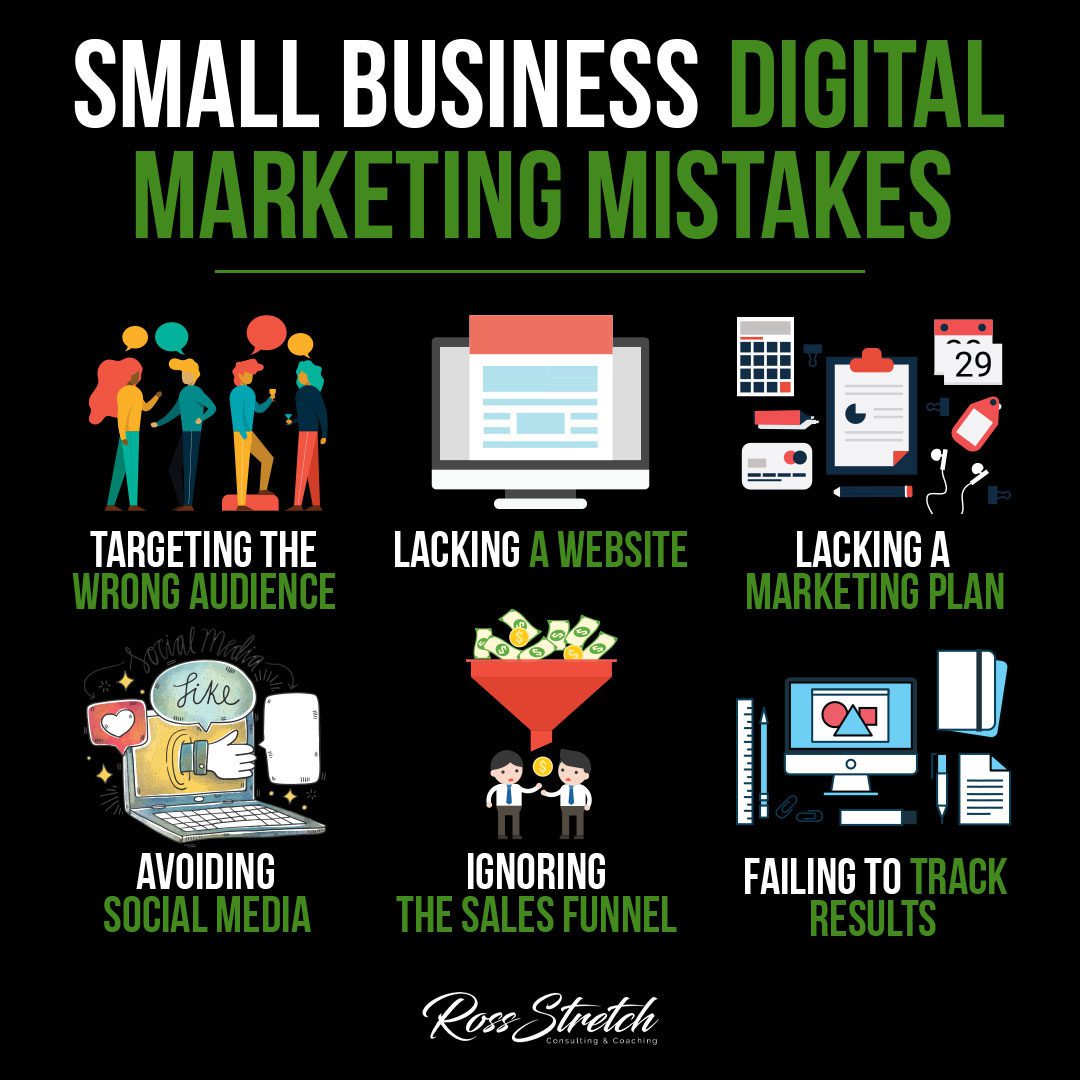
The most technically excellent marketing campaign fails if it reaches the wrong people. Yet many small businesses create content and advertising without first clearly defining who their ideal customer is. Without a specific, well-researched customer profile, marketing messages tend to be vague, generic, and easy to ignore — because they are not speaking to anyone in particular.
Building a customer persona involves more than basic demographics. Age and location matter, but so do pain points, goals, preferred communication channels, purchase triggers, and common objections. The more precisely you understand your ideal customer, the more effectively you can craft messages that feel personal and relevant — and relevant messages convert at dramatically higher rates than generic ones.
Small business owners often assume their product is for “everyone.” In reality, trying to appeal to everyone typically means appealing to no one effectively. Narrowing your target audience does not reduce your market — it sharpens your message and increases the return on every dollar you spend on marketing.
Operating Without a Marketing Plan
Posting sporadically on social media, running occasional ads when revenue dips, and relying on word of mouth without a systematic strategy is not a marketing plan — it is reactive improvisation. Small businesses that approach marketing this way tend to experience inconsistent results, because they are making decisions based on urgency rather than data and deliberate strategy.
A basic marketing plan does not need to be elaborate, but it should include clear goals, defined channels, a content calendar, a budget allocation, and metrics for measuring success. Goals should be specific and measurable: “increase website traffic by 20 percent over six months” is a useful objective; “get more customers” is not. With clear goals, every tactic can be evaluated against its contribution to those outcomes.
Even a one-page marketing plan created at the start of each quarter provides structure and accountability that dramatically improves consistency and results. The discipline of planning — rather than reacting — separates businesses that grow deliberately from those that plateau or stall.
Neglecting Your Website
In an era where consumers research businesses online before making virtually any purchasing decision, a missing, outdated, or poorly designed website is a serious liability. Your website is your digital storefront — it operates around the clock, and it is often the first impression a potential customer has of your business. A site that loads slowly, looks unprofessional, or fails to clearly communicate what you offer and why customers should choose you is actively costing you business every day it exists in that state.
A functional small business website needs, at minimum, a clear description of your products or services, a compelling value proposition, contact information, and social proof in the form of testimonials or reviews. A blog or resources section can dramatically improve search engine visibility over time. Mobile optimization is non-negotiable — the majority of web traffic now comes from smartphones, and a site that does not function well on mobile drives visitors away before they have a chance to become customers.
Ignoring Social Media or Using It Without Strategy
Social media is one of the most powerful and cost-efficient marketing tools available to small businesses — but it is only effective when used with strategy and consistency. Two common failure modes exist: ignoring social media entirely, and being present on every platform without a clear purpose on any of them.
Rather than spreading thin across six platforms, identify where your target audience actually spends time and build a genuine presence there. A local service business may find Facebook and Nextdoor more effective than Instagram. A visually oriented retail brand may find Instagram and Pinterest ideal. A B2B consultant may generate far more qualified leads through LinkedIn than any consumer-facing platform. Platform selection should follow audience behavior, not personal preference.
Content should provide genuine value — educational information, behind-the-scenes looks, customer success stories, and honest conversation — rather than functioning as a constant sales pitch. Audiences disengage from promotional content quickly, but engage consistently with content that helps, entertains, or gives them a reason to trust the business behind it.
Ignoring the Sales Funnel
Many small businesses focus their marketing entirely on the awareness stage — attracting new eyeballs — without building the infrastructure to move those prospects toward a purchase decision. A customer who sees your ad or visits your website for the first time is unlikely to buy immediately. They need nurturing through the consideration and decision stages before they are ready to commit.
An email list is one of the most effective tools for funnel-based marketing, because it gives you a direct line of communication with people who have already expressed interest in your business. Lead magnets — free guides, checklists, consultations, or discounts — provide a compelling reason to subscribe, and a thoughtful email sequence can move subscribers from curiosity to conversion over time without requiring constant manual effort.
Not Tracking or Analyzing Results
Marketing without measurement is money spent without accountability. Yet many small businesses have no systematic way of knowing which marketing activities are generating leads or revenue and which are simply consuming budget. Without data, it is impossible to allocate resources effectively, improve performance over time, or justify continued marketing investment to yourself or stakeholders.
Google Analytics provides free, detailed insight into website traffic, user behavior, and conversion performance. Most social platforms offer native analytics dashboards. Email marketing tools track open rates, click rates, and conversions. Even simple tracking — asking every new customer how they heard about you — provides valuable signal that informs future decisions. Reviewing these metrics monthly and adjusting strategy accordingly is the difference between marketing that compounds its effectiveness over time and marketing that repeats the same mistakes indefinitely.
Conclusion
Small business marketing does not need to be expensive or sophisticated to be effective, but it does need to be strategic, consistent, and data-driven. The most common mistakes — targeting the wrong audience, skipping the plan, neglecting the website, misusing social media, ignoring the funnel, and running blind without analytics — are all correctable with deliberate effort. Fixing even two or three of these gaps can produce measurable improvements in lead generation and revenue. The businesses that grow are the ones willing to examine their marketing honestly and make the adjustments required to do better.
Resources

 Ross Stretch