Building and maintaining wealth requires more than earning a good income. Many high earners end up financially stagnant — or worse — because they never develop the habits and systems that turn income into lasting financial security. Smart personal finance is about actively managing what you have, eliminating behaviors that drain wealth silently, and systematically growing your financial position over time. This guide outlines the key principles that separate people who accumulate genuine wealth from those who perpetually feel behind despite solid incomes.
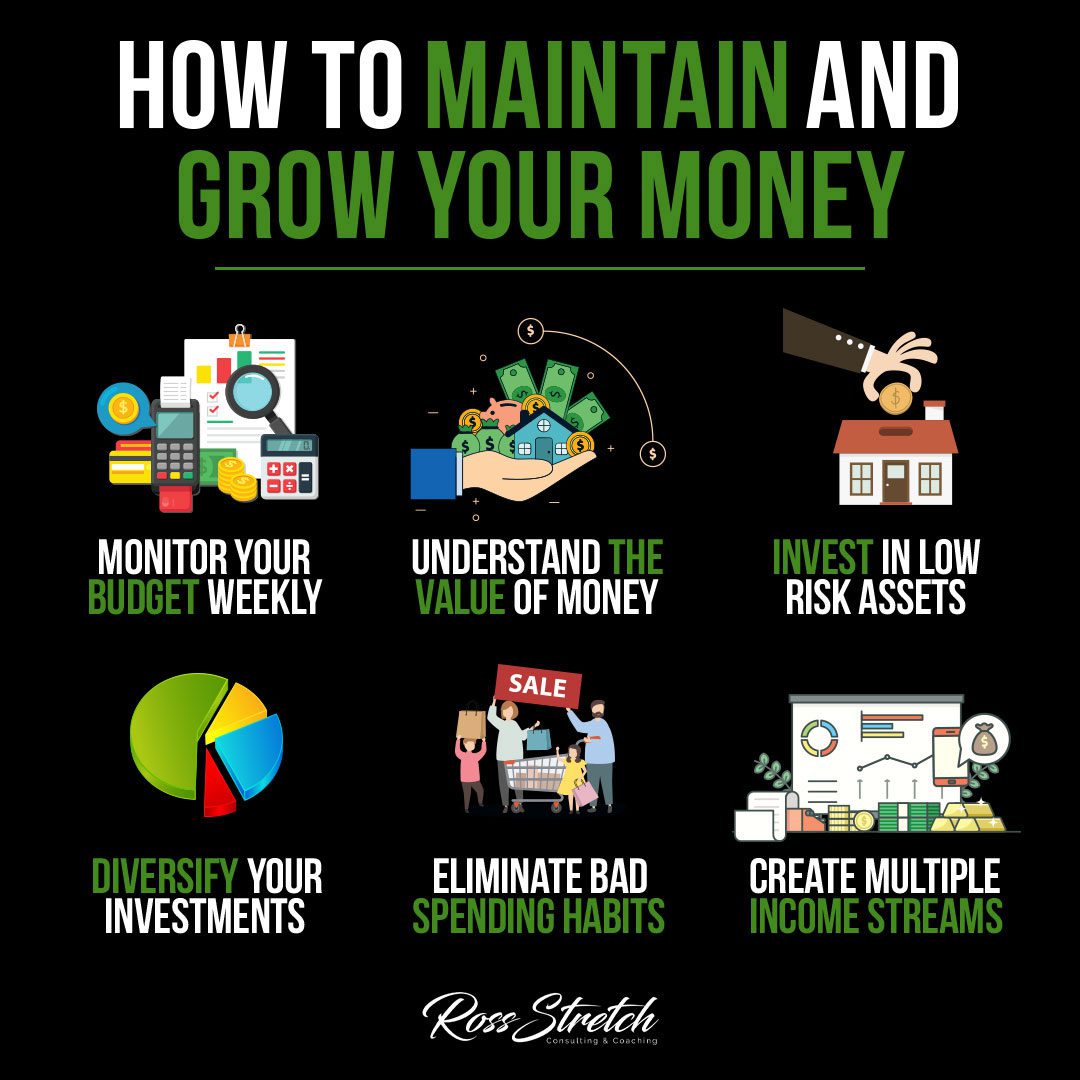
Weekly Budget Monitoring: Your Financial Health Check
Most people review their finances once a month — or not at all — and then wonder why they consistently come up short. Effective financial management requires a regular review cadence, and weekly is the optimal frequency for most people. A weekly budget review takes 15-20 minutes and provides the situational awareness needed to catch problems before they compound. You see where your money actually went, not just where you planned for it to go — a crucial distinction that monthly reviews miss.
The most effective tracking systems are the ones you’ll actually use. For some people that’s a dedicated app like YNAB or Monarch Money. For others it’s a simple spreadsheet updated once per week. The platform matters far less than the habit. What you’re looking for in each review is straightforward: Are actual spending categories aligned with your stated priorities? Are there recurring charges you’ve forgotten about or no longer use? Are you on track with savings and investment targets for the month?
Beyond catching overspending, weekly budget reviews reveal behavioral patterns invisible when you only examine monthly totals. You might notice your grocery spending spikes on certain days, or that dining out creeps up whenever a particularly stressful work week hits. This kind of pattern recognition transforms financial data into actionable behavioral insight — and behavioral change is where lasting financial improvement actually occurs.
Understanding the True Cost of Spending
Every dollar you spend has an opportunity cost — the return that dollar could have generated if invested instead. This concept, genuinely internalized, fundamentally changes how you evaluate purchases. A $200 monthly subscription to a service you rarely use isn’t just a $200 cost — it’s $200 per month that, invested at a 7% average annual return, would grow to roughly $240,000 over 30 years. That reframe doesn’t mean never spending on anything; it means spending intentionally with full awareness of what you’re trading.
The framework of spending in hours of work — rather than dollars — is another powerful mental model. If you earn $50 per hour after tax, a $500 impulse purchase costs 10 hours of your working life. Expressed that way, many purchases feel dramatically different. This is what financial educators call the real price of things: not the sticker price, but the time it took to earn that money combined with the future growth that money could have produced.
Financial literacy is the underlying skill that makes all of this possible. Understanding compound interest, inflation, tax-advantaged accounts, and basic asset classes doesn’t require a finance degree — it requires a few well-chosen books and the consistent habit of applying these principles to real decisions. The financial returns on financial education are among the highest of any investment available to most people.
Building a Resilient Investment Strategy
Investing can feel overwhelming to people who didn’t grow up with it, but the fundamentals are actually straightforward. The three most important principles are starting early to maximize compound growth, diversifying broadly to manage risk, and keeping costs low to avoid eroding returns with fees. For most individual investors, a simple three-fund portfolio — U.S. total market, international total market, and bonds in an age-appropriate proportion — will outperform the vast majority of actively managed strategies over any significant time horizon.
Tax-advantaged accounts are among the most powerful tools available to individual investors. Maxing out a 401(k) and Roth IRA before investing in taxable accounts is almost always the right first move for U.S.-based investors. In Canada, the RRSP and TFSA offer equivalent benefits. The tax advantages in these accounts — either tax-free growth or tax-deferred growth — compound significantly over decades and can add hundreds of thousands of dollars to a retirement portfolio compared to investing identical amounts in taxable accounts.
Diversification across asset classes — equities, bonds, real estate, and potentially alternative assets — reduces portfolio volatility without proportionally reducing expected returns. The goal is not to eliminate risk entirely but to ensure you’re appropriately compensated for the risk you take, and that no single market event can permanently derail your financial plan. A well-diversified portfolio can weather significant market downturns without forcing you into the worst possible financial decision: panic-selling at the bottom.
Eliminating the Spending Habits That Drain Wealth
Lifestyle inflation is one of the most common and least-discussed threats to wealth building. It describes the tendency for spending to expand in lockstep with income — so that despite earning more every year, savings and net worth barely improve. The professional who earns $60,000 and saves 20% is in a stronger long-term financial position than one who earns $120,000 and saves 5%. Income is not the same as wealth; the gap between what you earn and what you spend determines your financial trajectory.
A subscription audit is a high-value exercise that takes about 30 minutes and typically reveals $50-200 per month in forgotten or unused recurring charges. Go through your bank and credit card statements for the past three months and list every recurring charge. Cancel anything you haven’t actively used in the past 30 days, anything replaceable with a free alternative, and anything that represents a luxury category you can revisit after hitting key savings targets.
High-interest consumer debt — particularly credit card debt — is a financial emergency that takes priority over investing. Paying 20% interest on a credit card balance while earning 7% on investments is a guaranteed net loss. The correct priority sequence for most people is: eliminate high-interest debt first, build a three-to-six-month emergency fund, maximize tax-advantaged investment accounts, then invest in taxable accounts. Deviating from this sequence costs real money over time.
Creating Multiple Streams of Income
Dependence on a single income source is a financial vulnerability, regardless of how stable that source appears. A layoff, a health crisis, or an industry disruption can eliminate a single income stream rapidly. Building additional income sources — a side business, freelance work, dividend income, rental income, or digital product sales — provides both financial resilience and the raw material for accelerated wealth building. The wealthiest individuals almost universally have multiple income streams working simultaneously.
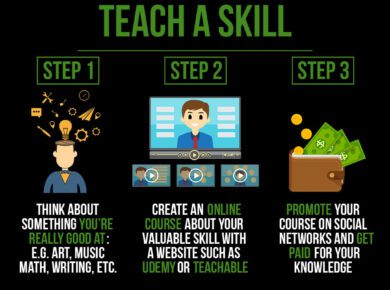
The most accessible path to a second income stream for most professionals is monetizing existing skills. A software engineer can consult or build side projects. A marketer can take freelance clients. A designer can sell templates or online courses. The initial goal isn’t to replace your primary income — it’s to generate an additional $500-2,000 per month that can be directed entirely into investments, meaningfully accelerating the timeline to financial independence.
Conclusion
Smart personal finance is not about deprivation — it’s about intention. It’s about understanding where your money is actually going, eliminating spending that doesn’t serve your real goals, and systematically building assets that generate lasting financial freedom. The habits described here — regular monitoring, intentional spending, disciplined investing, debt elimination, and income diversification — compound on each other over time. Start with one, establish it as a consistent practice, then add the next. The financial trajectory you set in the next twelve months can look dramatically different from the one you’ve been on — if you’re willing to apply the fundamentals with consistency and patience.
Resources

 Ross Stretch