Effective money management is not a skill reserved for accountants or financial professionals — it is the foundation on which every form of lasting wealth is built. Yet most people never receive a practical education in personal finance, leaving them trapped in cycles of debt, missed investment opportunities, and financial decisions driven by emotion rather than strategy. The good news is that the core principles of smart money management are learnable, actionable, and accessible to anyone willing to apply them with consistency. This article unpacks the key strategies that separate financially secure people from those who struggle, regardless of income level.
Eliminating Debt: The Non-Negotiable First Step
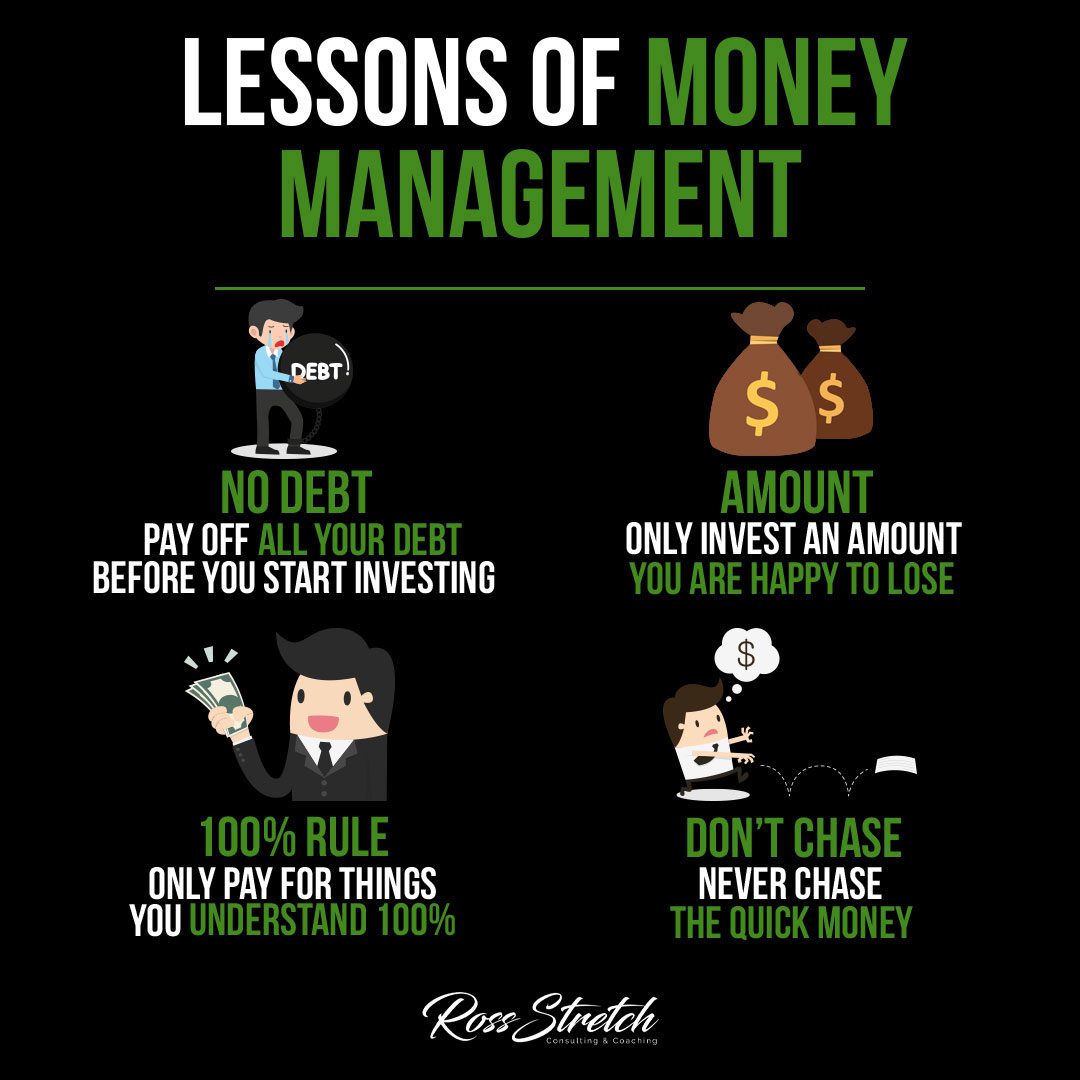
Debt is the single greatest obstacle to financial independence for most people. It is not just a number on a balance sheet — it is a monthly tax on your income that compounds against you while your potential investments compound for someone else. High-interest consumer debt, in particular, carries rates of 18–29% annually on credit cards, making it mathematically impossible to build real wealth while carrying significant balances. You cannot out-invest 24% interest. The math simply doesn’t work in your favor.
The most effective debt elimination strategy used by financial planners is the debt avalanche method: list all debts by interest rate, pay minimums on everything, and direct every available dollar toward the highest-rate debt first. Once that’s eliminated, roll that payment into the next highest-rate debt. This mathematically minimizes total interest paid and accelerates your path to zero. Some prefer the debt snowball method — smallest balance first — for psychological momentum. Both work. The avalanche saves more money; the snowball sustains motivation. Choose the one you’ll actually execute.
The critical discipline is this: before you invest a dollar in markets, real estate, or a business, eliminate your consumer debt. The guaranteed return of eliminating a 22% credit card balance is better than virtually any investment available to retail investors. Debt-free individuals redirect that same cash into wealth-building assets — and from that point forward, compounding works entirely in their favor.
Invest Wisely: The Art of Calibrated Risk
The second principle of smart money management is investing only what you can genuinely afford to lose. This is not pessimism — it is the foundational rule of risk management that protects your financial stability while allowing you to participate in wealth-generating markets. The practical application: define your investable surplus — the money that, if lost entirely, would not alter your lifestyle, housing stability, or food security. That is your actual investment budget. Everything else is living capital, not investment capital.
Before putting money into any investment vehicle — stocks, real estate, private equity, cryptocurrency — run a simple scenario test: “If this went to zero tomorrow, would I be financially okay?” If the answer is no, the position is too large. This discipline prevents the catastrophic mistakes that derail financial progress: borrowing to invest, using emergency funds, or allocating retirement savings to speculative assets. Wealth is built through consistent, patient investing over long periods — not through single high-conviction bets.
Diversification is the risk management mechanism that protects you when individual investments underperform. A portfolio spread across different asset classes — broad market index funds, bonds, real estate investment trusts, cash equivalents — reduces exposure to any single point of failure. Vanguard’s research consistently demonstrates that low-cost, diversified index fund investing outperforms the majority of actively managed funds over 10+ year horizons. In investing, simplicity is usually more profitable than complexity.
The 100% Rule: Only Invest in What You Fully Understand
Warren Buffett’s most frequently cited investment principle is deceptively simple: never invest in a business you don’t understand. This applies equally to individual stocks, real estate markets, cryptocurrency, private equity, and every other asset class. The 100% Rule — only deploy capital into what you comprehend entirely — protects you from the most expensive category of financial mistake: investing in things that sound compelling but that you cannot actually evaluate on your own merits.
Understanding an investment means more than reading a headline or watching a YouTube breakdown. It means knowing the business model, the competitive landscape, the key risks, the revenue drivers, and the conditions under which the investment would lose value. It means being able to explain, in plain language, why you believe this asset will perform well over your specific timeframe. If you can’t pass that test, you’re speculating — not investing. The distinction matters enormously for your long-term results.
Financial education is therefore not optional — it is the prerequisite to effective investing. Read annual reports. Study balance sheets. Understand what price-to-earnings ratios, debt-to-equity ratios, and free cash flow tell you about a business’s health. Take courses on personal finance through reputable sources. The investor who continuously builds financial literacy makes better decisions each year — a genuine compounding of knowledge that mirrors the compounding of capital over time.
Avoiding the Quick-Money Trap
One of the most consistent patterns in financial ruin is the pursuit of quick money. Get-rich-quick schemes, meme stocks, highly speculative cryptocurrency plays, multi-level marketing opportunities, and high-pressure investment offers all share a common feature: they promise exceptional returns with minimal risk and minimal time. That combination is mathematically impossible in legitimate markets. If a deal appears too good to be true, that assessment is almost certainly correct.
The psychological appeal of quick money is understandable — especially when long-term financial progress feels slow. But the math of compounding is far more powerful than any speculative shortcut. A $10,000 investment growing at 10% annually — approximately the S&P 500’s long-term historical average — becomes $67,275 in 20 years without adding a single additional dollar. The same $10,000 lost in a speculative venture must first be recovered before it can begin generating returns. Time in the market, not timing the market, is what creates durable financial security.
Building a Money Management System That Works
Effective money management requires a system, not just good intentions. The most practical foundational framework is the 50/30/20 budget: allocate 50% of after-tax income to needs (housing, food, transportation), 30% to wants (entertainment, dining, travel), and 20% to savings and debt repayment. This is a starting point, not an immutable rule — high earners targeting early financial independence often increase the savings rate to 30–40% or more, dramatically accelerating their timeline.
Automation is your most powerful enforcement tool. Set up automatic transfers to a savings account on payday — before you have the opportunity to spend that money. Automate contributions to your 401(k), Roth IRA, or other tax-advantaged retirement accounts. Automate extra debt payments above the minimum. When saving and investing happen automatically, willpower is no longer required, and the behavior becomes structural rather than aspirational. Your future financial self is built by the systems your current self puts in place today.
Review your financial plan quarterly, not just annually. Your income, expenses, goals, and market conditions change — your plan should evolve with them. Track your net worth monthly using a simple spreadsheet or a tool like Personal Capital or Mint. Watching your net worth grow over time provides the psychological reinforcement that sustains financial discipline over the long term. What you measure consistently, you manage more effectively.
Leveraging Tools and Professional Guidance
Modern financial tools have democratized access to information and strategies previously available only to the wealthy. Budgeting apps like YNAB (You Need A Budget) help you track spending patterns with precision, making it easier to identify where money leaks and where savings opportunities exist. Investment platforms like Vanguard, Fidelity, and Schwab provide access to low-cost index funds with no minimum investment thresholds — removing the barriers that once made diversified investing a privilege of the already-wealthy.
Tax optimization is an area where the right knowledge can compound your returns significantly. Maxing out tax-advantaged accounts — your 401(k) to the employer match threshold first, then a Roth IRA if you qualify — before investing in taxable accounts reduces your tax burden and increases the effective return on every dollar deployed. A fee-only financial advisor who operates as a fiduciary — legally obligated to act in your interest rather than earning commissions — can help you build a tax-efficient, personalized strategy aligned with your specific goals and timeline.
Conclusion
Smart money management is not about restriction or deprivation — it’s about intention. Every principle covered here points toward the same outcome: financial decisions made with clarity and purpose, compounding in your favor over time. Eliminate debt. Invest within your means and within your understanding. Avoid the seductive shortcuts that promise fast wealth. Build a system that works automatically. Use the tools and guidance available to you.
The people who achieve genuine financial security are not necessarily those who earned the most — they are those who managed what they earned most effectively. Start with one change today. Attack your highest-interest debt. Set up an automatic savings transfer. Open an annual report on a company you’re curious about. Financial independence is built one disciplined decision at a time, and the best time to start building is always now.
Resources


 Ross Stretch