Success is not accidental. The gap between successful people and unsuccessful ones is not luck, privilege, or timing — it is a consistent pattern of habits, choices, and mindset. Study any high achiever and you will find the same core traits repeating: radical ownership, deliberate goal-setting, and an unwavering commitment to growth. The encouraging truth is that none of these traits are genetic — every single one can be developed starting today.
Why This Matters More Than You Think
Most people spend their lives waiting for the right circumstances — the right job, the right opportunity, the right moment to start. Successful people understand that circumstances are shaped by action, not the other way around. Research from Stanford psychologist Carol Dweck shows that individuals who believe their abilities can be developed — what she calls a “growth mindset” — consistently outperform those who believe talent is fixed, across every domain from academics to business and entrepreneurship.
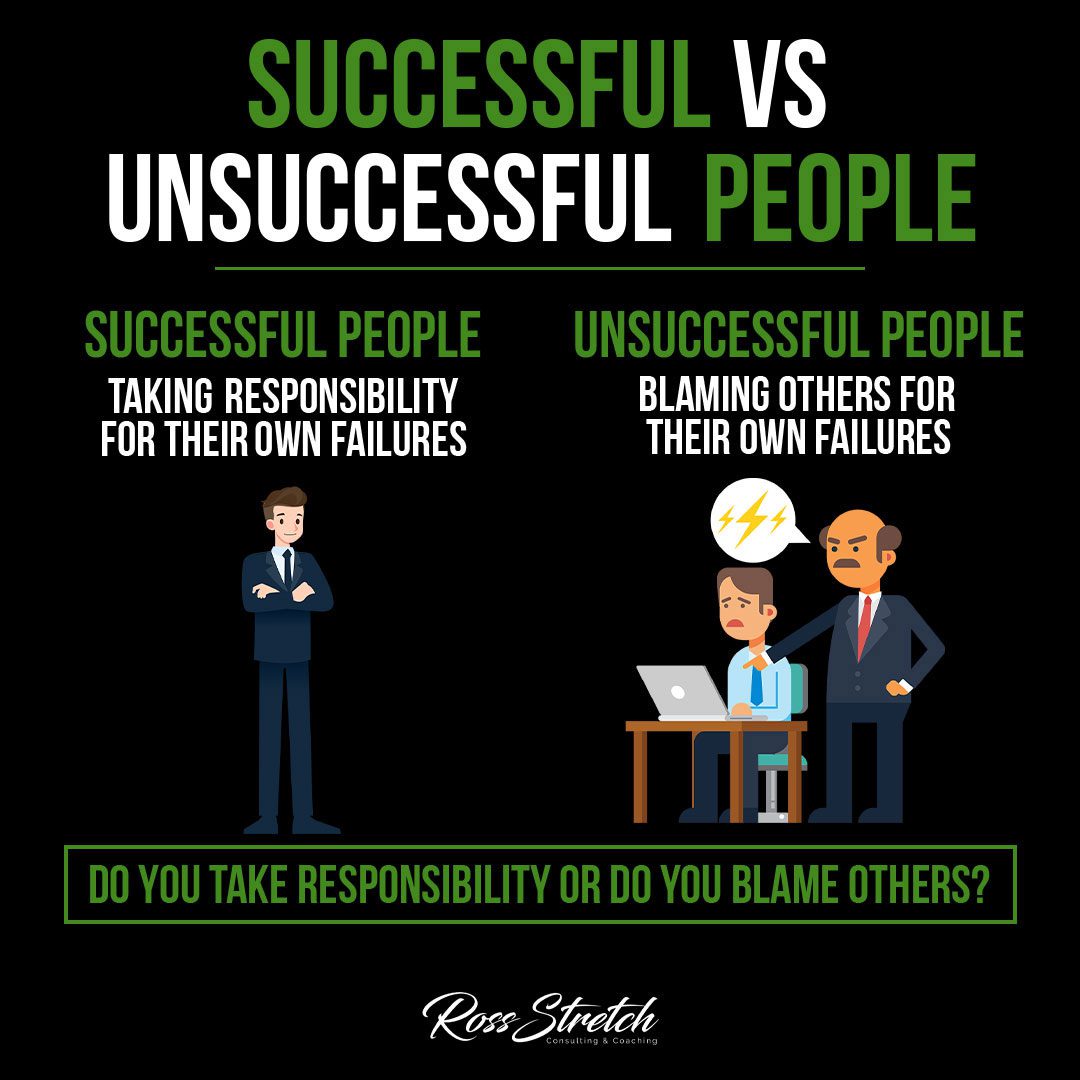
The behavioral gap between successful and unsuccessful people compounds dramatically over time. A person who takes responsibility for a failure learns from it and adjusts their approach. A person who blames others for that same failure repeats the same mistake in a different setting. After a decade, these two people inhabit entirely different financial, professional, and personal realities — and the only meaningful difference was the choice each made in how they responded when things went wrong.
Understanding these differences is not about judging others or feeling superior. It is about honest self-assessment. If you recognize patterns of unsuccessful thinking in yourself, that recognition is the first and most powerful step toward changing them.
What the Research Actually Shows
The divide between successful and unsuccessful people is not really about talent or intelligence. Multiple long-term studies, including Thomas Corley’s five-year research project published in Rich Habits, found that wealthy, successful individuals share strikingly consistent daily behaviors: 88% read for self-improvement daily, 81% maintain to-do lists, and 76% exercise aerobically at least four times a week. These aren’t coincidences — they are the compounding effects of intentional choices made consistently over time.
On the other side, unsuccessful people tend to share equally consistent patterns: reactive thinking rather than proactive planning, an external locus of control (attributing outcomes to luck or other people), and social circles that normalize mediocrity. Neither set of traits is destiny — but both are self-reinforcing. The habits you build today are the results you live with tomorrow.
How to Apply This in Your Life
Take Complete Ownership of Every Outcome
Successful people do not outsource responsibility for their results. When something goes wrong, they ask: “What role did I play in this, and what can I do differently next time?” This isn’t self-blame — it’s retaining your agency to change outcomes. Without ownership, there is no path to improvement.
- Actionable Tip: The next time something doesn’t go your way, spend five minutes writing down what you could have controlled differently — before assigning any blame externally.
- Why It Works: Ownership activates problem-solving; blame activates defensiveness. Only one of those leads to growth.
Set Specific, Measurable Goals
Successful people don’t just “want to be wealthy” or “want to get in shape.” They define exactly what they want, set a deadline, and break it into weekly actions. Vague ambitions produce vague results. The clearer your goal, the clearer your daily priorities become.
- Actionable Tip: Write down three goals today — one financial, one professional, one personal. For each, define what success looks like and set a specific deadline.
- Why It Works: Written goals activate the brain’s reticular activating system, making you more likely to notice relevant opportunities and information that match your targets.
Audit and Upgrade Your Inner Circle
Jim Rohn’s famous observation — that you are the average of the five people you spend the most time with — is backed by social science. Harvard research on social networks shows that behaviors, attitudes, and even income levels are contagious within close social groups. Successful people actively seek out mentors, peers, and communities that raise their standards.
- Actionable Tip: Identify one relationship that consistently leaves you feeling small or doubtful, and consciously reduce exposure. Simultaneously, find one person whose success you admire and seek more time around them.
- Why It Works: Environment shapes behavior more powerfully than willpower alone. Designing your social environment deliberately is one of the highest-leverage moves you can make.
Build Persistence as a Daily Practice
Unsuccessful people quit when things get hard. Successful people treat obstacles as information — signals about what needs to change in their approach. Persistence isn’t stubbornly doing the same thing repeatedly; it’s the commitment to keep adjusting and moving forward regardless of setbacks.
- Actionable Tip: When you feel like quitting on a goal, commit to one more small action before stopping. Build “one more rep” into your mindset.
- Why It Works: Most failure happens just before a breakthrough. The person who quits never discovers how close they were.
Invest in Continuous Learning
High achievers are almost universally voracious learners. Warren Buffett reportedly spends 80% of his working day reading. Elon Musk taught himself rocket science through books and conversations with engineers. The willingness to acquire new knowledge and skills is what separates people who grow from those who plateau early and stay there.
- Actionable Tip: Commit to 30 minutes of intentional learning every day — books, podcasts, courses, or mentorship conversations all count.
- Why It Works: Knowledge compounds. A small daily investment in learning produces enormous returns over a decade of consistent effort.
Common Mistakes People Make
- Confusing being busy with making progress — staying in constant motion without moving toward any meaningful goal
- Surrounding themselves with people who validate excuses rather than challenge them to grow and hold them accountable
- Waiting for “the right time” instead of starting imperfectly and improving as they go — perfect conditions never arrive
- Defining success purely by external metrics — salary, title, possessions — rather than by personal fulfillment, growth, and genuine impact
The Bottom Line
The differences between successful and unsuccessful people are real and significant — but they are not fixed. Every defining trait of a high achiever is a learnable skill. Ownership, goal clarity, resilience, persistence, and the drive to keep learning are all available to anyone willing to practice them consistently. The gap is not talent; it is habits applied over time.
Start where you are. Take responsibility for one thing today that you previously blamed on external circumstances. Set one specific, measurable goal. Reach out to one person whose success you admire. These small actions, compounded daily, produce the life that most people only dream about. Success is not a destination — it is a direction you choose every single day.
Resources
- Carol Dweck — Mindset: The New Psychology of Success (official site)
- Harvard Business Review — What Having a Growth Mindset Actually Means
- Psychology Today — The Habits of Highly Successful People
- Forbes — 16 Rich Habits That Separate Successful People from Everyone Else


 Ross Stretch