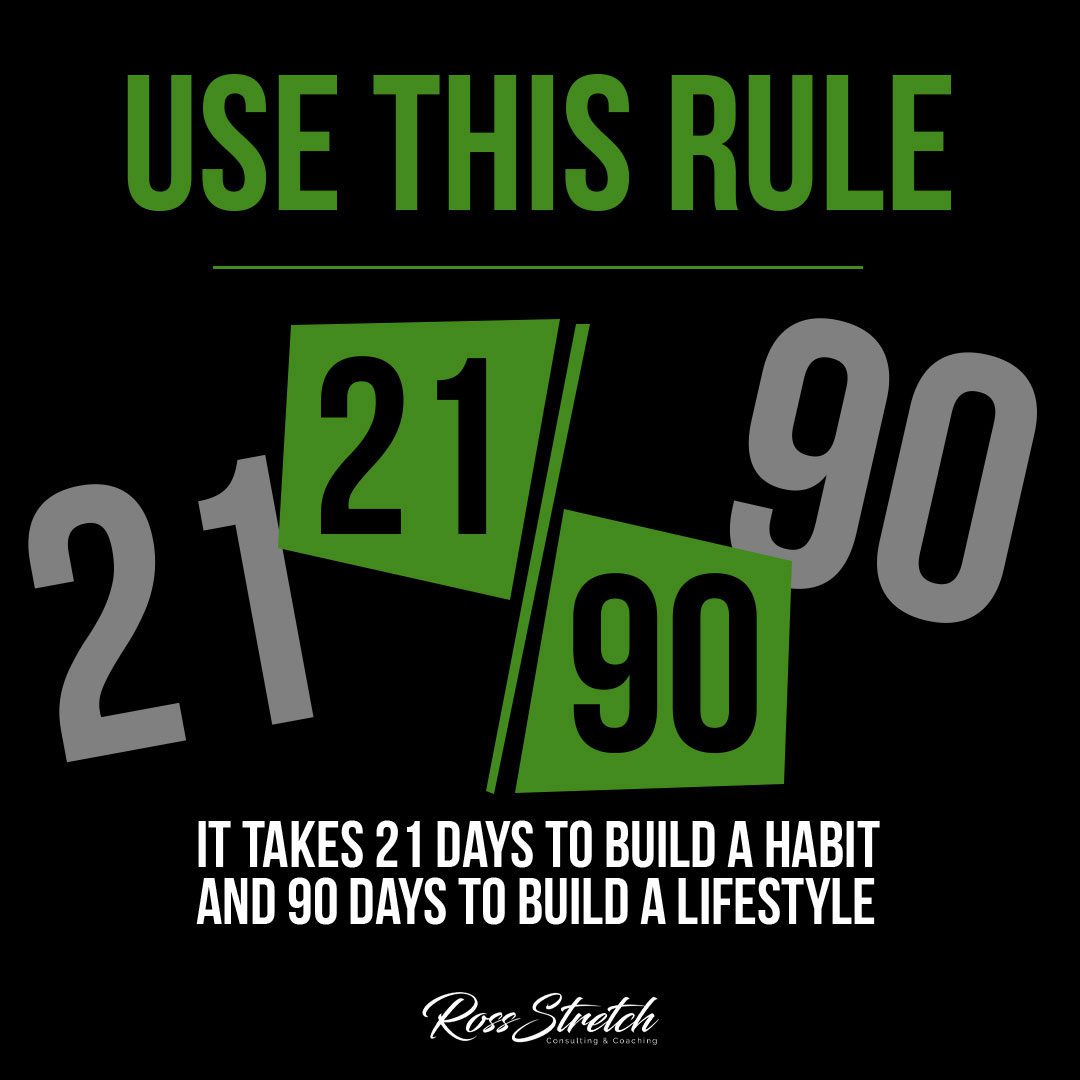
The 21/90 rule is one of the most actionable frameworks for lasting personal change: commit to a new behavior for 21 days to build a habit, then maintain it for 90 days to make it a permanent part of your lifestyle. While popular versions of this rule sometimes oversimplify the underlying science, the practical core is sound — habit formation takes time and repetition, and the people who succeed at lasting change are those who plan for both phases rather than expecting transformation to happen overnight through willpower alone.
The Science Behind Habit Formation
The brain forms habits through a process called neuroplasticity — the ability of neural pathways to strengthen through repeated use. Every time you perform an action, the neurons involved in that action fire together, and over time, those connections become stronger and increasingly automatic. This is why experienced drivers can navigate a familiar route while thinking about something else entirely: the behavior has been encoded at a level below conscious thought, freeing up cognitive resources for other things.
The idea that habits form in exactly 21 days originates from observations made by plastic surgeon Maxwell Maltz in the 1960s, who noticed that patients took roughly three weeks to adjust to changes in their appearance. The figure was popularized by the self-help industry, but more recent research — including a notable 2010 study by Phillippa Lally published in the European Journal of Social Psychology — found that habit formation takes an average of 66 days, with significant variation depending on the person and the complexity of the behavior. The 21/90 framework accounts for this reality by treating the first 21 days as the foundation and the following 69 days as the consolidation period.
Phase One: The First 21 Days — Breaking Resistance
The first three weeks of any new behavior are typically the hardest. Your brain is still running its old default programming, and every time you try to do something new, you are swimming upstream against established patterns. Motivation tends to be relatively high at the start, but it is also at its most fragile — because you have not yet built the neurological infrastructure to make the behavior feel natural or even comfortable.
The most important thing you can do during this phase is reduce friction. Make the new behavior as easy to perform as possible. If you want to exercise in the morning, sleep in your workout clothes. If you want to read before bed, put your book on your pillow. If you want to journal daily, keep your notebook open on your desk. Every bit of friction you remove is a barrier you are less likely to negotiate your way out of when resistance is highest.
Choose one habit, not three. The most common mistake in Phase One is attempting too much change at once. Willpower and attentional resources are finite, and trying to overhaul multiple areas of life simultaneously increases the odds of failing at all of them. Pick the habit that would have the highest impact if practiced consistently, and commit to that one thing first. Everything else can come later, built on the foundation of this first success.
Phase Two: Days 22 to 90 — Building a Lifestyle
If you have made it to day 22, something important has already happened: you have established a track record. The behavior is starting to feel more familiar, even if it is not yet effortless. Phase Two is about extending that track record until the habit becomes part of your identity — something you do because it is who you are, not just because you set a goal 22 days ago.
During this phase, the habit needs to be integrated into your existing systems. Stack it onto an anchor behavior — something you already do reliably every day. If you want to meditate, do it right after your morning coffee. If you want to review your finances weekly, do it every Sunday after your grocery run. Linking a new behavior to an existing one leverages the automaticity of your current habits to support the new one, reducing the cognitive effort required to remember and follow through.
Use Phase Two to also refine the habit. Notice what is working and what is not. Adjust the timing, the duration, or the approach as needed. Flexibility within commitment is not failure — it is optimization. The goal is not to execute the habit exactly as you imagined it on day one; the goal is to still be doing it on day 90, in whatever form actually fits your life.
Common Pitfalls and How to Navigate Them
The most common reason people fail at habit formation is all-or-nothing thinking. They miss one day, declare the effort a failure, and quit entirely. Research by psychologists studying self-regulation suggests that missing a single day has almost no measurable impact on long-term habit formation — what matters is how quickly you recover. If you skip a day, apply one simple rule: never miss twice. Get back to it the next day and keep your streak alive.
Another common pitfall is choosing a habit that is too vague to execute. “Exercise more” is not a habit — “do 20 minutes of exercise at 7am on weekdays” is. Specificity is what makes habits trackable and executable. The more precisely you define the behavior — when, where, how long, and how often — the less room there is for your brain to negotiate its way out of it when resistance appears.
Finally, do not underestimate the power of accountability. Telling someone else about your 90-day commitment, tracking your progress publicly, or keeping a visible streak counter dramatically increases follow-through. Social accountability engages a different motivational system than private commitment, and it tends to be considerably more robust in the face of setbacks and low-motivation days.
Applying the 21/90 Rule to Financial and Professional Goals
The 21/90 rule is particularly effective when applied to financial habits. Automating savings, reviewing a budget weekly, tracking daily spending, or spending 30 minutes on professional development each morning are all behaviors that benefit enormously from the compound effect of consistent repetition. None of these actions produce a dramatic result in isolation — but applied consistently over 90 days, they produce measurable and lasting change that grows over time.
Entrepreneurs and professionals can apply the same framework to productivity habits, client relationship practices, or health behaviors. The mechanism is identical regardless of the domain: lower the barrier to entry, commit to daily consistency, and give the behavior enough time to become automatic. The 90-day window is long enough for results to become visible, which creates its own momentum and makes the habit easier to maintain beyond the initial commitment period.
Conclusion
The 21/90 rule is not magic — it is a structure. It works because it sets realistic expectations, divides a daunting goal into two manageable phases, and gives you a clear horizon to work toward. Start your 21 days today, and commit to the 90 before you expect to see results. The transformation happens on the back end of consistency, not the front end of motivation. Give your habits time, and they will give you a different life.
Resources


 Ross Stretch